Contango vs. Backwardation: What the Oil Futures Curve Is Telling You
The shape of the oil futures curve reveals more about supply and demand than any single headline. Here's how to read it — and why it matters more than the spot price.
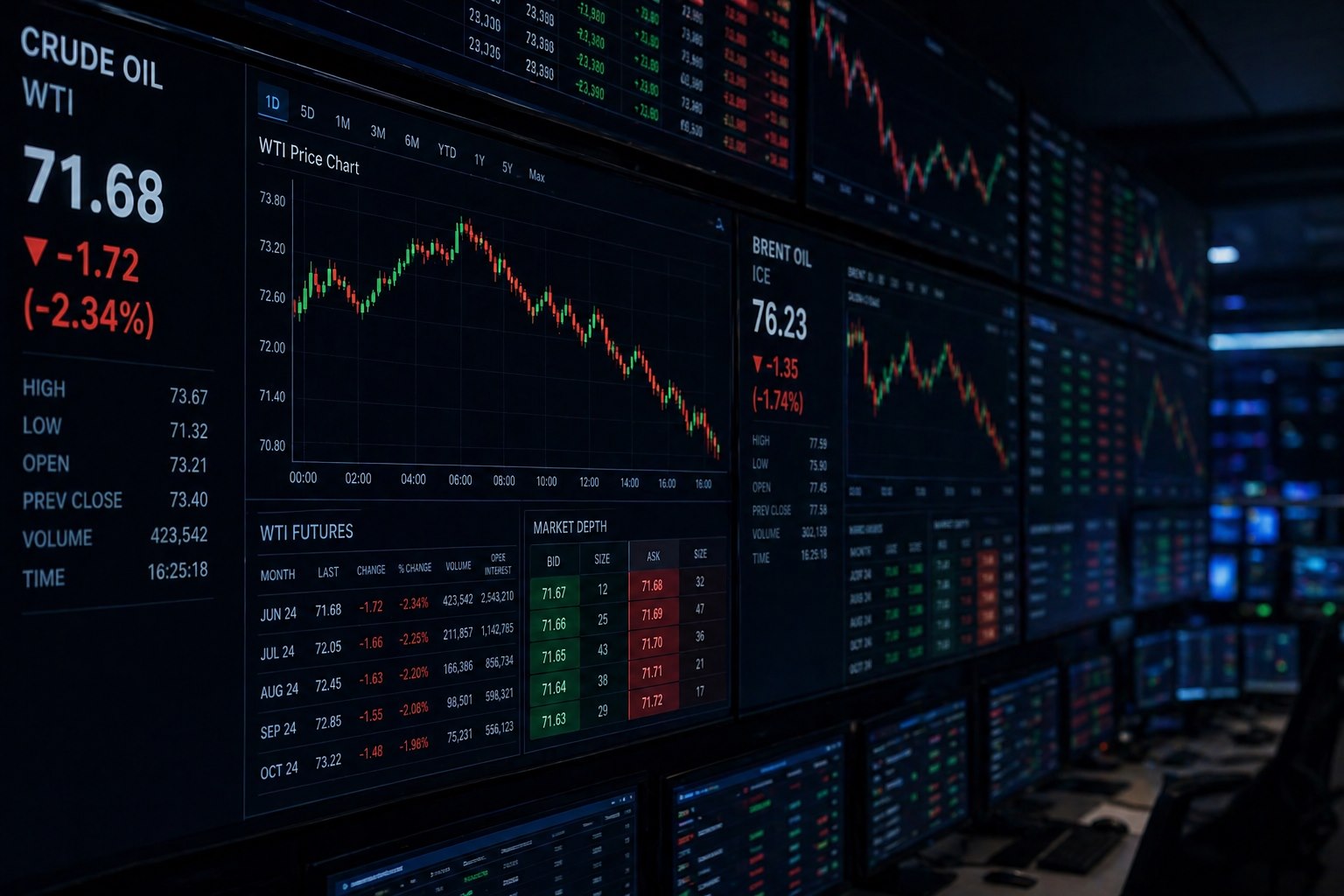
Real-time WTI crude, Brent crude, and natural gas market data
WTI (West Texas Intermediate) crude oil — continuous futures contract. Data provided by TradingView.
The shape of the oil futures curve reveals more about supply and demand than any single headline. Here's how to read it — and why it matters more than the spot price.
Every spring, refineries switch blends, demand picks up, and pump prices follow. Here's the seasonal pattern that plays out like clockwork — until it doesn't.
A look at the key factors driving WTI crude oil prices in 2026, including OPEC+ policy, U.S. shale production, and global demand trends.
The price of oil is one of the most closely watched commodity prices in the world. WTI (West Texas Intermediate) crude oil serves as the primary benchmark for U.S. oil pricing, while Brent crude is the international benchmark. Both prices fluctuate continuously based on supply and demand dynamics, OPEC+ production decisions, geopolitical events, and broader macroeconomic conditions.
Use the charts above for live WTI and Brent crude oil prices, or visit our dedicated WTI crude oil page and Brent crude page for in-depth analysis.