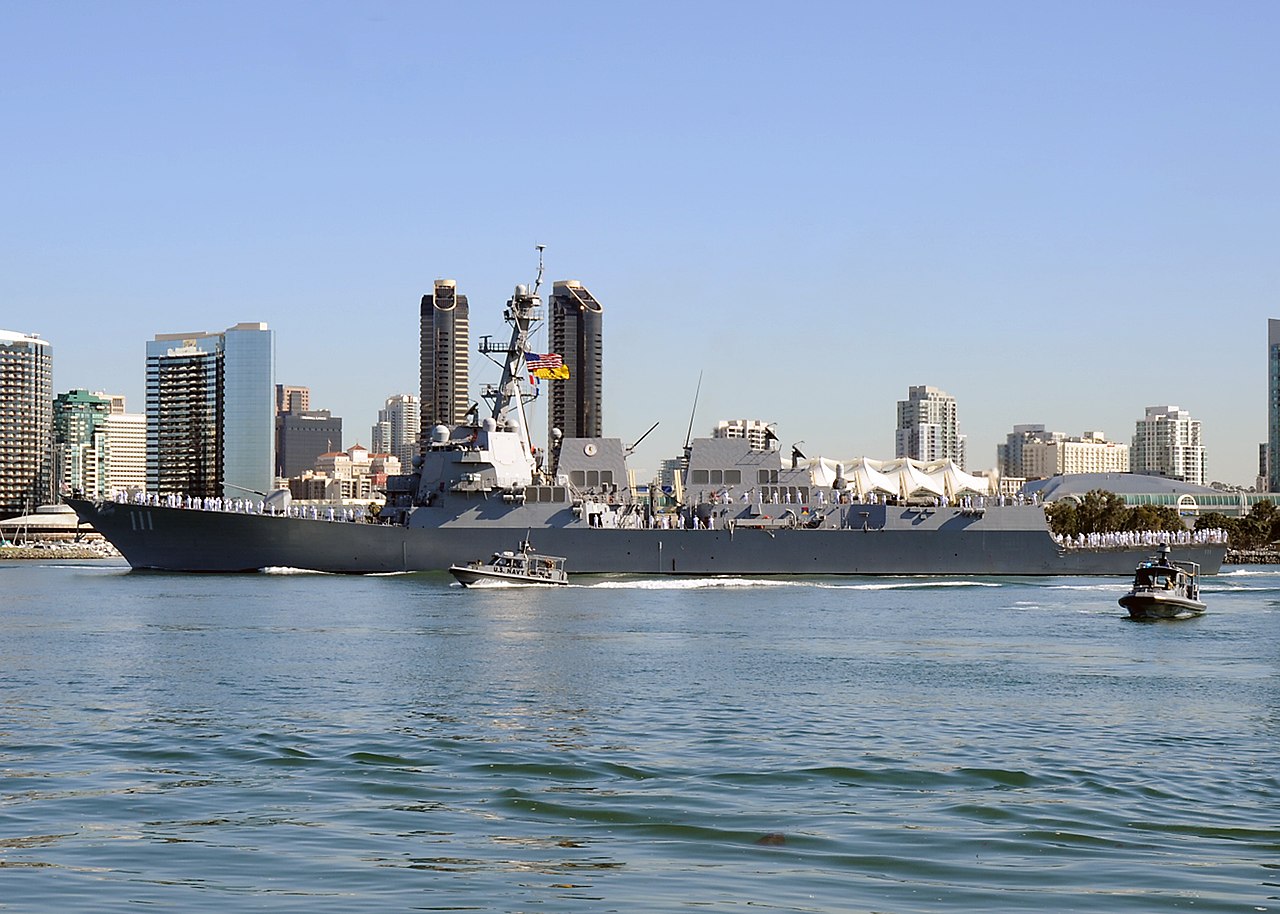
US Central Command struck targets inside Iran late Monday for the first time since the April 8 ceasefire. F-35s and drones hit two IRGC naval vessels described as "laying naval mines" in the Strait of Hormuz approaches and a surface-to-air missile site near Bandar Abbas that CENTCOM said had tracked US aircraft. Four Iranian Revolutionary Guard personnel were killed. Additional explosions were reported near Sirik and Jask along the southern coast. CENTCOM framed the action as "self-defense strikes" rather than a renewed offensive.
Oil prices barely moved. Brent briefly touched $100 intraday Tuesday, then settled near $99.18. WTI traded down to $93.12 by Wednesday's session. Both benchmarks are now below where they closed on May 22, before the strikes happened.
The market read that anyone covering this story will write a different sentence than the one it just delivered. The market is calling Trump's bluff that escalation stays contained.
What CENTCOM Hit
The strike package targeted two IRGC fast boats that US intelligence had observed staging mines in the shipping channels east of Bandar Abbas. The SAM battery, a Russian-supplied Tor-M1 according to one Iran International account, had reportedly locked onto US aircraft conducting overflight in the prior 72 hours. CENTCOM spokesperson Captain Tim Hawkins said the strikes were "narrowly scoped to the immediate threat" and characterized them as consistent with the ceasefire framework's self-defense provisions.
That framing is doing a lot of work. The April 8 ceasefire was negotiated on the explicit basis that neither party would conduct offensive operations against the other's territory. Striking IRGC personnel inside Iranian sovereign waters and ground installations on Iranian soil is, by any reasonable definition, an attack inside Iran. CENTCOM's interpretation is that mine-laying in international shipping lanes is itself an offensive act that justifies a defensive response. Iran's interpretation will be different.
The Iranian Revolutionary Guard responded within hours, saying it had "identified and engaged" US drones and an F-35 that entered Iranian airspace. No US losses were reported. Iran's foreign ministry promised "no act of aggression will be left unanswered."
Why Oil Did Not Spike
A direct US strike on Iranian military personnel inside Iranian territory, during a notional ceasefire, with no clear off-ramp, is the kind of event that historically pushes Brent up $5 to $10 in a session. This time it pushed Brent up briefly, then back down through the level it started at.
Several things explain the muted move.
The market is interpreting the strike as narrow rather than escalatory. CENTCOM's "self-defense" framing, the small kinetic footprint (4 IRGC casualties), and the absence of any US strike on Iranian command-and-control all signal that the action was meant to deter further mine-laying without rupturing the broader diplomatic track. That reading may be wrong, but it is the reading that has prevailed across two trading sessions.
The Doha talks did not collapse. Iran's foreign minister Abbas Araghchi, Parliament Speaker Mohammad Bagher Ghalibaf, and Central Bank Governor Abdolnaser Hemmati remain in Qatar working on framework language. Rubio said Tuesday from India that disagreements are over "specific language in the initial document, a word, a sentence." That's the language of a deal being negotiated in detail, not a deal being walked away from.
The Iranian permit regime through Hormuz has continued operating during the strike period. The 33-tankers-per-day pace from May 22 has not been sustained at that level, but flow has not stopped. Non-US-aligned cargoes are still moving. The physical supply restoration that drove the price decline last week has not reversed.
And the Trump-Xi joint position from May 15 still holds: China has stayed publicly silent on the strikes and continues buying Iranian crude. The structural global supply situation is incrementally better than it was a week ago, even if the diplomatic optics are worse.
What Mojtaba Khamenei Said
Iran's new Supreme Leader broke his public silence Tuesday for the first major statement of his tenure. Mojtaba Khamenei, who took the position following the February 28 assassination of his father, used his speech to vow there would be no US military bases in the region. He did not directly address the strikes or the ongoing Doha negotiations.
The speech matters for what it signals about Iran's negotiating position post-strike. If Mojtaba had directly attacked the talks or repudiated the Pakistan-mediated framework, the Doha delegation would not be able to keep negotiating. The fact that he focused on a longer-term anti-US-basing message rather than the immediate clash gives the foreign ministry diplomatic room to keep operating.
That is the most important political fact of the week and it explains why oil hasn't broken higher.
The Permit Regime Becomes Permanent
While the kinetic and diplomatic tracks have been moving, Iran has been quietly institutionalizing the Persian Gulf Strait Authority. The PGSA formally launched May 18. Reports now indicate transit fees are being charged in Chinese yuan, with some vessels reportedly paying up to $2 million per crossing. India, Iraq, and Pakistan have negotiated bilateral access outside the standard fee regime. Chinese-linked and UAE-managed gray-fleet operators are paying.
This is the post-war shipping reality being built in real-time. Whether or not a US-Iran framework is signed in the coming days, Iran is creating an institution that will outlast the negotiation. Yuan-denominated fees on Hormuz transits is also a non-trivial de-dollarization data point worth its own piece eventually.
What to Watch Through Week's End
Three things will determine whether the current price trajectory holds or reverses.
The Doha talks. Rubio's "few more days" frame implies signing this week or next. If language gets locked on the nuclear and sanctions clauses, Brent likely tests $95. If talks break, Brent likely retests $107.
Iran's response to the strikes. Tehran's "no act of aggression unanswered" line is rhetorical for now. Whether it stays rhetorical or produces an actual reciprocal action determines whether the strike is the end of escalation or the beginning. The most likely venue is a renewed shipping incident or an Iraqi militia attack on US troops in Iraq, both of which Iran can launch with limited attribution risk.
The tanker count. If the 33-per-day flow rebuilds toward 50 or 60 daily transits, the structural case for Brent below $100 strengthens. If flow stalls below 20 per day, the supply-restoration narrative weakens and the floor moves back up.
The market has placed a bet that escalation is contained and talks are progressing. So far the price action confirms that bet. The next 72 hours will test it.
This article is for informational purposes only and does not constitute financial or investment advice. Oil market conditions can change rapidly. Consult a qualified financial professional before making investment decisions.