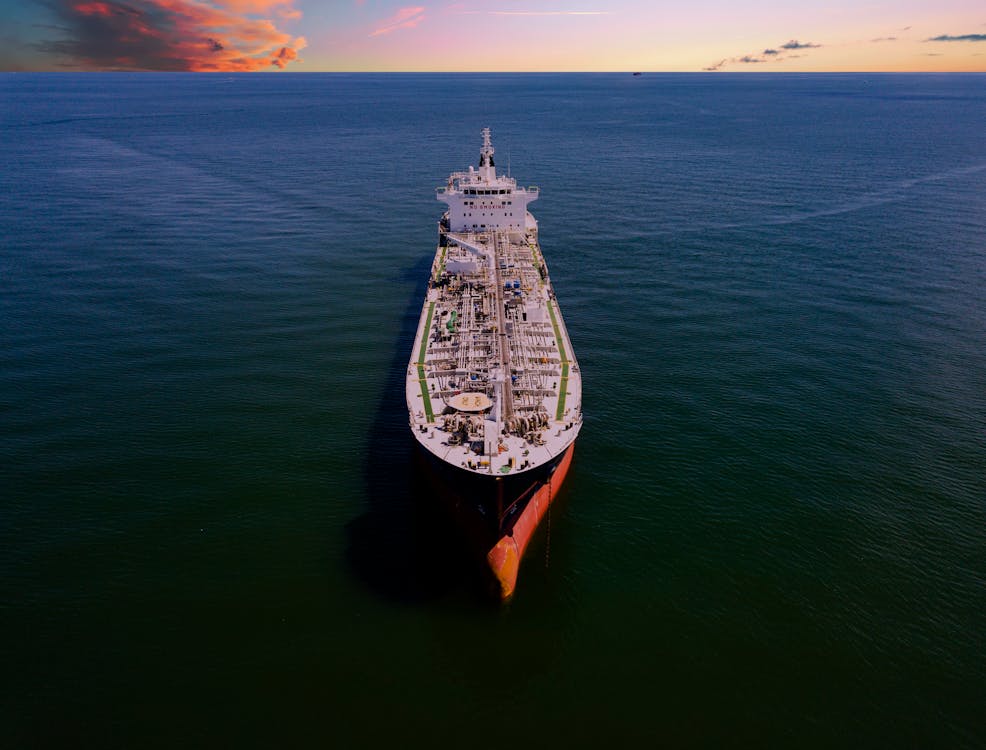
The gap between Brent crude and WTI is called the Brent-WTI spread. For most of the past five years it has run $2 to $4 a barrel. But it widens sharply during Middle East supply disruptions: at the height of the 2026 Strait of Hormuz crisis, with Brent above $110 and WTI in the low $100s, the spread blew out to roughly $8. Understanding why takes understanding what drives it.
The Two Benchmarks
WTI (West Texas Intermediate) is the American benchmark crude. It is a light, sweet crude oil produced primarily in the Permian Basin in West Texas and southeastern New Mexico. Its physical delivery point is Cushing, Oklahoma, a landlocked pipeline hub in the middle of the country.
Brent crude is the international benchmark. Despite the name, it is no longer primarily from the Brent field in the North Sea. The modern Brent benchmark aggregates production from several North Sea fields under a basket called BFOE (Brent, Forties, Oseberg, Ekofisk, Troll). It trades on a free-on-board (FOB) basis at a North Sea loading port, meaning it has direct access to waterborne global markets.
How the Relationship Used to Work
Before the US shale boom, WTI generally traded at a slight premium to Brent. US domestic production was declining, Cushing storage was not congested, and WTI's higher quality commanded a price above the global benchmark. The two prices tracked each other closely, typically within a dollar or two.
That relationship broke down around 2010. Shale production from the Permian Basin and Eagle Ford flooded the Cushing pipeline system faster than takeaway capacity could handle. Crude backed up in Oklahoma. At the same time, US law prohibited crude oil exports, so there was no way to relieve the glut by shipping excess barrels overseas.
By early 2011, the Brent-WTI spread had blown out to $25 per barrel, then widened further to nearly $28 in early 2012. Brent-exposed refiners in Europe and Asia were paying a substantial premium over refiners processing cheaper domestic WTI. The spread persisted until the US lifted its crude export ban in December 2015 and new Gulf Coast export infrastructure came online. Once US crude could reach global buyers, the arbitrage compressed the spread back toward a more normal range.
What Drives the Spread Today
US export capacity. The post-2015 ability to export US crude is the main reason the spread is narrower than it was in 2011-2014. When WTI trades at a significant discount to Brent, exporters buy WTI, ship it to the Gulf Coast, and sell it into the Brent market. That arbitrage corrects the spread over time. Adequate pipeline and export capacity keeps the mechanism functioning.
Cushing inventory. High crude stocks at Cushing push WTI down relative to Brent. The market discounts landlocked barrels that cannot be moved quickly. Low Cushing stocks support WTI's price. Inventory reports from the US Energy Information Administration (EIA) move the spread weekly when storage figures deviate from expectations.
Middle East geopolitical premium. Brent prices in disruptions to Middle East supply more directly than WTI. Gulf producers export crude that is priced off the Brent or Dubai benchmarks into Asian and European refineries. When those supply flows are threatened, Brent carries a larger risk premium than WTI, which reflects US domestic production that is unaffected by Gulf events. During a Gulf crisis, the spread widens. During periods of Gulf stability, it narrows.
Quality differences. WTI is slightly lighter (lower density) and sweeter (lower sulfur) than Brent. Both are classified as light sweet crude, so the quality differential between them is modest. But not zero. Refiners configured for light sweet crude pay a slight premium for either grade. This factor plays a smaller role than geography and inventory in driving daily spread moves.
What a Wide Spread Signals
When the spread widened to around $8 during the 2026 Hormuz crisis, it sat above the post-2016 norm but well below the 2011-2013 extremes. It reflected two things: Brent's geopolitical crisis premium from the Hormuz closure, and US shale's relative insulation from that same disruption.
The Strait of Hormuz closure cut roughly 20 million barrels per day of Gulf crude from global markets. That crude was priced off the Brent or Dubai benchmark. US shale production, priced off WTI, was not disrupted. So Brent absorbed a larger share of the geopolitical risk premium.
A spread that wide is the market's price for being exposed to Middle East supply versus US domestic supply. Brent buyers pay that premium. US Gulf Coast refiners processing WTI do not.
Why Traders and Refiners Watch It
For refiners, the spread is a feedstock cost question. When the spread is wide, a US Gulf Coast refinery running WTI pays several dollars less per barrel than a European or Asian refinery running Brent-priced crude. That differential feeds directly into refinery margin calculations.
For US crude exporters, a wide spread is a business opportunity. When WTI trades at a large discount to Brent, US crude is attractive to foreign buyers. Export volumes tend to rise when the spread widens. The arbitrage trade, buy WTI at Cushing, pipe to the Gulf Coast, load onto a tanker, sell into the Brent market, is the mechanism that keeps the modern spread from holding at extreme levels.
For traders running spread positions, the Brent-WTI differential is one of the most liquid intermarket trades in crude oil. Positions on the spread are a way to express a view on US domestic supply versus global supply without taking outright directional risk on the oil price itself.
A crisis-widened spread narrows when the Middle East geopolitical premium on Brent eases, which requires a resolution to the disruption or a sustained normalization of Gulf supply flows. When Gulf supply is stable, the spread settles back toward its $2 to $4 norm.
This article is for informational purposes only and does not constitute financial or investment advice. Oil market conditions can change rapidly. Consult a qualified financial professional before making investment decisions.