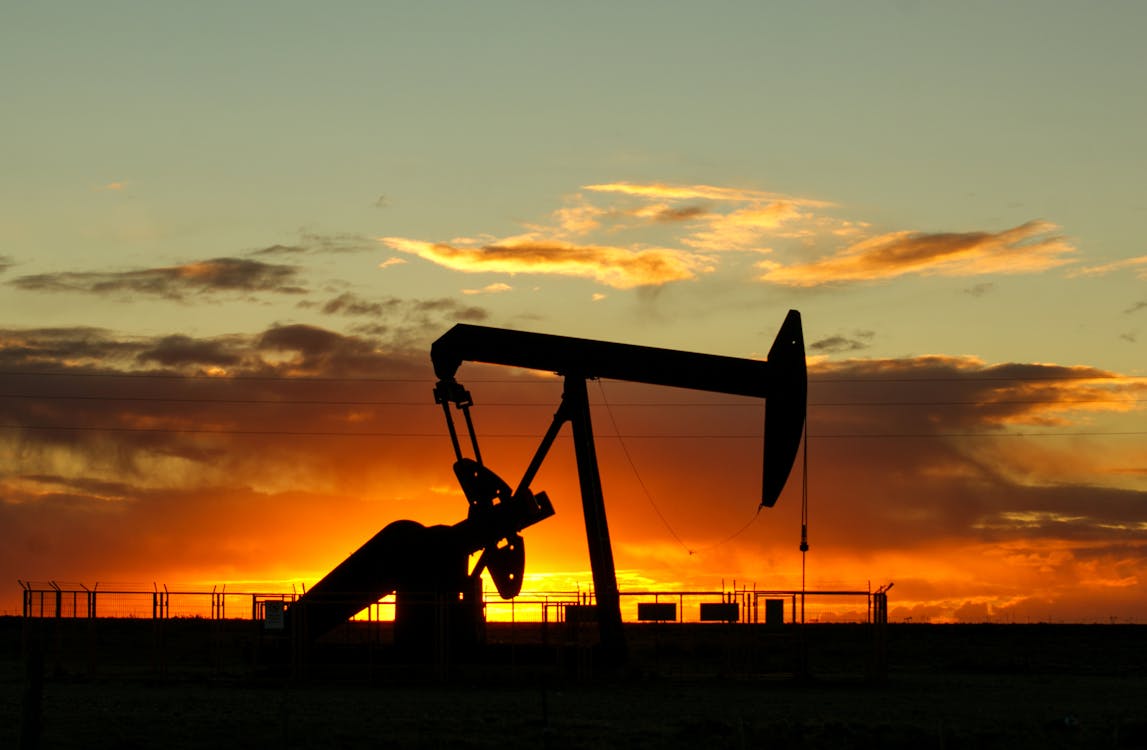
WTI crude spent most of 2024 trading in the $70s. By early 2026 it had crossed $90, and the Hormuz crisis pushed it above $100 for the first time since the 2022 energy shock. A lot more people are now paying attention to what the benchmark actually measures.
If you've spent any time in Houston, you already know that oil isn't just a commodity, it's a weather system. It shapes the local economy, the mood at dinner parties, and, in certain zip codes, the square footage of new construction. So when people ask me what WTI crude oil actually is, I try not to be condescending about it. Most people know the price of oil the same way they know their blood pressure: they're aware it exists, they know it matters, and they'd rather not watch it too closely.
Let's fix that.
The Short Answer
WTI stands for West Texas Intermediate, and it is the primary benchmark for crude oil prices in North America. When a news anchor says "oil fell two dollars today," they are almost certainly talking about the WTI price, specifically, the front-month futures contract traded on the New York Mercantile Exchange, or NYMEX.
It is not oil from West Texas exclusively. It never really was. The name refers to the crude oil characteristics, light, sweet, and the delivery point: Cushing, Oklahoma, which is either the crossroads of American energy infrastructure or the most important small city you've never thought about, depending on your perspective.
Light and Sweet: Not a Coffee Order
Crude oil is not a single substance. It comes out of the ground with wildly varying properties, and those properties determine how easy, and how expensive, it is to refine into useful products like gasoline, diesel, and jet fuel.
The two properties that matter most are:
API gravity, a measure of how light or heavy the oil is. Higher gravity means lighter oil. WTI has an API gravity of around 39.6 degrees, which classifies it as "light." Light crudes are easier to refine and produce a higher percentage of high-value products. Refiners prefer them.
Sulfur content, lower sulfur means "sweeter" oil, which is also preferable. WTI has a sulfur content of around 0.24%, making it a sweet crude. Heavy, sour crudes require additional processing steps to remove sulfur, which costs money and time.
Light and sweet, in other words, is not a personality type. It is a quality premium.
Where Does WTI Come From?
The bulk of WTI-grade crude comes from the Permian Basin in West Texas and southeastern New Mexico, one of the most prolific oil-producing regions in human history. The Eagle Ford Shale, also in Texas, contributes significantly. U.S. shale production has transformed American energy output over the past two decades to a degree that would have seemed implausible as recently as 2005.
All of this crude eventually flows to Cushing, Oklahoma, through a network of pipelines. Cushing is the official delivery point for NYMEX WTI futures contracts, which means its storage levels are watched with a level of intensity that seems disproportionate to the fact that it is a town of approximately 7,000 people.
Why Does the WTI Price Matter?
Because it is the price signal that ripples through the entire North American energy economy.
When WTI rises, domestic oil producers make more money. Drilling activity increases. Oilfield service companies hire more people. And in Houston, the restaurants on Westheimer fill up faster. When WTI falls, the opposite happens, with a speed and thoroughness that anyone who lived through 2014, 2016 or early 2020 will not soon forget.
Beyond the industry, the WTI price influences gasoline prices at the pump, though not with the clean one-to-one relationship that consumers sometimes assume. Refining capacity, seasonal blending requirements, regional distribution factors, and the margin ambitions of your local station owner all play roles in what you actually pay.
WTI vs. Brent
WTI is not the only crude oil benchmark in the world. Brent crude, extracted from the North Sea, serves as the global benchmark and prices approximately two-thirds of internationally traded oil. The two prices move together most of the time, but the spread between them, sometimes called the Brent-WTI spread, fluctuates based on logistical factors, U.S. export capacity, and regional supply conditions.
As a rule, Brent trades at a small premium to WTI. When that spread widens unusually, it is generally worth paying attention to why.
The Bottom Line
WTI crude oil is a light, sweet crude oil benchmark traded on NYMEX, priced at Cushing, Oklahoma, and primarily produced from U.S. shale fields in Texas and New Mexico. It is the reference price for North American oil markets and one of the most closely watched commodity prices in the world.
Whether you're monitoring it for investment purposes, trying to understand your gas bill, or simply curious about the commodity that built much of the city I've called home my entire life, now you know what it is.
The price is up top. It updates in real time.
This article is for informational purposes only and does not constitute financial or investment advice.