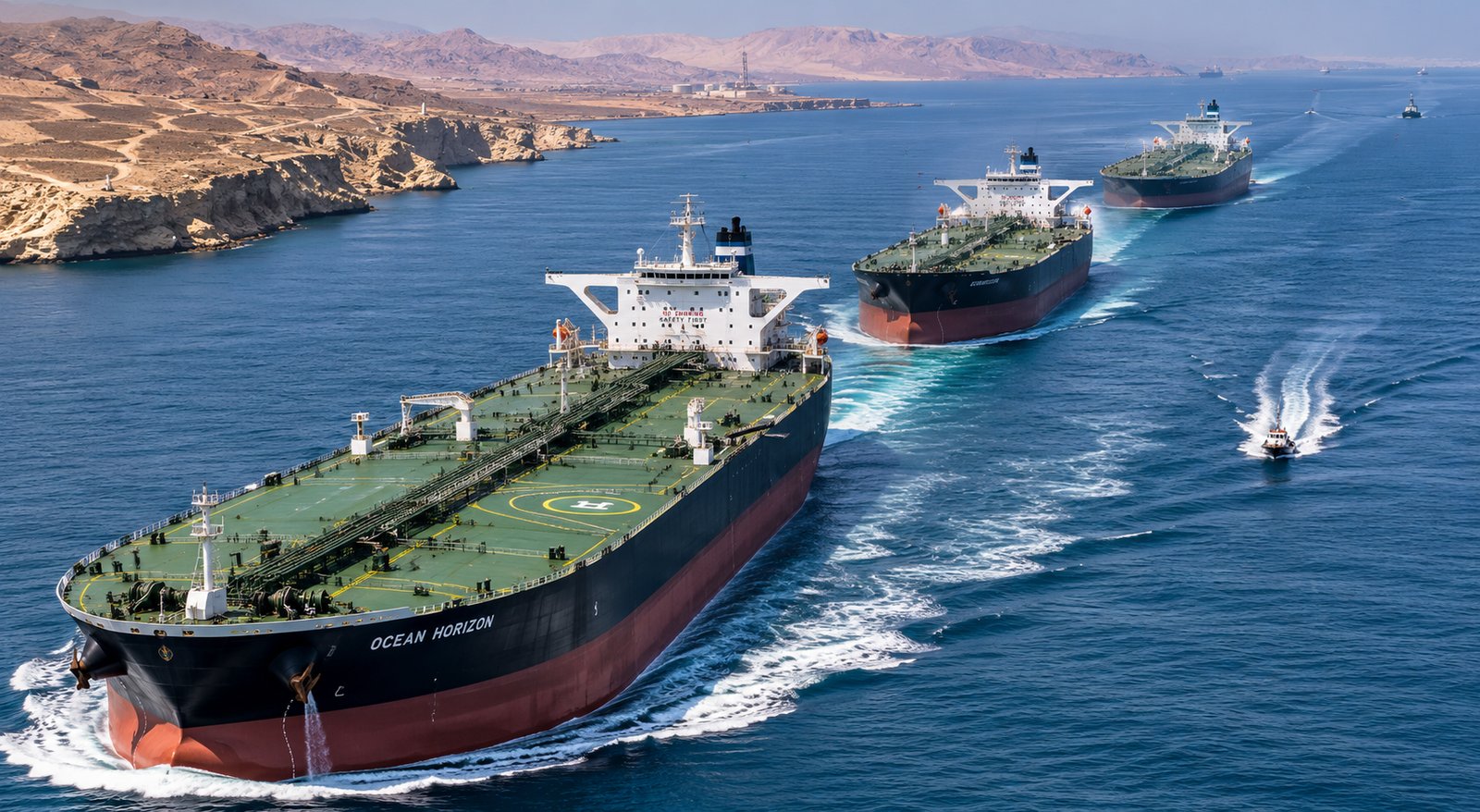
When the Strait of Hormuz flares up, one of the first prices to move is not the price of oil. It is the price of insuring the ship that carries it. War-risk insurance is a quiet but powerful link between a distant conflict and the cost of a barrel, and understanding it explains why oil can react to a threat long before a single cargo is actually lost.
Two Kinds of Marine Cover
A tanker carries several layers of insurance. Hull and machinery cover protects the ship itself; protection and indemnity, or P&I, covers liabilities like pollution and crew. Both are standard, and both specifically exclude war.
War risks are covered separately. Because losses from war, mines, missiles, and seizure are impossible to price like ordinary accidents, they are carved out of standard policies and insured under a dedicated war-risk cover. In calm conditions this cover is cheap and routine. When a region becomes dangerous, it becomes the single most volatile cost in shipping.
Listed Areas and the Additional Premium
The mechanism runs through a small London-centered market. A body of underwriters known as the Joint War Committee maintains a list of high-risk areas. When a region like the Persian Gulf or the Strait of Hormuz is added or its risk rises, insurers stop treating transit as routine and start charging an additional premium, quoted as a percentage of the ship's insured value, for each voyage into the zone.
The numbers move fast. In quiet times the additional premium for a Gulf transit might be around 0.1% of hull value. In a crisis it can jump to 0.3%, 0.5%, or higher. For a large tanker worth $100 million or more, that is the difference between a modest fee and several hundred thousand dollars in extra cost for a single trip through the strait. Premiums are typically quoted for a seven-day window, so a slow or delayed transit costs even more.
In the sharpest episodes, some insurers stop quoting altogether, or P&I clubs signal they may withdraw cover for certain voyages. A ship that cannot get war-risk cover effectively cannot sail, because no owner or charterer will accept the uninsured liability.
How It Reaches the Oil Price
War-risk premiums feed into the oil price through two channels.
The first is direct cost. The extra insurance is a real expense added to every cargo that transits the danger zone, on top of higher freight rates as owners demand more to send their vessels in. That cost is passed down the chain and shows up in the delivered price of oil to refineries.
The second, and larger, channel is supply. When insurance becomes expensive or unavailable, some owners simply refuse to send their ships, at any freight rate. Tanker traffic through the chokepoint falls. Fewer ships willing to move oil means less oil actually reaching buyers, which tightens the effective supply even if no barrels have been destroyed. That is how a strait that is technically still open can still push prices up: the oil is there, but the ships to carry it are not.
Not the Same as the Futures Risk Premium
It is worth separating war-risk insurance from the geopolitical risk premium that shows up in the oil futures price. They rise together but they are different things.
The futures risk premium is an expectation, the extra dollars traders pay for the possibility of a future disruption. It can appear and vanish overnight, because it is a belief, not a bill. War-risk insurance is an actual cost, paid on real cargoes moving through real danger. It reflects what underwriters, who have money on the line, judge the physical risk to be right now. When both move at once, the futures premium tells you what the market fears, and the insurance premium tells you what the people insuring the ships are actually charging for it.
Why It Matters
War-risk insurance is the market's early-warning system. It reacts to a chokepoint threat before any supply is lost, it is measured in hard numbers rather than sentiment, and it directly throttles how much oil can move. When you read that premiums have jumped to several times their normal level and that owners are avoiding a waterway, that is not background detail. It is often the clearest sign that a geopolitical event is about to become an oil-price event.
This article is for informational purposes only and does not constitute financial or investment advice. Oil market conditions can change rapidly. Consult a qualified financial professional before making investment decisions.