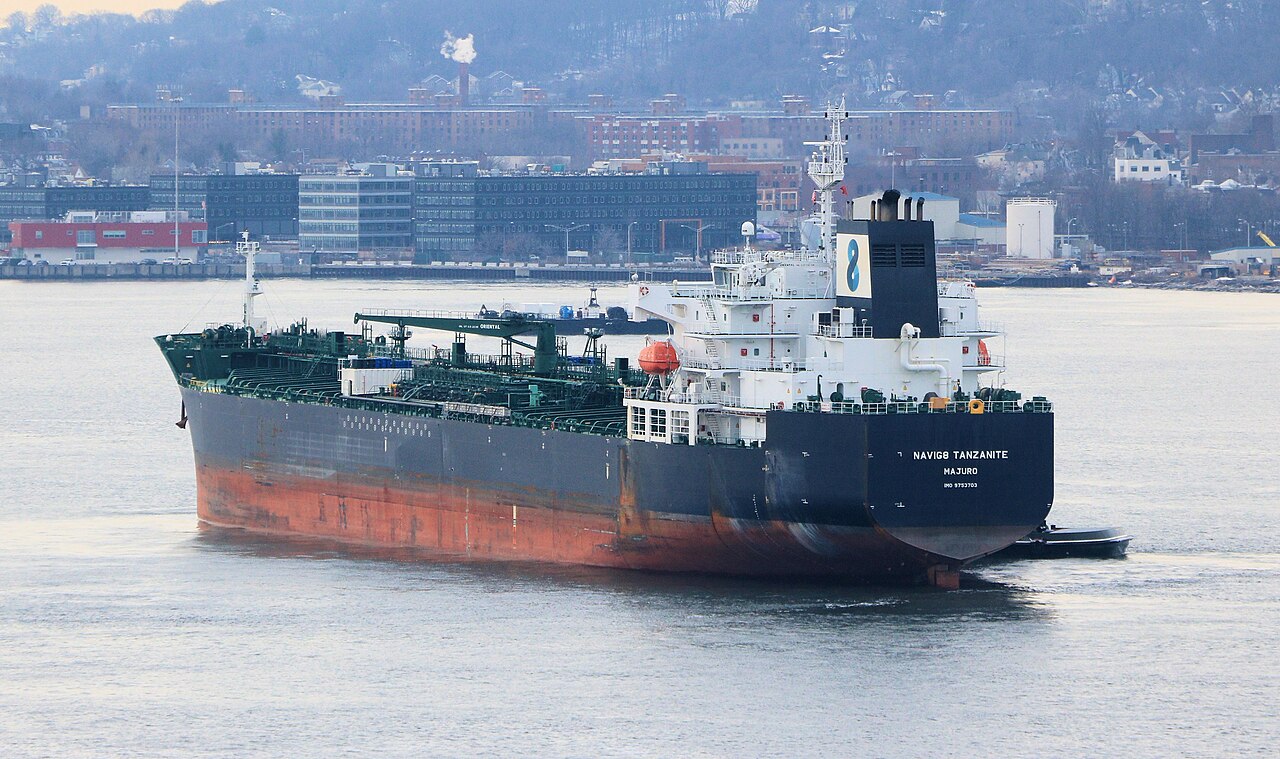
A drone struck Oman's Mina al-Fahal oil terminal on Friday, causing an explosion near the offshore mooring berths that handle most of the country's crude exports. Oman initially suspended loadings, then Petroleum Development Oman said later in the day that operations were "proceeding normally," leaving the full extent of the disruption unclear. No party has formally claimed the attack, and Oman's government has not attributed it.
The target is what makes it significant. Mina al-Fahal sits on Oman's Gulf of Oman coast, outside the Strait of Hormuz. It was the market's workaround, the one major Gulf export route that did not depend on the chokepoint Iran has kept closed since late February. India had recently signed a trade deal with Oman specifically to diversify its energy imports away from Hormuz. A strike there hits the safe route, not the contested one.
Brent crude firmed to around $94 to $95 on the news, after pulling back about 3% on Thursday. WTI traded in the low $90s. Oil is still up roughly 4% on the week, but the clean three-session rally that followed Wednesday's Kuwait airport strike did not hold. This is consolidation in the mid-$90s, not a continued march to $100. And OPEC+ meets Sunday into all of it.
Why Oman Was the Calm Corner
Throughout the crisis, the supply story has been about Hormuz: roughly a fifth of the world's seaborne oil cannot move through the strait, and there is no full substitute. The partial relief valves have been the pipelines that bypass the strait and the export terminals that sit outside it. Oman's Mina al-Fahal, handling 800,000 to 900,000 barrels per day, was one of the most important of those outside-the-strait routes.
Hitting it, if the attack is what it appears to be, extends the disruption from the chokepoint itself to the alternatives around it. That is the logic of Iran's stated threat to "activate other fronts." The market has watched Tehran promise to widen the war beyond Hormuz for two weeks. The Kuwait airport strike on Wednesday was one expression of that. An attack on Oman's export terminal, if confirmed, is another, and a more economically targeted one, because it goes directly at the oil the world is still able to get out of the region.
The caution is real: Oman has not blamed anyone, Petroleum Development Oman walked back the loading suspension within hours, and attribution to Iran is an inference, not a confirmation. But the market does not need certainty to price risk. The mere fact that the safe route was hit is enough to firm prices into the weekend.
The Week Whipsawed
The price path since Wednesday tells the story of a market with no stable read. Wednesday, oil jumped toward $100 on the Kuwait strike and a large US inventory draw. Thursday, it fell about 3% on renewed deal optimism and a renewed Israel-Hezbollah ceasefire in Lebanon, which together signaled de-escalation. Friday, it firmed again on Oman.
That is three directional reversals in three sessions, each driven by a different headline. The market is not trending. It is reacting, day by day, to whichever signal dominates the tape, because the underlying situation, a closed strait, an unsigned deal, and an escalating regional war, supports both the bull and the bear case simultaneously.
Kuwait, meanwhile, responded to Wednesday's airport strike with diplomacy rather than force. It summoned Iran's chargé d'affaires, delivered a formal protest, and expelled two Iranian embassy staff with a 24-hour deadline. Iran's IRGC denied targeting the airport at all, claiming a failed US Patriot interceptor fell on the terminal. CENTCOM denied that account. The injury toll was revised to 63.
The Deal Is Drafted and Still Unsigned
Underneath the military headlines, a concrete diplomatic framework now exists. Negotiators have drafted a memorandum of understanding for a 60-day ceasefire extension, the most substantive diplomatic step since the war began on February 28. The reported terms: unrestricted shipping through Hormuz, Iran to clear all mines from the strait within 30 days, a proportional lifting of the US blockade as traffic resumes, US sanctions waivers allowing Iran to sell oil, and a commitment from Iran not to pursue nuclear weapons, with nuclear talks beginning during the 60-day window.
It awaits two signatures: Trump's and Supreme Leader Mojtaba Khamenei's. Neither has signed. The sticking point is unchanged: Trump wants Iran's nuclear commitments in writing, and rejected earlier verbal assurances. Iran says there has been no real progress on the nuclear specifics. Vice President Vance said talks are making "good progress," and Trump said an agreement was possible "as early as this weekend," even offering that he would be "honoured" to meet Mojtaba Khamenei "if it was to make a deal." Iran's IRGC-linked Tasnim said the final text "has not yet been completed or approved." Secretary Rubio met Pakistan's foreign minister in Washington on Friday to work the mediation.
A signed MOU this weekend would be the single most bearish catalyst the market has seen, because mine clearing within 30 days is the first concrete path to physically reopening the strait. That is why every de-escalation signal pulls prices down hard. It is also why the Oman strike matters: it is exactly the kind of event that can break the framework before either side signs.
OPEC+ Meets Into a War It Cannot Fix
OPEC+ holds its 41st ministerial meeting by video conference on Sunday. The expectation, per delegates briefed on the agenda, is another production increase of 188,000 barrels per day for July, the same size as the June hike, continuing the unwind of the group's voluntary cuts. The Gulf escalation has not changed that expected direction.
The number is close to meaningless, and the reason is the contradiction at the heart of this market. Because of the Hormuz closure, Saudi Arabia's actual output fell roughly 30% to around 7.25 million barrels per day, against a June quota of 10.291 million. That is an involuntary cut of roughly 3 million barrels per day, imposed by geography, that dwarfs the entire 188,000 barrel increase the group is unwinding. OPEC+ can raise quotas all it wants. The barrels cannot leave through a strait that is closed.
The math is punishing for the Gulf producers. Saudi Arabia's fiscal breakeven is estimated at $108 to $111 per barrel. At current prices near $94, that is a gap of $14 to $20 a barrel, roughly $100 million a day in revenue the kingdom is not earning, and no quota decision can close it when the binding constraint is a chokepoint rather than a production ceiling. The main beneficiary of the unwind is Russia, which moves its crude through the Baltic and Black Seas rather than Hormuz and can actually deliver the extra barrels.
So Sunday's meeting is likely to produce a paper increase that changes nothing physical, from a group whose largest member is losing $100 million a day to a problem its own production policy cannot touch. The decision matters less for the barrels than for the signal: OPEC+ proceeding with the unwind tells the market the group still expects the closure to end and demand to be there when it does.
What to Watch This Weekend
Three things, in rough order of market impact.
Whether the MOU gets signed. A weekend signature from Trump and Mojtaba Khamenei starts the 30-day mine-clearing clock and is decisively bearish for prices. A breakdown, or a new strike that derails it, is bullish.
The Oman situation. Whether loadings actually halt or resume, and whether attribution to Iran firms up, determines if this is a one-off or the start of a sustained campaign against the Hormuz workarounds. The latter would expand the supply disruption materially.
OPEC+ on Sunday. The base case is a 188,000 barrel increase that is symbolic given the closure. The thing to watch is the language: any signal that the group is considering a pause, or any acknowledgment of the Gulf escalation, would be a more meaningful tell than the headline number.
The war reached the safe route this week. The market is now pricing a conflict with no calm corner left.
This article is for informational purposes only and does not constitute financial or investment advice. Oil market conditions can change rapidly. Consult a qualified financial professional before making investment decisions.