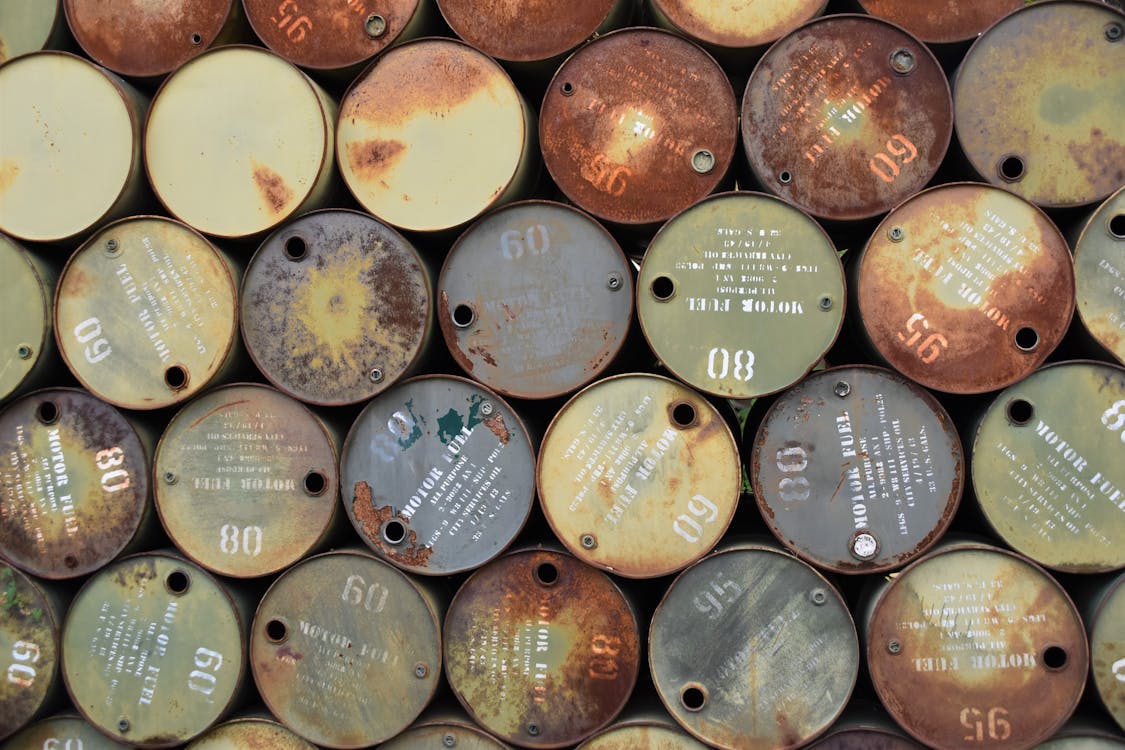
OPEC+ approved another production increase on Sunday, adding 188,000 barrels per day for July. It was the fourth consecutive monthly hike since the Strait of Hormuz closed in late February, and it changes almost nothing, because the closure keeps the group's largest producer pumping roughly 3 million barrels per day below the quota it already holds. The barrels exist on paper. They cannot leave through a strait that is shut.
Oil rose regardless. Brent crude traded in the mid-$90s on Monday, somewhere near $94 to $97 depending on the source, up roughly 1% to 4% on the day. WTI held in the low-to-mid $90s. The OPEC+ decision did nothing to cap prices, because the supply it authorizes is theoretical while escalation in the Gulf and the closed strait are real.
The meeting's significance is not the number. It is the contradiction the number exposes.
A Quota Increase That Cannot Be Filled
Seven OPEC+ members met by video on Sunday: Saudi Arabia, Russia, Iraq, Kuwait, Kazakhstan, Algeria, and Oman. They agreed to raise the July quota by 188,000 barrels per day, the same increment as June, with Saudi Arabia and Russia each taking 62,000 barrels of it. The group's language was the usual: the increase supports "oil market stability," members retain "full flexibility to increase, pause or reverse" the unwinding of their voluntary cuts, and the compensation schedule for past overproduction runs to the end of 2026. The next meeting is July 5.
None of it matters in the near term. Saudi Arabia's actual output has fallen roughly 30% to around 7.25 million barrels per day because the Hormuz closure prevents it from exporting more, against a quota above 10 million. That is an involuntary cut of roughly 3 million barrels per day imposed by geography. Adding 188,000 barrels of paper quota on top of a 3 million barrel real-world shortfall is an accounting exercise, not a supply decision.
Jorge Leon of Rystad Energy put the contradiction directly: "An OPEC+ production increase means very little while the Strait of Hormuz remains closed. When the Strait of Hormuz reopens, the market could move very quickly from fear of shortage to fear of surplus."
That sentence is the whole story. OPEC+ is building a latent surplus, unwinding cuts on paper that it physically cannot deliver, and the moment the strait reopens, all of that suppressed supply becomes available at once into a market that has spent months pricing scarcity. The same decision that is meaningless today becomes sharply bearish the day Hormuz clears.
Why Prices Rose Anyway
If OPEC+ raised output, the intuitive expectation is lower prices. Prices rose because the quota increase is irrelevant to actual barrels and because the things that do move barrels all pointed up.
The strait is still closed. Cumulative Gulf supply losses now exceed roughly a billion barrels since late February, and global inventories are drawing at a fast pace. The Kuwait airport strike, the Bahrain claims, and the drone strike on Oman's Mina al-Fahal terminal last week are all fresh reminders that the conflict is widening rather than resolving. Weak Chinese import data was the one bearish counterweight, and it was not enough to offset the supply picture.
The wide spread in price quotes, Brent anywhere from $94 to $97 depending on which wire you read, is itself the story. The market has no settled level. It has spent two weeks reversing direction almost daily on competing headlines, and Monday was another session of that.
The Deal Is Still Unsigned, and Trump Is Already Complaining
The 60-day ceasefire framework remains unsigned by both Trump and Supreme Leader Mojtaba Khamenei. Iran's Tasnim agency said the text is "not yet finalised or confirmed." Vice President Vance had earlier hedged that "it's hard to say exactly when or if the president's going to sign."
Trump spent Monday sending mixed signals, which has become the pattern. He posted that the parties "are looking to do an immediate CEASEFIRE" and that "final negotiations on peace are proceeding, subject to ignorance or stupidity getting in its way." In the same breath he criticized Iran's conduct in the strait, saying Tehran was doing a "very poor job" handling Hormuz shipping and that it was "not the agreement we have." He confirmed the US naval blockade of Iranian ports stays in place until a deal is signed.
That combination, teasing an imminent ceasefire while publicly attacking Iran's compliance before anything is signed, is brinkmanship, not breakdown and not breakthrough. The framework still requires Iran to clear all mines from the strait within 30 days of signing, and Trump's "very poor job" comment suggests mine-clearing and compliance are already points of friction. The deal that would reopen Hormuz, and trigger exactly the surplus Rystad is warning about, is close enough to argue over the details and far enough that neither side has signed.
The Two Clocks the Market Is Watching
There are two countdowns running, and they point in opposite directions for prices.
The escalation clock is bullish. Every week without a deal is another week of a closed strait, drawing inventories, and a widening Gulf conflict that has now hit a civilian airport and an export terminal outside Hormuz. As long as this clock runs, the supply deficit deepens and prices stay supported in the mid-$90s or higher.
The reopening clock is bearish, and OPEC+ just wound it tighter. The moment a deal is signed and mine-clearing begins, the market starts pricing the return of not just normal Gulf exports but the entire paper surplus OPEC+ has been accumulating through four straight quota hikes. Leon's "fear of shortage to fear of surplus" flip would be fast and large.
Sunday's decision matters because it widened the gap between those two outcomes. The longer the strait stays closed, the more suppressed supply piles up behind it, and the harder prices fall when it finally clears. OPEC+ raised output into a war. The barrels are waiting for the peace.
This article is for informational purposes only and does not constitute financial or investment advice. Oil market conditions can change rapidly. Consult a qualified financial professional before making investment decisions.