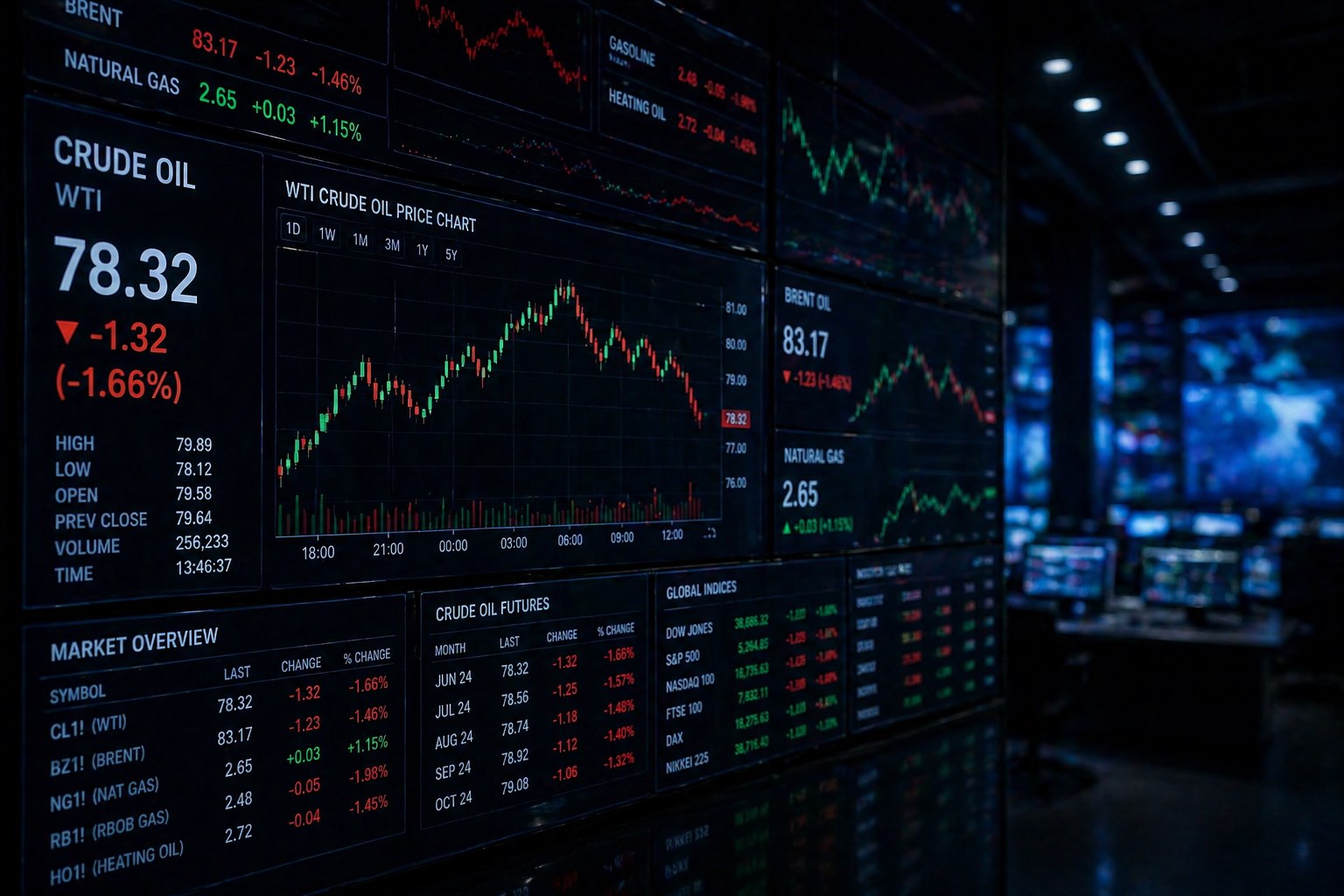
US crude inventories drew down 3 million barrels last week, the Energy Information Administration reported Wednesday, well short of the roughly 8 million barrel draw the market expected. A smaller draw than forecast is a bearish signal: it means less tightening than priced. Oil should have fallen. Instead it rose. WTI crude climbed about 1.8% to around $90, and Brent gained to around $93, bouncing off Tuesday's seven-week low.
The divergence is the story. The day before, oil dropped 4% as the market sold the prospect of Hormuz reopening, after US Energy Secretary Chris Wright said strait traffic was "rising very meaningfully." On Wednesday, a bearish inventory print landed on top of that bearish setup, and prices went up anyway. The market spent one session pricing the reopening and the next session remembering the strait is still closed.
A Bearish Number That Did Not Matter
The 3 million barrel crude draw was less than half the consensus. On a normal day, that miss pushes prices down. The previous week's report had shown an 8 million barrel draw, so the slowing draw pace fits the narrative that supply tightness is easing as reopening expectations build.
It did not move the market in that direction, because the physical reality reasserted itself. The Strait of Hormuz is still running at roughly 5% of its pre-war traffic. Wright's "rising very meaningfully" is the official US line, but it is not yet verified by independent tanker tracking, and Kpler analyst Matthew Wright called the reported reopenings "a false dawn." Producers cut Middle East output by roughly 11 million barrels per day in May against pre-conflict levels. A strait at 5% of normal does not become a strait at 100% of normal because a US official says traffic is improving and an inventory draw came in light.
So the inventory miss was real but secondary. The market is not trading week-to-week stock changes right now. It is trading the binary question of whether Hormuz reopens, and on Wednesday the answer still looked like no.
The Tightness Is Showing Up Elsewhere
Two data points on Wednesday reinforced that the strait is still physically choked, regardless of the official traffic claim.
Kazakhstan's oil buyers are demanding more supply as the Hormuz closure tightens the market, a sign that the disruption is forcing buyers to scramble for barrels through non-Gulf channels. And China has begun tapping its own strategic stockpiles as the crisis drags on. That second point is important. China's May crude imports fell 29% to an eight-year low, which looked bearish for demand. But if China is covering its needs by drawing down reserves rather than importing, the low import number is not soft demand. It is demand being met from storage, which has to be refilled later. That converts a bearish headline into a delayed-restocking signal.
Both data points say the same thing: the strait is still closed enough to force buyers into workarounds. That is what put the bid back under prices even as the inventory number disappointed.
The Truce Held, but Lebanon Is the Fuse
The geopolitical backdrop was quiet in the last 24 hours, which is itself fragile. The Iran-Israel halt from Monday held overnight. There was no new strike, no Hormuz incident, and no follow-on from Tuesday's US Army Apache crash off Oman, which appears to have been a one-off.
But the truce is conditional, and the condition is Lebanon. Iran insists that any ceasefire fold in Hezbollah, and Hezbollah rejected the June 3 Lebanon-Israel renewal deal, demanding a full Israeli withdrawal. The exchange that preceded Monday's halt, Israel striking Beirut's southern suburbs on June 7 and Iran firing ballistic missiles at Israel on June 7 and 8, was triggered by exactly this Lebanon linkage. As long as the Lebanon track is unresolved, the Iran-Israel calm is one strike away from breaking, and the risk premium that lifted prices on Wednesday reflects that.
The 60-day MOU remains unsigned by both Trump and Supreme Leader Mojtaba Khamenei. Trump's repeated "two or three days away" has slipped again with no announcement. The reported signing logistics are themselves a tell: Mojtaba Khamenei is said to be approving documents by secret courier while in hiding as a designated target, which is not the posture of a deal about to be signed in a ceremony.
Mid-June Is the Date Aramco Flagged
There is a near-term marker worth watching. Saudi Aramco's chief executive recently warned that the oil market would not normalize until 2027 if Hormuz stays blocked past mid-June. Mid-June is now days away. If the strait is still effectively closed at that mark, with no signed deal and no verified traffic recovery, the Aramco framing becomes the base case: a multi-quarter disruption rather than a weeks-away resolution. That would pull the market's pricing horizon out, deepen the structural deficit, and undercut the reopening trade that drove Tuesday's selloff.
The two clocks from earlier this week are still running. The escalation clock says the strait stays closed, the deficit deepens, and prices stay supported. The reopening clock says a signature and verified mine-clearing flood the market with the surplus OPEC+ has been building. Wednesday belonged to the first clock. The inventory miss could not change that, because inventories are not the question. The strait is.
What to Watch
The signature remains the dominant variable. A signed MOU and confirmed mine-clearing would revive Tuesday's surplus trade and push prices back toward the lows. Continued stalling keeps the deficit in place and prices supported in the low-$90s.
The mid-June Aramco marker is the near-term test. If it passes with the strait still closed, the market starts pricing a 2027 normalization rather than a June one.
And the Lebanon track is the wildcard. The Iran-Israel truce is holding on a condition that has not been met. A single strike in Beirut or a single Iranian response could reverse Wednesday's bounce and the entire de-escalation narrative behind it.
A bearish inventory number could not push oil down on Wednesday. That tells you what the market is actually trading, and it is not barrels in tanks. It is a strait that is still closed.
This article is for informational purposes only and does not constitute financial or investment advice. Oil market conditions can change rapidly. Consult a qualified financial professional before making investment decisions.