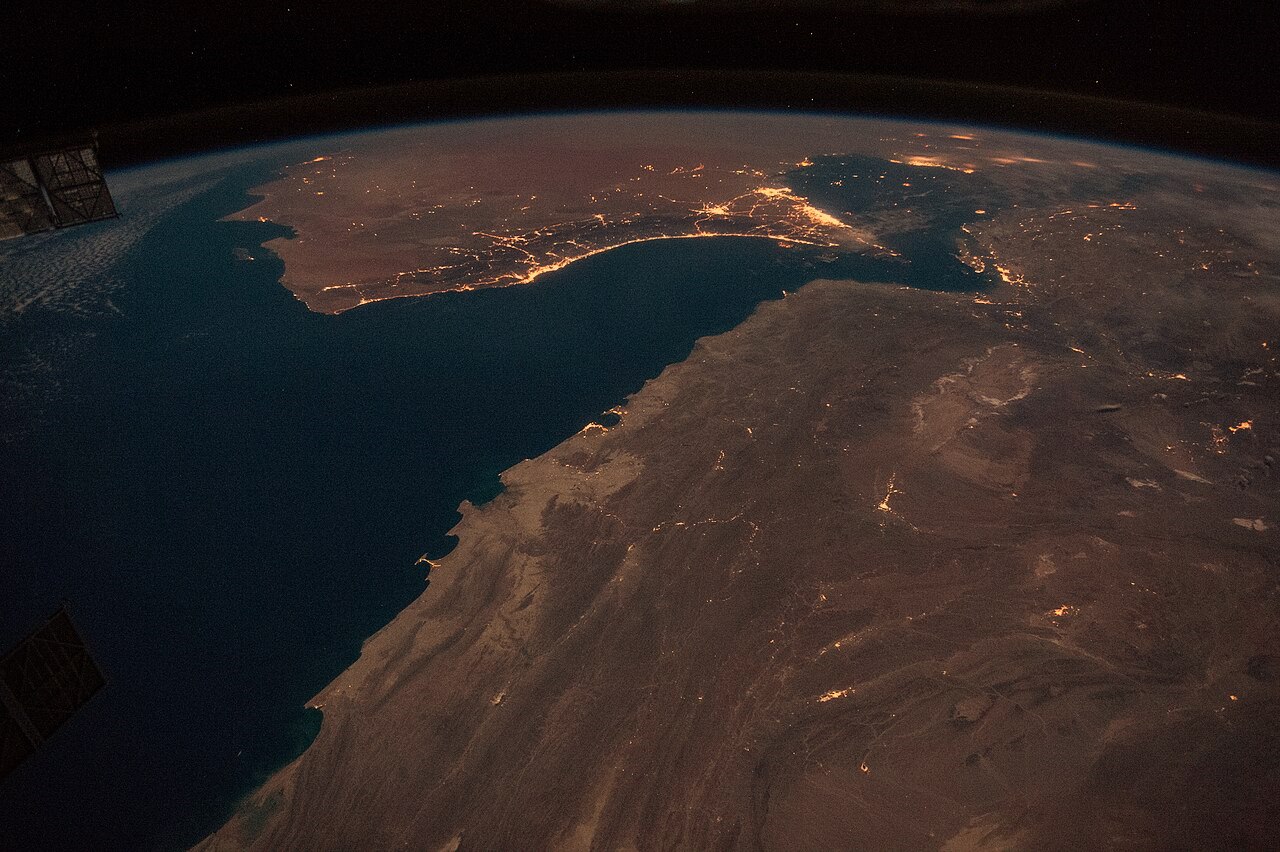
Iran said on Wednesday that it has agreed with Oman on the geographic coordinates of a shipping route through the Strait of Hormuz. It is the first concrete, named deliverable in two months of negotiation.
In the same briefing, Iran's foreign ministry said the strait stays closed anyway.
Brent crude traded near $78.75 a barrel in early Wednesday afternoon, down about 0.8% from Tuesday's settle of $79.36, with WTI near $74.55, down about 1.6% from $75.77. Brent ran as high as $80.94 in the morning on two attacks in the Red Sea, then gave the whole move back and more, trading as low as $78.12.
What Was Actually Agreed
Foreign ministry spokesman Esmail Baghaei told his regular briefing that Tehran and Muscat have settled the coordinates, and that a joint statement covering "the principal considerations and points of agreement" is in final review and drafting. He said the talks have run two months across technical, legal, security and environmental questions, and described them as professional and progressing.
He attached two conditions to his own announcement.
The first was a caveat about interference: the statement advances "provided that certain third parties do not obstruct the process."
The second matters more. Baghaei said an Iran-Oman agreement on its own cannot guarantee safe passage while the American naval blockade and what he called other aggressive and threatening actions remain in place.
So the deliverable and the disclaimer arrived together. Iranian state broadcaster IRIB went further, citing an informed source to say that even with an Oman agreement the strait remains closed until the United States changes its behavior, and that the talks have nothing to do with Washington.
An agreed set of coordinates is a map. It is not an opening.
Iran's Deputy Foreign Minister Said There Are No Negotiations
Trump said on Monday that Hormuz should be fully open by Tuesday. Treasury Secretary Scott Bessent said on Tuesday morning that a deal might land that day or the next, a remark that took more than 5% off the price within hours. Both windows have now closed with no meeting, no text and no reopening.
On Wednesday, Iranian deputy foreign minister Kazem Gharibabadi told Iranian state television that the American claim of ongoing negotiations "is false" and that "there have been no negotiations." He acknowledged that Tehran has received US messages expressing readiness to return to previous commitments, but said Iran has not decided whether to enter a second phase.
That is a state television interview relayed by CNN rather than a wire report, so treat it as Iran's public position rather than an independently established fact. It is consistent with everything Tehran has said since June.
Set that against what the administration said the same day. Trump told Fox News that the strait "is going to be open very soon or they are going to get hit very hard." Secretary of State Marco Rubio described progress but "not finality yet."
Trump also said the US would know within 48 hours. He said that on Tuesday, and he said it again on Wednesday. A 48-hour clock restated a day later is not a countdown.
One detail has gone almost unreported and changes how all of these markers should be read. On Monday, the same day he said Hormuz should be open by Tuesday, Trump also said Iran does not have a deadline. Nothing slipped this week. There was never anything binding to slip.
The Faction That Has to Approve This Is Not in the Room
The sharpest piece of reporting published on Wednesday came from a senior Gulf official familiar with the talks, speaking to CNN. Two things, both on the record as an official's assessment:
The chance of Iran and Oman reaching a deal by Friday is roughly even.
And the Iranian delegation does not include the Revolutionary Guard Corps, which would have to sign off on any provisional agreement.
That is the mechanism by which this fails, described by a regional official before it happens. The negotiating team does not contain the faction holding the veto.
Two other approvals are outstanding. Axios reported Wednesday, citing two regional sources and a US official, that foreign minister Abbas Araghchi agreed to the framework in principle over the weekend but needs sign-off from Supreme Leader Mojtaba Khamenei and the Supreme National Security Council. Khamenei has made no public appearance since the confrontation began.
Inside Iran the politics are moving the other way. A hardline lawmaker said on Tuesday that members of parliament are assembling documentation to impeach Araghchi for failing to extract maximalist American concessions, and indicated on Wednesday that President Masoud Pezeshkian could face the same. Hardliners have accused Pezeshkian, Araghchi and parliament speaker Mohammad Bagher Ghalibaf of a soft coup conducted during Khamenei's absence from public view. These reports come from Iranian outlets rather than wires, and impeachment threats in Tehran frequently go nowhere, but the direction is clear enough.
Three Descriptions of the Same Document, and They Do Not Match
No text has been published. What exists is three leaked descriptions, and they are not compatible.
The Axios account, sourced to a US official and regional sources, describes a 60-day extendable arrangement: inbound traffic through a northern lane in Iranian territorial waters, outbound through a southern lane in Omani waters in coordination with Iran, no tolls or fees during the temporary period, and naval mine clearance from the median lane within 30 days.
A senior Middle East diplomat with direct knowledge told MS NOW on Tuesday something different: that Washington and European governments are pressuring Oman heavily to accept terms giving Iran temporary control over both inbound and outbound routes.
Iranian state television described a third version, a middle corridor jointly controlled by Iran and Oman that would replace the existing northern and southern lanes, with service fees for navigation, pilotage, environmental protection and security, and revenue split between the two countries.
The first says no fees and no Iranian permission. The third says fees, split two ways, on a corridor Iran co-controls. Those are different arrangements.
A Pakistani official told The National that Pakistan is the primary channel passing messages, with Qatar and Oman assisting, and that the document is an updated memorandum revising the June 17 agreement. His summary of the state of play: "There are lots of arguments about details." He added that Gulf states would prefer everything spelled out explicitly. An Iranian source told the same outlet that as long as American threats of military attack continue, the agreement will be delayed, because Tehran will not sign under the shadow of threats.
The money appears to be where it is stuck. One account of the negotiation has Tehran seeking 5% to 7% of cargo value, Oman proposing 3%, and Washington rejecting any Iranian toll at all. We found those figures in one place rather than several, so treat them as indicative. They do fit the shape of the disagreement: the American description of this deal contains no fees, and the Iranian description contains fees.
The unresolved question is the same one that has been unresolved since June: who grants permission to transit, through whose waters, and who is paid for it.
A Ship Sank in the Red Sea and Brent Still Fell
Two maritime attacks were reported Wednesday. Neither was in Hormuz. Both were in the Red Sea, the corridor Saudi Arabia has been using to route around the strait.
The UK Maritime Trade Operations reported that a vessel was attacked by an uncrewed surface vessel about 9 nautical miles off Al Mukha, Yemen, caught fire, and has been reported as sunk. The crew were rescued by local authorities and are safe. Indian authorities identified a vessel matching the description as the India-flagged MSV Faize Noore Oliya, struck by a projectile and capsized, with all 14 seafarers rescued.
The details do not fully line up. Windward assessed it as a bomb-boat attack; the Houthi-run news agency claimed ballistic missiles; Yemen's transportation ministry blamed the Houthis using an explosive-laden boat. Reported positions differ by more than a hundred nautical miles. These may be two events rather than one.
Separately, Houthi military spokesman Yahya Saree said Wednesday morning that ballistic missiles struck the Saudi-flagged tanker Wafa off Yanbu in the northern Red Sea, which he called the eighth Saudi tanker targeted with 29 more turned back. Lloyd's List could not independently verify that the vessel was struck at all, and there has been no confirmation of damage from the operator or Saudi authorities. It is a claim, not a confirmed strike.
No new attack was reported in or near Hormuz itself on Tuesday or Wednesday, breaking a near-daily run. But Monday night's casualty has not been resolved. The Minoan Pioneer, the Liberia-flagged bulk carrier hit about 20 nautical miles northeast of Khasab, was still abandoned and still smoking two days later. Its third engineer remains unaccounted for. Nobody has claimed the attack, and the Iranian attribution circulating on open-source accounts is speculation.
Here is why the Red Sea matters for the price rather than only for the crews. Saudi Arabia now ships roughly three quarters of its exports from Red Sea terminals precisely because Hormuz is shut. Its Red Sea shipment suspension remains in force, and the maritime coalition it proposed on July 30 has attracted no announced members. The second chokepoint is not inside the document being drafted. No reporting places the Houthi file in the Iran-Oman text at all.
Brent opened higher on that news and spent the rest of the day giving it back. Two attacks, one confirmed sinking and a claimed strike on a Saudi tanker bought a $1.58 rally that lasted a few hours.
Rebecca Babin, senior energy trader at CIBC Private Wealth Group, put it precisely on Tuesday: this is a market that consistently reprices risk on the prospect of flows resuming rather than the details required to achieve them.
Priyanka Sachdeva at Phillip Nova made the narrower version of the point on Wednesday, saying the geopolitical premium has unwound while the underlying supply picture still warrants caution.
The Waterway Is Open in the Legal Sense Only
Central Command posted on Wednesday that the southern route "remains free and open for all commercial vessels seeking to transit the international waterway," and that US forces have assisted more than a thousand vessels in transiting over the past three months.
Its own enforcement numbers point the other way. The count of commercial vessels redirected under the blockade was revised up to 45 on August 4, from 44 the day before and 30 in an earlier accounting, alongside two disabled and two boarded.
Traffic remains in single digits. We are not going to give you a precise number, and the reason is instructive: three outlets published Tuesday's transit count this week, all three credited it to the same tracking firm, and all three printed something different. One said five vessels, three inbound and two outbound. Two said eight, and disagreed with each other about the composition. Published pre-crisis baselines are just as split, running from 73 a day to above 130 depending on whether the series counts all vessels or only cargo carriers.
Fewer than ten a day against a norm of roughly seventy-plus is the honest version. That is barely a tenth of normal, and it is the same conclusion whichever pair of numbers you pick.
War-risk cover for a transit is unchanged at 7.5% to 10% of hull value, where it has sat since late July, and 208 vessels are holding position away from berth.
That combination is the clearest reading available of what the market believes. Brent has fallen more than 12% this week. War-risk premiums have not moved at all. Underwriters are not pricing a deal. Traders are.
One more Iranian number is worth more than any satellite count. Iran's own state oil company set its August official selling price for light crude to Asia at $4.35 below the Oman and Dubai average, against $7.15 above in July. That is an $11.50 cut, made in a month when Brent rose nearly 24%. It is not what a seller does when it expects access to its buyers to be restored.
The Two Inventory Reports Agreed This Week
Last week the American Petroleum Institute and the Energy Information Administration diverged by 10.5 million barrels, in opposite directions, on the same reporting week. This week they landed 0.2 million apart.
The API estimated a build of 2.69 million barrels on Tuesday evening. The EIA reported a build of about 2.5 million on Wednesday morning for the week ended July 31, taking commercial crude stocks to 407 million barrels, still roughly 6% below the five-year average. Consensus had been for a draw of 1.5 million, so the direction was the surprise rather than the size. Macquarie was the exception and called it almost exactly.
The two series still disagree on gasoline, where the API showed a small build and the EIA a draw of 1.6 million barrels, leaving stocks at an eight and a half month low. Distillates fell 3.5 million. Cushing rose 2.4 million to 21 million. Refinery utilization slipped to 96.5%.
The Strategic Petroleum Reserve fell 2.8 million barrels to 304.8 million, down 98 million barrels, or 24%, from a year ago.
This is the cleanest explanation for why WTI is falling twice as fast as Brent today. A US-specific inventory build is landing on top of a global unwind in war premium, and WTI carries both.
What to Watch
Saudi Aramco's September official selling prices had not been published as of Wednesday afternoon and are due imminently. August's were cut to $1.50 below the Oman and Dubai average, an $11 reduction that was the largest single-month move in Reuters records going back to 2003.
A specific warning about that search, because we have been caught by this class of error before and now keep a reference page on it. Articles reporting that Saudi Arabia raised its September Arab Light price to $3.20 over Oman and Dubai are circulating and read exactly like current news. They are from August 2025. One of the URLs carries the date in its own slug. The 2026 September price has not been announced.
The same applies to reports that QatarEnergy is extending its LNG force majeure through mid-October. That is a Bloomberg report from July 22 and is not new.
The worst example we hit today was not stale at all, which is what makes it dangerous. A major business title published an oil price page stamped with Wednesday's date, in a URL containing Wednesday's date, quoting Brent at $83.72. That was Monday's settle. A correct date on the page is not evidence of a current number on the page.
Beyond that, the test is simple and falls within days. A senior Gulf official put the odds of an Iran-Oman deal by Friday at roughly even. If it lands, the question immediately becomes whether the Revolutionary Guard, which was not at the table, accepts it, and whether the United States lifts a blockade that Tehran says must go first.
Brent is priced for the map. The map is not the strait.
This article is for informational purposes only and does not constitute financial or investment advice. Oil market conditions can change rapidly. Consult a qualified financial professional before making investment decisions.