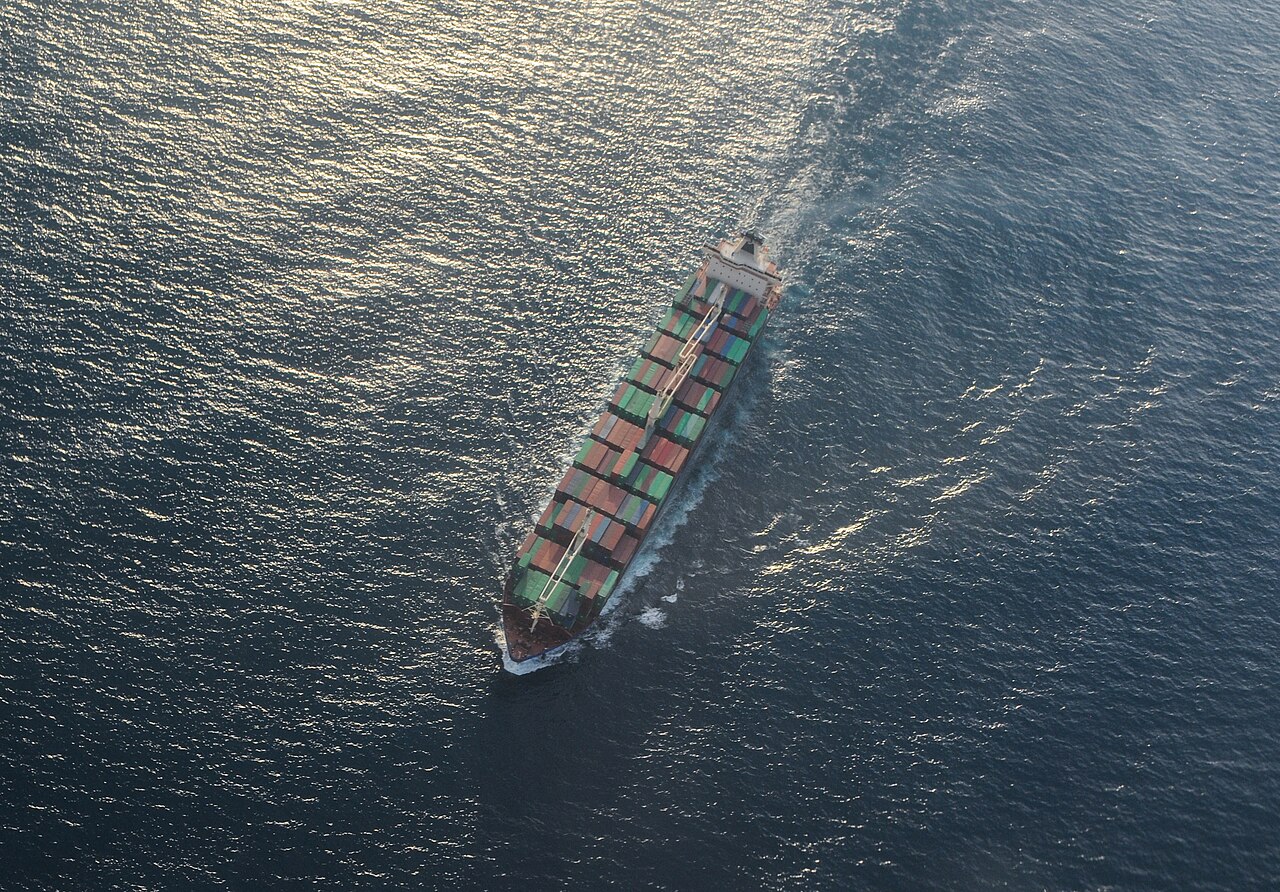
The oil price has risen about 6% this week. The freight market has done something closer to a repricing of what the Strait of Hormuz is worth.
Earnings on the TD3C route, the benchmark very large crude carrier run from the Middle East Gulf to China, are above $520,000 a day, according to Lloyd's List Intelligence. A VLCC on that route in a normal year earns somewhere in the tens of thousands.
Brent traded near $94.11, up about 0.35%, having ranged between $92.76 and $94.42. WTI was near $86.76, effectively flat after a $85.81 to $87.50 range. Both are at roughly one-month highs and Brent is heading for a second consecutive weekly gain of about 6%.
What Half a Million Dollars a Day Actually Means
A VLCC carries about 2 million barrels. At $520,000 a day, a voyage of a few weeks adds several dollars a barrel to the delivered cost of that cargo before anyone has argued about the crude price itself.
That is the part of this crisis that does not show up in a Brent quote. The benchmark tells you what a barrel costs at a loading point. The freight rate tells you what it costs to get it somewhere, and right now the second number is doing more work than the first.
It also tells you what shipowners believe. Freight rates are set by people deciding whether to send a specific hull into a specific waterway next week. They have marked that risk up by more than an order of magnitude, which is a harder signal than any government statement about whether the strait is open.
Abu Dhabi National Oil Company is among the operators securing vessel capacity and running ship-to-ship transfers outside the strait, moving cargo between vessels beyond the chokepoint rather than sailing loaded hulls through it. That is expensive, slow, and preferable to the alternative.
Bessent Changed What the Sanctions Are For
Treasury Secretary Scott Bessent told CNBC on Thursday what the campaign is now meant to achieve, and it is not a negotiating position.
"It is a one-two punch," he said. "We have the blockade, and we are going to have the toughest sanctions in history. It is going to work in Iran, and we are going to collapse this regime."
On third countries he was equally direct. "We're going to them and saying: You're either with us or against us. If you insist on doing business with them, either transferring money, buying oil, doing seaborne ship transport, then the US Treasury and the US government, they will put its full might and force towards enforcing against you." He added that "it is time for our allies and the rest of the world to make a decision."
Asked whether China would face penalties, he declined to answer, saying some conversations are better held in private.
Two things are worth separating here. The first is the stated objective. Sanctions aimed at changing a government's behaviour and sanctions aimed at collapsing it are different instruments, and the second gives the target very little reason to negotiate over the first. Iran's public position for three weeks has been that the strait reopens only when the blockade lifts. A stated goal of regime collapse does not make that easier to trade against.
The second is the timing. Bessent promised on 14 August that measures would come "next week." That week ends today. What arrived instead was an interview and a commitment to a media conference on Monday, where he says he will set out "exactly what we're going to do." The announcement has now slipped once. Whether it reaches the Chinese banks, insurers and refiners that actually move Iranian barrels is still the only question that matters, and he specifically declined to say.
A Note on Our Own Transit Numbers
We have described crossings as running "in single digits" several times over the past week. Better data is now available and it is worth being precise.
Lloyd's List Intelligence counted 73 transits through the strait in the week of 10 to 16 August, down from 91 the week before. Stripping out Iranian-linked traffic, the figure was 43 for 10 to 16 August, against 60 the previous week and 68 the week before that. Both sets are preliminary and Lloyd's expects revisions as more voyages are identified.
So the honest version is this. Total transits are running around ten a day. Non-Iranian commercial traffic is running around six a day, which is where the single-digit description holds. Against a pre-war norm above 130 a day, both numbers describe a waterway that has lost roughly 90% or more of its traffic, and the trend across three weeks is still downward.
The daily figures we have quoted from Kpler, five commodity vessels on Saturday 15 August and none on the Sunday, are consistent with this. Weekends are thinner. A weekly series from a maritime intelligence provider is simply a better instrument than a two-day snapshot, and we should have reached for one sooner.
An Iranian Seizure Claim That Has Not Been Confirmed
Iran's semi-official Fars news agency reported the seizure of an Emirati-affiliated tanker near Qeshm Island. Lloyd's List Intelligence carries the report and states plainly that it remains unconfirmed.
We are repeating it the same way, because in the last day it has already begun circulating as an established fact, with one summary describing the vessel as "assessed as seized rather than merely boarded" and holding position in Iranian waters. No vessel name, flag or cargo has been published, and the original source is the state media of one party to the conflict.
If it is confirmed it matters a great deal, because a seizure is a different act from an attack: it puts a crew in custody and gives a government a hostage rather than a casualty. Until then it is a claim, and this is the fifth time in nine days we have had to date-stamp or attribute something that reached us dressed as fact. That discipline is the whole of our reference page on oil data traps.
The Other Supply Story
While the market watches one chokepoint, a second source of barrels is degrading quietly.
Russian refinery runs fell in July to about 3.6 million barrels a day, the lowest since May 2002, after Ukrainian drone strikes hit refineries, tankers, ports and pipeline infrastructure more than thirty times in the month. Crude shipments have now fallen for five consecutive weeks, and at Novorossiysk on the Black Sea there was a stretch with no crude loaded at all.
This is not a Hormuz story and it is not priced as one. But an oil market absorbing a Gulf chokepoint closure has less tolerance for a simultaneous decline in Russian exports than it would in a quiet year, and the two are additive.
What to Watch
Bessent's Monday press conference. He has now attached his own name and a date to it twice. What matters is not the language but whether the measures name non-Iranian institutions, particularly Chinese ones.
Whether TD3C rates hold above half a million dollars a day. Freight is the fastest-moving honest signal in this crisis, and it will turn before any official statement does.
Whether the Qeshm Island seizure is confirmed, and by whom.
Baker Hughes publishes the US rig count at 1pm Eastern, after this goes up. Last week was 593 total with oil at 455, the highest since March 2025.
This article is for informational purposes only and does not constitute financial or investment advice. Oil market conditions can change rapidly. Consult a qualified financial professional before making investment decisions.