Iran did not just hit Saudi oil production last week. It hit the pipeline Saudi Arabia was using to route crude around the Strait of Hormuz.
That distinction matters. It explains why WTI is holding near $99 today, four days after a ceasefire was supposed to calm the market.
What the Attacks Hit
Saudi authorities confirmed that a series of strikes targeted facilities in Riyadh, the Eastern Province, and Yanbu Industrial City. The damage spans every stage of the supply chain.
On the production side, the Manifa oilfield lost roughly 300,000 barrels per day of capacity. The Khurais facility lost another 300,000 bpd. Total production capacity is down at least 600,000 bpd, according to Bloomberg, citing Saudi authorities. Refineries including Ras Tanura, SATORP in Jubail, SAMREF in Yanbu, and the Riyadh refinery were also struck.
The pipeline hit is the more strategically significant blow. The East-West crude pipeline runs more than 1,000 kilometers across the Arabian Peninsula, from the Eastern Province oil fields to the Red Sea port at Yanbu. By late March, Saudi Arabia had pushed the pipeline to its full 7-million-barrel-per-day capacity as the Hormuz closure forced a wholesale rerouting of exports. Yanbu port was handling four times its normal monthly tanker volume.
The attacks cut East-West pipeline throughput by approximately 700,000 bpd.
Why This Changes the Ceasefire Math
When the ceasefire was announced April 8, the market priced in an eventual Hormuz reopening. WTI fell 18% in a single session, the largest one-day drop since 1991.
But the Saudi infrastructure damage complicates that recovery in two ways.
First, it reduces the production available to flow through either route. Some of the crude that would move through a reopened Hormuz no longer exists yet. JPMorgan said the damage represents a "measurable supply shock," equivalent to roughly 10% of Saudi Arabia's pre-conflict crude exports.
Second, it weakens Saudi Arabia's ability to buffer further disruptions. Officials indicated that repeated attacks have already drawn down a significant portion of the kingdom's operational and emergency reserves. The cushion that gave markets confidence in previous crises is thinner now.
Market Reaction
WTI traded near $99 Friday morning, up about $4 from Thursday. Brent was around $97. Both benchmarks are still down roughly 12% on the week, reflecting the ceasefire's initial impact. But they are not falling further, and the Saudi damage is a large part of why.
Talks between U.S. and Iranian delegations are scheduled for this weekend in Islamabad, brokered by Pakistan. Vice President JD Vance is leading the American side. Even if those talks produce a formal agreement, the physical repair timeline for Saudi facilities is a separate clock. Oilfield damage of this scale is measured in weeks to months, not days.
The ceasefire ended the war premium. The infrastructure damage created a new floor.
This article is for informational purposes only and does not constitute financial or investment advice. Oil market conditions can change rapidly. Consult a qualified financial professional before making investment decisions.
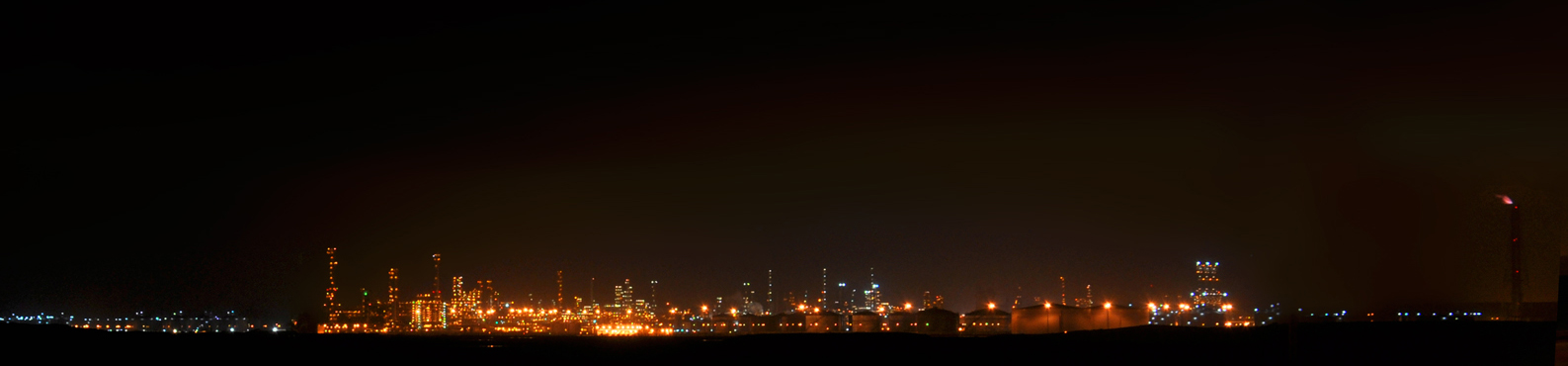
Cover photo: SATORP refinery complex, Jubail, Saudi Arabia. Pillai.mech / Wikimedia Commons, CC BY-SA 3.0.
