The signing came two days early and 300 miles from where it was supposed to happen. On Wednesday, on the margins of the G7 and over a dinner at the Palace of Versailles, Trump and Iranian President Masoud Pezeshkian signed the framework agreement electronically. The Friday ceremony in Geneva, the event this market had been waiting on for a week, is cancelled. "It's signed," Trump told reporters. "I signed it in Versailles. Just signed it."
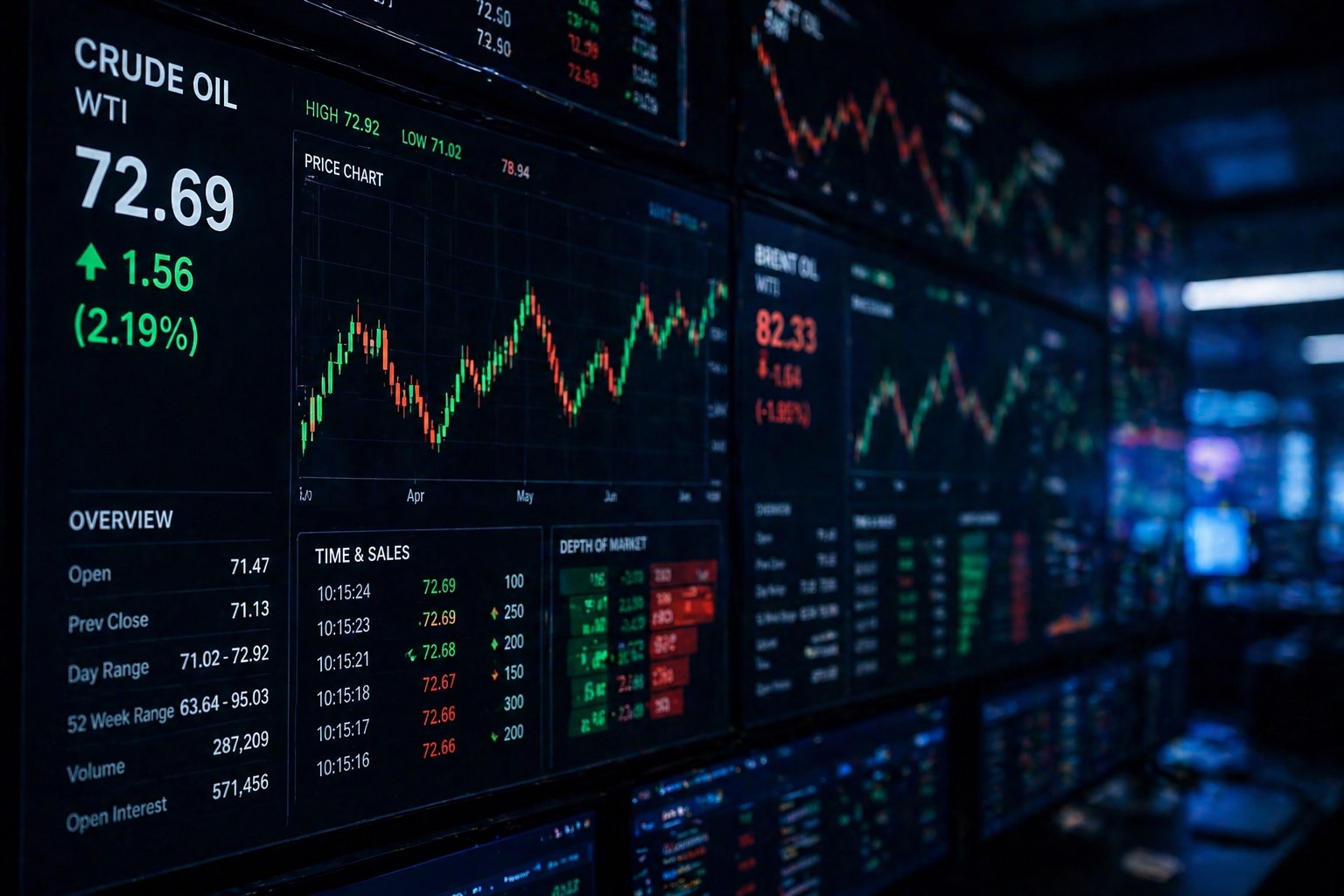
Oil did what it does when the last piece of a feared event resolves. It broke its floor. WTI fell below $75, Brent below $78, both to their lowest levels since early March, when the strait first closed. The high-$70s level that held for two sessions did not survive the signature. Crude is now down roughly 38% from its April war peak, and the single largest catalyst of the entire four-month crisis has fired.
What it has not done is reopen the Strait of Hormuz.
Signed Is Not the Same as Open
This is the distinction that now defines the market. The framework is signed. The waterway is not open. No commercial vessel has exited the strait in the past five days. Roughly 550 ships remain stranded on either side of the blockade line that Iran imposed on February 28. The mines have not been cleared.
Under the agreement, mine removal is supposed to finish within 30 days. Clearance specialists put the realistic timeline closer to 50, and that is before normal traffic volumes resume through lanes that are currently restricted to narrow mine-free coastal corridors. French and German de-mining vessels are mobilizing. Full pre-war crude export volumes are four to six months away. A signature on a document in Versailles does not move a single trapped tanker.
That gap is why the floor, when it broke, broke in an orderly way rather than a panic. The market is selling the certainty of eventual reopening, not the arrival of actual barrels. The barrels are still stuck.
What Was Actually Signed
The word doing a lot of work this week is "framework." What Trump signed is an interim memorandum of understanding, not a final treaty. It takes immediate effect and it opens a 60-day window to negotiate the hard questions: the nuclear program, the sequencing of sanctions relief, the permanent status of the strait. The full text remains classified and is not due to be published until June 19, the day the Geneva ceremony was meant to take place.
That matters because the disputes this column has tracked for two weeks are not resolved in the signed document. They are deferred into the 60-day window, and on at least one of them the public characterizations now contradict each other outright.
On the strait tolls, Trump has insisted the waterway reopens free of Iranian fees. Reporting on the signed text describes Iran establishing a new management regime with Oman and charging for services. Those two statements cannot both be true, and the classified text is where the answer sits. On the roughly $24 to $25 billion in frozen Iranian assets, the language has softened from a transfer to a "mechanism" for access, with Iran treating release as a precondition it is still pressing. On uranium, Iran's position prevailed on paper: the enriched material stays inside Iran and is diluted under IAEA supervision rather than removed for destruction.
And the approval that was supposed to anchor the whole deal is still missing. Pezeshkian signed for Iran. Supreme Leader Mojtaba Khamenei has still said nothing. US officials describe his position as "tacit approval." Every public account of his blessing traces back to Trump or to Pakistan's prime minister praising him, not to a word from his own office. The signature that closed the deal was the president's. The silence at the top of the Iranian state is the same silence it was a week ago.
Lebanon Is Still the Fuse
The military de-escalation that made the signing possible is holding on the Iran-Israel axis and fraying badly on the Lebanese one. Israeli strikes on southern Lebanon continued through Tuesday, with at least four killed in Nabatieh. Hezbollah answered with rockets near Kfar Tebnit and explosive drones that wounded five Israeli soldiers, one seriously.
Iran says Israel has violated the ceasefire 84 times in two days and has warned of a "harsh response." Foreign Minister Araghchi has named an Israeli withdrawal from Lebanon as a core demand for moving the framework forward. Israel, which is not a party to the agreement, insists the deal "does not bind us" and that its troops stay in Lebanese security zones. A separate Israel-Lebanon ceasefire track has its next meeting June 22.
This is the same fuse that broke the last ceasefire. A signed framework on the US-Iran axis does not defuse it. It sits underneath the deal, and a hard enough escalation could still pull Iran back out of a document it signed only this week.
The Glut Behind the Floor
The EIA reported a crude draw of 8.3 million barrels for the week ending June 12, more than double the expected number. In a normal week that print pushes prices up. This week it did nothing, because the market is no longer trading the current barrel. It is trading the wave of supply that returns when the strait reopens and when the OPEC+ production that was held back during the crisis comes off the sidelines.
The IEA is now flagging the other side of the cycle: a potential glut, with supply growth running well ahead of demand growth into 2027. That is the bearish weight sitting under this market. The war premium is gone. The fundamental story underneath it is one of too much oil, not too little, the moment the physical disruption clears.
For now the two forces hold each other in tension. The signing pulled prices to multi-month lows. The closed strait is the only thing keeping them from falling further. The next real move belongs not to a ceremony but to the first tanker that clears the mines and sails.
This article is for informational purposes only and does not constitute financial or investment advice. Oil market conditions can change rapidly. Consult a qualified financial professional before making investment decisions.