Treasury Secretary Scott Bessent announces the measures he has been promising for ten days at 2pm Eastern. Over the weekend Iran told the countries that might cooperate with them what will happen if they do.
Brent fell about 1.1% to near $93, and WTI about 1.6% to near $85.50, after a two-week rally of more than 5%.
The Threat Is Aimed at the Neighbours, Not at Washington
Mohsen Rezaei, who runs Iran's Supreme National Security Council, gave an interview to state television that aired late on Saturday. "If Trump wants to do something, we will retaliate in a seismic manner," he said.
On Sunday he went further, and the second statement is the one that matters. Any country's support for the new American measures, he wrote, would be treated as an act of war.
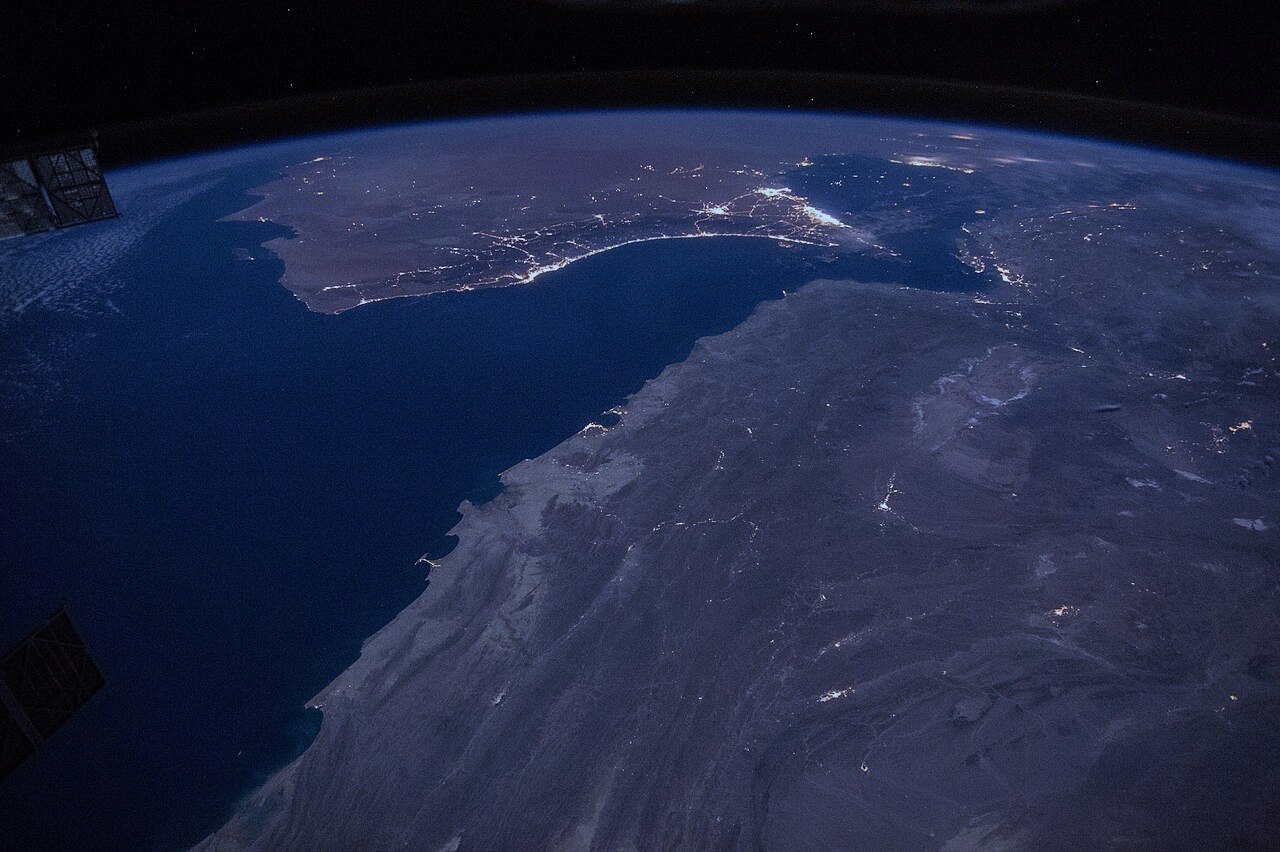
He was specific about who he meant. If countries neighbouring Iran cooperate with the Americans in the economic war, he said, Iran will target their interests. He added that Iran would not allow a single drop of oil to pass through the Persian Gulf, and that it would target the alternative oil-shipping routes out of the Gulf.
Read that last clause slowly, because it is the part with a physical consequence.
He Named the Escape Valves
For seven weeks the entire adaptation to this crisis has run through routes that avoid the Strait of Hormuz. Saudi Arabia loading at Yanbu on the Red Sea. Japanese and South Korean refiners asking for Sidi Kerir on the Egyptian Mediterranean. The Abu Dhabi pipeline to Fujairah. Ship-to-ship transfers outside the strait. A 15-country maritime coalition assembled to protect Bab al-Mandeb.
Every one of those is an alternative oil-shipping route out of the Gulf. Iran's security chief has just said they are targets if their operators back the sanctions.
That is a different proposition from closing Hormuz. Closing one strait forces oil onto other paths. Threatening the other paths at the same time removes the adaptation, and the adaptation is the reason a closed chokepoint has produced $93 Brent rather than $130 Brent.
Whether Iran can execute against Yanbu or Sidi Kerir is a separate question from whether it has now said it would. The Houthis have already hit Jizan and fired on Yanbu, so the capability is not hypothetical at the Red Sea end.
What Bessent Has Said He Will Do
The announcement is set for 2pm Eastern, and the framing has been running for a week and a half.
Bessent told CNBC the measures will be the toughest in history and described the objective as collapsing the Iranian government. He has called it the greatest campaign of coordinated economic isolation in the history of the world, and the mechanism is enforcement against third countries that keep trading with Iran. Trump has promised an economic D-Day and tremendous economic consequences for anyone doing business with Tehran.
The test is narrow and we have written it three times. Does it name non-Iranian institutions, particularly Chinese banks, insurers and refiners? Iran is already under a naval blockade and thousands of existing sanctions. Another list of Iranian entities changes very little. A designation that makes a Chinese bank choose between Iranian oil and the dollar system changes a great deal.
Bessent was asked directly last week whether China would be targeted and declined to answer, saying some conversations are better held in private.
Why the Price Fell on a Day Like This
Two reasons, and neither is new information.
The first is positioning. Crude has run up more than 5% over two weeks. Traders took profit ahead of an announcement whose contents nobody outside Treasury knows. A sanctions package can be read as pressure toward a settlement as easily as an escalation, and on a Monday morning the cheaper trade is to be flat into it.
The second is that today's bearish talking points are not from today. The 4.4 million barrel US crude build being quoted was published by the EIA on 19 August, for the week ending 14 August, taking commercial stocks to 428.8 million. The OPEC+ increase of 188,000 barrels a day was agreed on 2 August, three weeks ago, and applies to September.
Both are real. Neither is news. When a market falls on facts that were already known, what moved was the willingness to hold risk, not the balance of supply and demand.
Worth noting inside that inventory report: refineries ran at 97.2% of operable capacity and crude imports fell 746,000 barrels a day to 6.6 million. A build driven by a collapse in imports while refiners run flat out is a different animal from a build driven by weak demand.
A Note on Today's Price
Sources disagreed unusually widely this morning. Two independent feeds put Brent near $93.0 and $93.3, while a third showed $91.61, a gap of about $1.70. We have gone with the pair that agree, and their implied Brent-WTI spread of roughly $7.70 is consistent with where the spread has sat all month.
We are flagging it because we normally quote the outlier source, and because a benchmark quote is exactly the kind of number that gets copied without checking. If you see Brent under $92 attributed to today, that is where it came from.
What to Watch
The 2pm announcement, and specifically the nationality of the entities named. Everything else in the package is rhetoric with a press release attached.
Whether any Gulf state responds to being threatened. Saudi Arabia, the UAE, Kuwait and Qatar have all had oil infrastructure or vessels hit already, and Rezaei has now told them that cooperating with the sanctions makes them targets. Silence would be its own answer.
Whether freight moves. VLCC earnings on the Gulf to China run were above $520,000 a day last week. If owners believe the alternative routes are now in play, that number goes up before any official confirms anything.
This article is for informational purposes only and does not constitute financial or investment advice. Oil market conditions can change rapidly. Consult a qualified financial professional before making investment decisions.