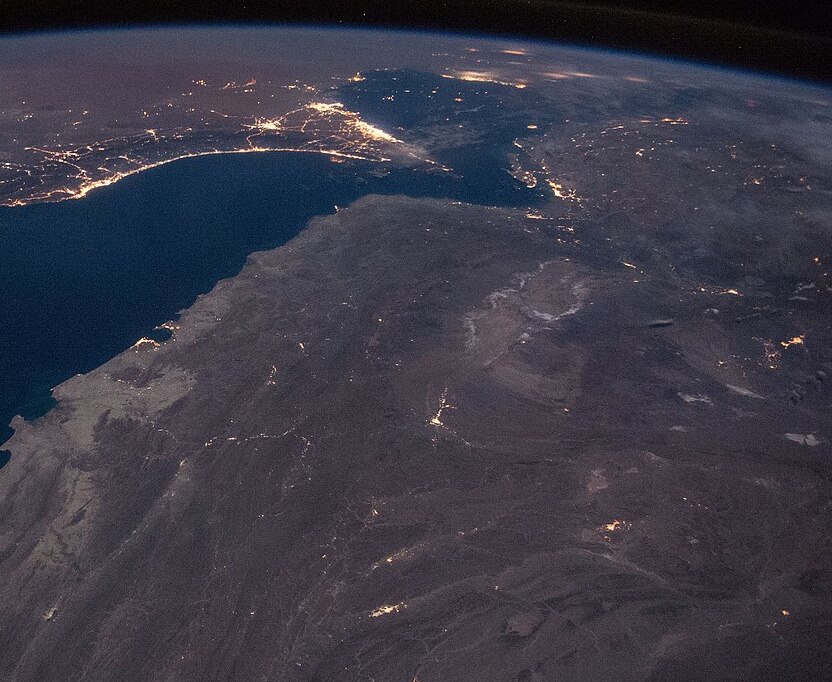
On Tuesday the President of the United States wrote that the Strait of Hormuz is open and operating. On Tuesday a projectile hit a ship on its way out of the strait, wrecked its engine room, and killed a member of its crew.
Brent rose for a fourth straight session, trading near $91.49, up about 0.5%, after touching $92.37. WTI was near $84.79, up about 0.9%. Four consecutive up sessions is the longest run of this crisis.
What Actually Happened in the Water
The United Kingdom Maritime Trade Operations centre reported on Tuesday that a vessel transiting outbound was struck by an unknown projectile in the vicinity of Khasab, on the Omani side of the strait. The engine room was damaged. One crew member was killed. Oman's coast guard assisted the survivors.
The ship's name, type and flag have not been released. No environmental impact has been reported and the incident is under investigation.
That is the second consecutive day on which a vessel leaving Hormuz was hit, and the fatality is what separates it from the run of attacks before it. We reported the strike on Tuesday morning without knowing anyone had died, because at that point nobody had said so.
Crossings remain in single digits against more than 130 a day before the war. Since 28 February, at least 17 merchant ships have been damaged, two have been captured, and twelve seafarers have been killed or are missing.
What the President Wrote
Trump posted a map to Truth Social with a circle drawn around the Strait of Hormuz, labelled as new US territory. The post carried no caption. In a separate post he wrote that the Hormuz Strait is open and operating.
The circle on that map includes a substantial stretch of Iranian land along the northern shore.
He also told reporters on Tuesday that there are no talks with Iran and none scheduled, and that the naval blockade remains in full force and effect.
Set those three statements beside each other. There are no negotiations. The blockade is fully enforced. And the waterway is open and operating. The first two are descriptions of a closed strait. The third is not.
Tehran Answered the Map, Not the Claim
Deputy foreign minister Kazem Gharibabadi replied in Arabic on X, and the reply was personal.
"Just as Trump correctly wrote the name of the Persian Gulf, his illusion about the Strait of Hormuz will soon be corrected, or we will correct the delusions of this delusional individual."
He added that the strait "has been Iranian, is Iranian, and will remain Iranian," and that it "will only be closed and opened under Iran's command."
Note what Tehran did not dispute. It objected to the ownership claim and said nothing about the claim that traffic is flowing, which is the assertion a reader can actually check.
This Is the Third Official Claim in Eight Days That the Data Does Not Support
We have now written this same paragraph three times in a week, and the repetition is the story.
On 11 August, Energy Secretary Chris Wright put outflows from the strait at almost 9 million barrels a day. Tanker trackers could see between 4 and 7 million, and the EIA's own outlook, published the same day, said 4.9 million. We covered that gap on 13 August.
Over the weekend of 15 and 16 August, Kpler counted five commodity vessels on the Saturday and none at all on the Sunday, against 31 the previous weekend.
Now the strait is open and operating, on a day one of the few ships in it was hit and a seafarer died.
None of these statements is refutable in the way a false number is, because each rests on traffic no independent party fully observes. Roughly 40% of transits run with transponders off, so the tracked count is a floor rather than a total, a point we made in the reader's favour when the trackers were being cited against Wright. But a floor of single digits and a dead crew member is not a description of a working waterway, and the burden of showing otherwise sits with the person making the claim.
The reason to keep flagging this is not politics. It is that the shut-in volume is the single biggest input into every 2026 price forecast on the market, including the EIA's own, which assumed Hormuz constraints would ease through August. August has twelve days left.
The Buffer Is Thinner Than the Argument
While the claims are argued about, the physical cushion keeps draining.
The IEA reported last week that global oil inventories fell by 2.2 million barrels a day over the previous month, taking total stocks below 7.9 billion barrels for the first time since early 2025. It now projects a deficit of 1.8 million barrels a day in the coming months, more than double the estimate it made in July, with about 8.3 million barrels a day of Gulf production still offline.
The American cushion is thinner than most people realise too. The Strategic Petroleum Reserve held 298.7 million barrels as of 7 August, its lowest since January 1983 and about 42% of its 714 million barrel capacity, after 172 million barrels were released in March. Below roughly 300 million the reserve also loses maximum pumping speed. We corrected our own pages on this yesterday, having previously described the reserve by its capacity rather than its contents.
What to Watch
Treasury Secretary Scott Bessent's promised measures. He said on 14 August to watch for announcements "next week" of economic isolation unlike anything in history. That week is now most of the way through and nothing has been published.
Whether the dead crew member's ship is identified. Flag and owner determine who is formally aggrieved, and an attributable fatality on a third-country vessel is the kind of event that pulls other governments into a conflict they have so far watched.
Whether anyone in the administration is asked to reconcile "open and operating" with the transit data. It is a checkable claim about a measurable thing, which makes it unusual in this war.
This article is for informational purposes only and does not constitute financial or investment advice. Oil market conditions can change rapidly. Consult a qualified financial professional before making investment decisions.