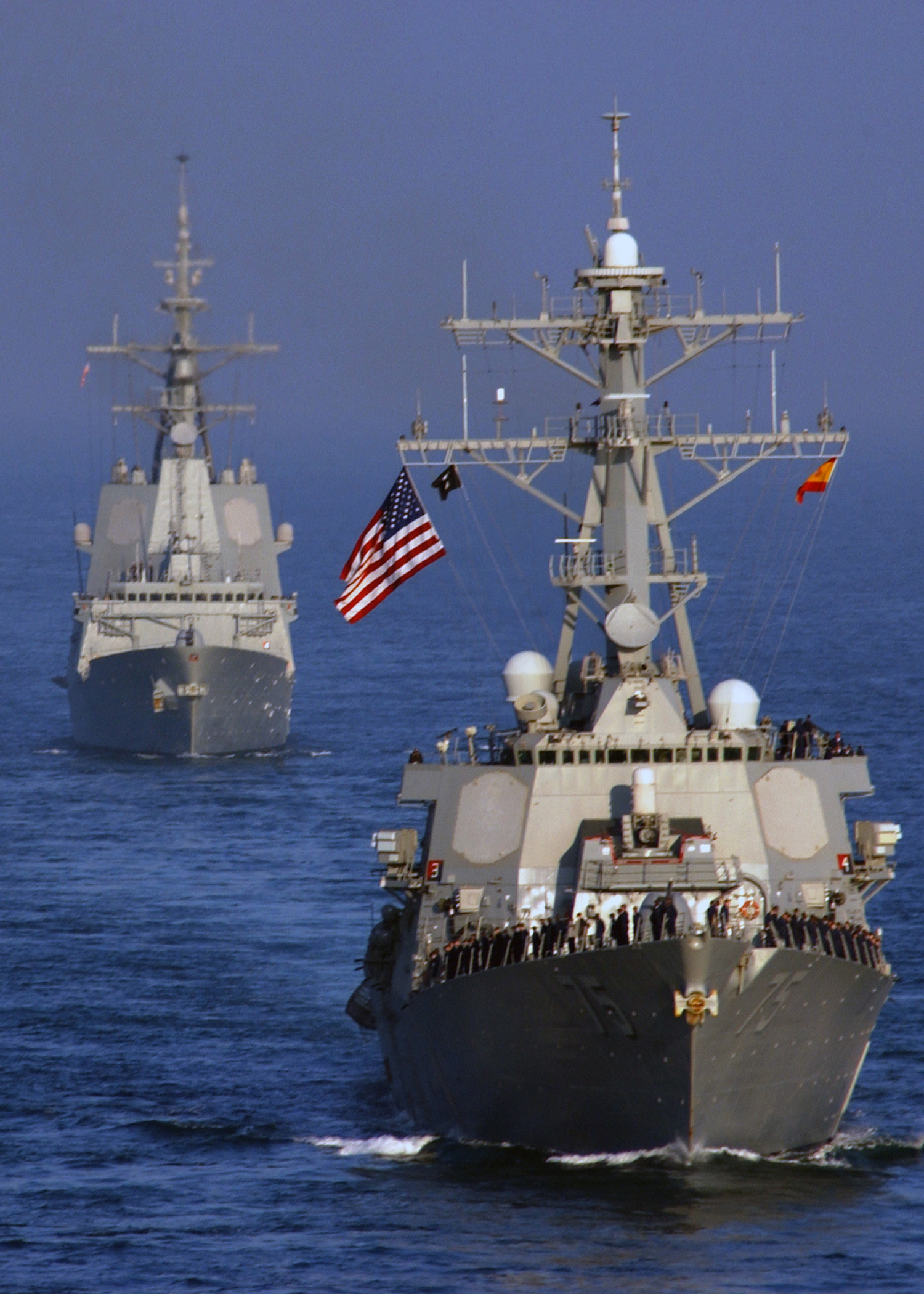
The ceasefire that has notionally framed the Iran conflict since April 8 has effectively collapsed. The US struck targets across Iranian cities on Tuesday and Wednesday, citing "continued aggression." Iran's Revolutionary Guard answered with what it claims were 21 attacks on US air and naval bases, firing missiles and drones at Bahrain, Kuwait, and Jordan. Iran's joint military command then declared the Strait of Hormuz completely closed to all vessels, warning that any ship attempting passage "will be shot at." Trump posted that the US will hit Iran "VERY HARD tonight" and, separately, threatened to seize Kharg Island, the terminal that handled roughly 90% of Iran's pre-war crude exports, and "assume total control of their oil and gas markets."
Oil barely moved. WTI traded near $89 to $90, roughly flat against Wednesday. Brent whipsawed intraday and settled around $93. Crude remains on track for a second straight weekly decline, below $100, through what is by any description the collapse of the ceasefire and the most explicit US threat against Iranian oil infrastructure of the entire war.
The muted reaction is the most important fact of the day.
How the Truce Broke
The sequence ran fast. The Iran-Israel exchange over the weekend cracked the calm. On Monday, a US Army Apache went down off Oman near Hormuz after a collision with an Iranian drone, with both crew rescued; Trump accused Iran of downing it, and the US and Iran exchanged strikes. On Wednesday evening, the US launched strikes on multiple targets across Iranian cities after Trump and Defense Secretary Hegseth warned Tehran would be "hit hard."
Iran's retaliation came overnight into Thursday: missiles and drones at US bases in Bahrain, Kuwait, and Jordan, including long-range missiles aimed at F-35 hangars at Jordan's Al Azraq base. By the accounts of the Bahraini, Kuwaiti, and Jordanian authorities, essentially all projectiles were intercepted, with no reported US casualties or base damage. Kuwait closed its airspace. Iran also claimed it struck a US warship, which CENTCOM denied. Foreign Minister Abbas Araghchi claimed "heavy damage" to US bases and delivered the line of the day from Tehran: "Leave our region if you want to be safe."
Iran's Foreign Ministry said the US strikes rendered the ceasefire "practically meaningless." Trump, asked whether it was over, called it "the most violated ceasefire in history" and posted that Iran had taken too long to negotiate and would now "pay the price." The 60-day MOU that was awaiting two signatures last week is, for now, shelved. Prediction markets price a permanent peace deal by June 15 at 9%.
The Kharg Island Threat
Trump's Thursday statement is the marquee escalation: "At some point in the not too distant future, we will be taking Kharg Island and other oil infrastructure points, and assume total control of their oil and gas markets." Kharg handled roughly 90% of Iran's pre-war crude exports. Seizing it would be the most direct US intervention in another country's oil industry in decades, and Trump drew the comparison to US action in Venezuela himself.
Hours later, he hedged on Fox News, saying he was not sure "America has the stomach" to take Kharg. The threat-then-hedge pattern is familiar by now. But a US president putting the physical seizure of Iran's primary export terminal on the table, even rhetorically, moves the conversation from blockade enforcement to occupation of oil infrastructure. That is a different category of war aim, and the market will have to decide how seriously to price it.
Why Oil Did Not Spike
A collapsed ceasefire, strikes on five US bases across three countries, a formal shoot-on-sight closure of Hormuz, and a threatened seizure of Iran's main export terminal would, in any prior month of this conflict, have produced a $5 to $10 move. Thursday produced approximately nothing. There are three reasons.
First, the strait was already functionally closed. IMF PortWatch data shows 2 transits on June 7 against a typical 94 per day, roughly 2% of pre-crisis volume. The "rising very meaningfully" traffic claim from earlier in the week was never verified, and Kpler's "false dawn" assessment held. Iran formally re-closing a strait that was running at 2% does not remove meaningful supply, because the supply was already gone. The market cannot price the loss of barrels it never got back.
Second, the market has adopted the long-grind base case. Invesco's Benjamin Jones described his firm's central scenario as a "status quo" of intermittent strikes rather than all-out war. CNBC's framing was that investors are bracing for a "long grind." After three months of escalation-and-talks cycles, the market no longer treats any single day's violence as a regime change. It prices the average.
Third, positioning. Crude is in its second straight weekly decline, and the latest combined commercial-plus-SPR drawdown figures, roughly 15 million barrels last week and more than 70 million over five weeks by one count, the largest sustained drawdown since the 1980s, describe a market already running hot on inventories. The marginal buyer who would chase a war headline has been chasing war headlines since February. There is exhaustion in the trade.
The Aramco Marker Has Arrived, and the Answer Is No
In mid-May, Saudi Aramco's chief executive warned that if Hormuz trade remained curtailed beyond a few weeks, roughly a mid-June horizon, the oil market would not normalize until 2027. He put the loss at around 100 million barrels per week of closure, with more than a billion barrels already lost, and noted the east-west pipeline had been ramped to 7 million barrels per day to compensate.
Mid-June is here. The strait is not only still closed but formally re-closed with a shoot-on-sight order, the ceasefire has collapsed, the MOU is shelved, and the US president is threatening to seize Iranian export infrastructure rather than negotiate its reopening. By Aramco's own framework, the 2027 normalization scenario is no longer the downside case. It is the base case.
That is the quiet repricing underneath Thursday's flat tape. The market did not move on the day's violence because the day's violence did not change the supply picture. What it changed is the timeline, and the timeline repricing happens slowly, in the back of the futures curve, not in a single session's headline move.
What to Watch
Whether the third US strike round happens as threatened, and what it hits. Strikes on oil infrastructure, Kharg in particular, would be the trigger that finally moves the front of the curve, because they would convert Iran's export capacity from blockaded to destroyed.
Whether Iran's Gulf-base retaliation extends to oil targets. The June 3 Kuwait airport strike and the June 5 Oman terminal strike established that Iranian retaliation reaches civilian and energy infrastructure in third countries. A repeat against Saudi or Emirati export facilities widens the supply disruption beyond Iran.
And whether anyone restores a diplomatic track. Qatar is reportedly still mediating draft exchanges. The 9% prediction-market odds on a near-term deal reflect how little is left of the process. But this war has cycled between collapse and negotiation repeatedly, and the next cycle, if it comes, starts from a market that has already priced the grind.
The ceasefire died on Thursday and oil closed flat. That is not calm. It is a market that has stopped believing in endings.
This article is for informational purposes only and does not constitute financial or investment advice. Oil market conditions can change rapidly. Consult a qualified financial professional before making investment decisions.