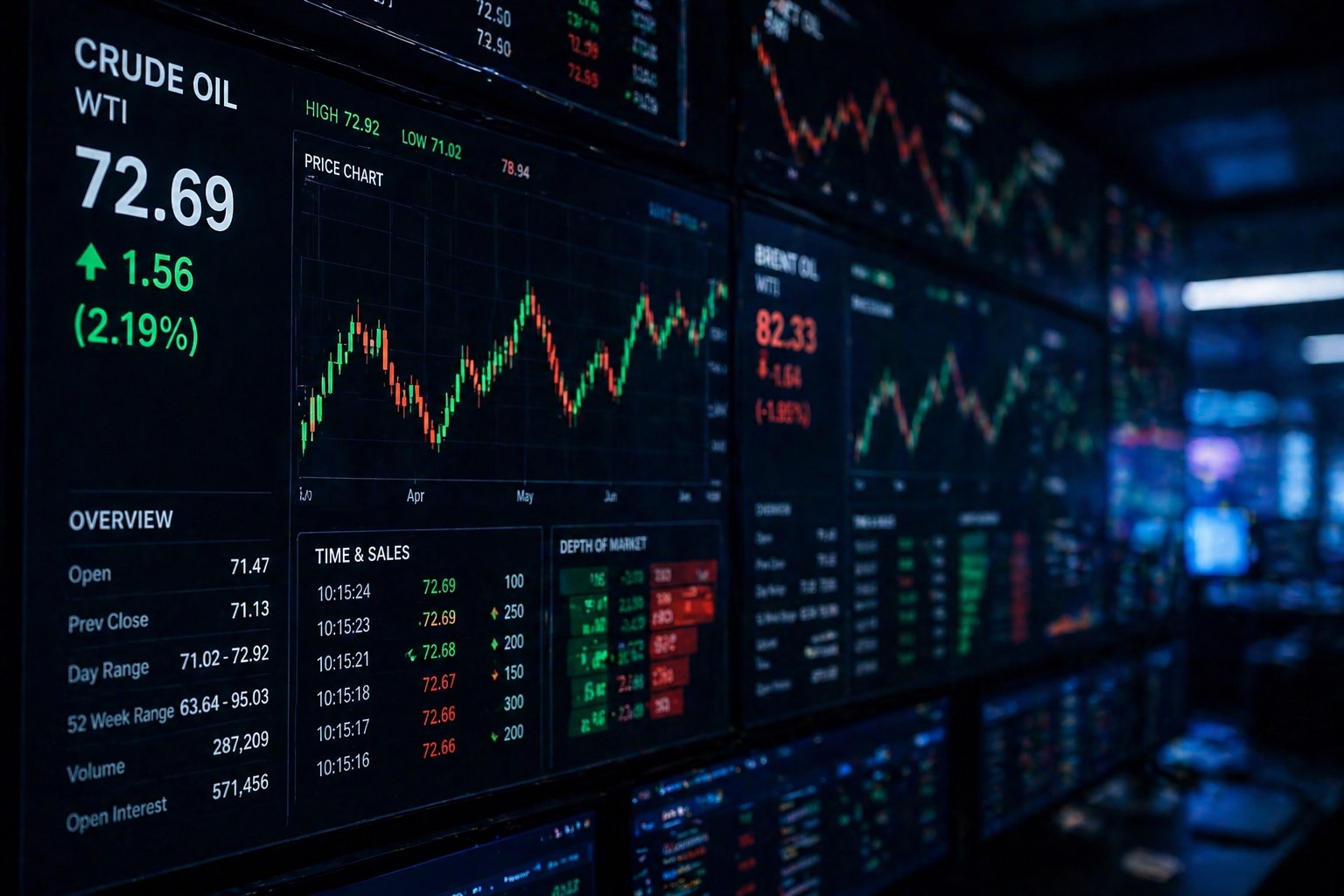
Brent crude crossed $100 a barrel on Thursday for the first time since late May, settling at $100.69, up about 7% on the day, with WTI at $92.19, up roughly 6%. On Friday it gave some of it back, trading near $96.70 in the European morning, down about 4%, with WTI near $89. The pullback is profit-taking, not a turn. Brent is still up close to 10% on the week and roughly 40% on the month, and the market has moved into backwardation, the structure that signals traders are paying up for oil now rather than later.
The $100 line matters because of how the market got there. It was not a single shock. It was Iran rejecting a ceasefire, the United States bombing for a 13th straight night, President Trump talking about a much larger attack, a confirmed strike on a Saudi tanker, and a fresh supply cut from Kazakhstan, all landing on a market that had already run out of slack.
Iran Said No, and Trump Talked Bigger
The diplomacy did not just stall. It broke. Iran rejected the US ceasefire proposal, which was reportedly delivered through Iraq. There is some confusion in the reporting about the plan itself: earlier accounts described a 10-day truce, while a newer one calls it a 15-point framework, and the two have not been reconciled. What is clear is Iran's answer and its reason. Tehran will not accept any deal that leaves the status of the Strait of Hormuz unresolved, and Washington will not grant Iran the control over the strait it is demanding. Iran's foreign minister Araghchi called the American position illogical, greedy, and controlling.
President Trump moved the other way. He told Axios he is considering a massive attack, bigger than ever before, and that he is close to a decision, adding that Iran had not received enough pain yet. That is a statement of intent, not an action, and no decision has been announced. But it is the clearest signal so far that the US is weighing escalation rather than an exit, and the market priced it accordingly.
The Second Chokepoint Is Real, but Traffic Has Not Collapsed
The Red Sea front is now genuinely open, and it is worth being precise about what that does and does not mean. The Houthi strike on the Saudi tanker Encelia is confirmed. A claim that a second tanker, the Layla, was also hit has since been listed by the maritime intelligence firm Windward, but independent confirmation that it was struck and set ablaze is still thin, so treat the second vessel as reported rather than established. Since those strikes, there have been no confirmed new attacks on other ships.
Here is the nuance the headlines miss. Despite the blockade, traffic through Bab el-Mandeb did not stop. Vessel crossings actually rose to 32 on Thursday from 26 the day before, according to Kpler data, and analysts describe the Houthi enforcement as mercurial, apparently based on a ship's affiliation rather than its cargo, with no clear definition of what the blockade covers. So the second chokepoint is contested rather than closed. The market is pricing the risk that it closes, which is rational after a real ship was hit, but the barrels are still largely moving. That distinction is the difference between $100 as a fear premium and a far higher number if the passage actually shuts.
Kazakhstan Is the First Real Barrel Loss
The most concrete supply hit of the week came from the front furthest from Iran. Loadings at the Caspian Pipeline Consortium terminal near Novorossiysk have been suspended since Ukrainian drones struck tankers there, and the effect has now reached the wellhead. Kazakhstan's crude output fell about 21% on July 22, to roughly 1.63 million barrels a day from a July average near 2.07 million, as the pipeline stopped taking its crude and production at the giant Tengiz field more than halved. The terminal operator says its facilities are undamaged and can resume once conditions allow.
This is different from everything else in the picture. Hormuz and the Red Sea are threats to the movement of oil. The Kazakhstan cut is oil that is not being produced right now. It is a smaller volume than a Gulf disruption would be, but it is real and it is additive, and it landed in the same week as everything else.
Still Not Kharg, and the Banks Still Say $80
The one strike that would justify $100 as a floor rather than a spike has still not happened. Satellite imagery shows Kharg Island's export terminal fully operational, with a tanker loading and others waiting, and Iranian exports still running above 1.5 million barrels a day. The 13th night of US strikes, like the twelve before it, hit military command centers, drone storage, and coastal surveillance, not the oil. Trump's standing threat to bomb a bridge or power plant for every ship attacked has not been carried out. Iranian claims of strikes on US assets in Kuwait and Bahrain, and reports of explosions near Erbil in Iraq, are unverified, as are the casualty figures on both sides.
The clearest evidence that the market is pricing risk rather than a realized shortage is what the banks are still saying. Even after Brent touched $100, Goldman Sachs left its base case unchanged at $80 Brent for the fourth quarter, because that case assumes Hormuz stays open. Its high scenario, above $120, requires the strait to stay disrupted. No major bank has moved a triple-digit number into its base case. The forecasters, in other words, still expect this to resolve. The tape is no longer sure they are right.
What Breaks It
The same short list, now with the odds visibly worse. A ceasefire still resets everything lower, and Iran just rejected the one on offer. A strike on Kharg still sends oil sharply higher, and Trump is openly weighing a bigger attack. And the two newer fronts, the Red Sea and the Caspian, have each produced a real event this week, a hit ship and a production cut, without yet becoming the sustained supply loss that would take $100 and make it a floor.
For a month this market has climbed a wall of threats that kept turning real one at a time. This week it climbed through $100. What it has not yet priced is the one event, a strike on the source, that every forecast still assumes will not come. As long as that assumption holds, $100 is a spike. The day it breaks, it is a floor.
This article is for informational purposes only and does not constitute financial or investment advice. Oil market conditions can change rapidly. Consult a qualified financial professional before making investment decisions.