Brent hit $106.80 in overnight trading. The new driver isn't just ship seizures. It's mines.
President Trump posted on Truth Social Thursday evening that he had ordered the US Navy to "shoot and kill any boat, small boats though they may be, that is putting mines in the waters of the Strait of Hormuz." He also ordered minesweepers to operate at "tripled" intensity. By Friday morning, Brent had added nearly five percent from Wednesday's close. WTI crossed $96.
The mine angle changes something that even diplomatic progress cannot quickly fix.
Why Mines Change the Timeline
Every previous off-ramp scenario, including the CFR's "Open for Open" proposal from Thursday, assumed both sides could simultaneously lift their respective closures and commercial traffic would resume within hours. A minefield does not work that way.
Mine-clearing requires surface sweepers working methodically across the full transit lane. Depending on mine density and placement, that is a days-to-weeks process. International maritime law and basic insurance underwriting mean no commercial carrier will transit until the strait is certified clear. Even if Iran and the US reached a deal today, the physical reopening of the strait would take longer than the diplomatic one.
That timeline extension is now priced in. It is also why the market moved five percent rather than two.
The Expanded Blockade
Trump's post went further than previous statements. He wrote that no ship "can enter or leave" the strait without US Navy approval, a formulation that extends US authority beyond Iranian ports to all commercial traffic in the waterway.
That is a significant shift in scope. The US is now asserting effective control over a chokepoint that handles about 20 million barrels per day of oil and petroleum products. Iran's argument that the blockade violates the ceasefire now has a materially stronger factual basis. The expanded language also puts third-party shippers, including Chinese state carriers, in the position of requiring US Navy clearance for any transit.
What the Transit Numbers Show
Commercial vessel transits through the strait have collapsed. Windward data shows 15 ships crossed on Monday, seven on Tuesday, and nine on Wednesday. Those numbers represent a fraction of pre-crisis levels and reflect one unambiguous conclusion: carriers have decided the strait is not worth the risk.
The pattern has not improved since the ceasefire extension. It has gotten worse.
Price From Here
Brent settled into the $104 to $105 range by mid-morning New York time after the overnight high. Goldman's full-year $100 average forecast is now functioning as a floor, not a ceiling.
The $110 level is next. Getting there requires only that the current trajectory continues: mine-clearing operations hampered by Iranian small boat activity, transit numbers staying near zero, and no scheduled talks.
Getting back to $90 requires both a diplomatic deal and a successful mine-clearing operation. Neither is imminent.
This article is for informational purposes only and does not constitute financial or investment advice. Oil market conditions can change rapidly. Consult a qualified financial professional before making investment decisions.
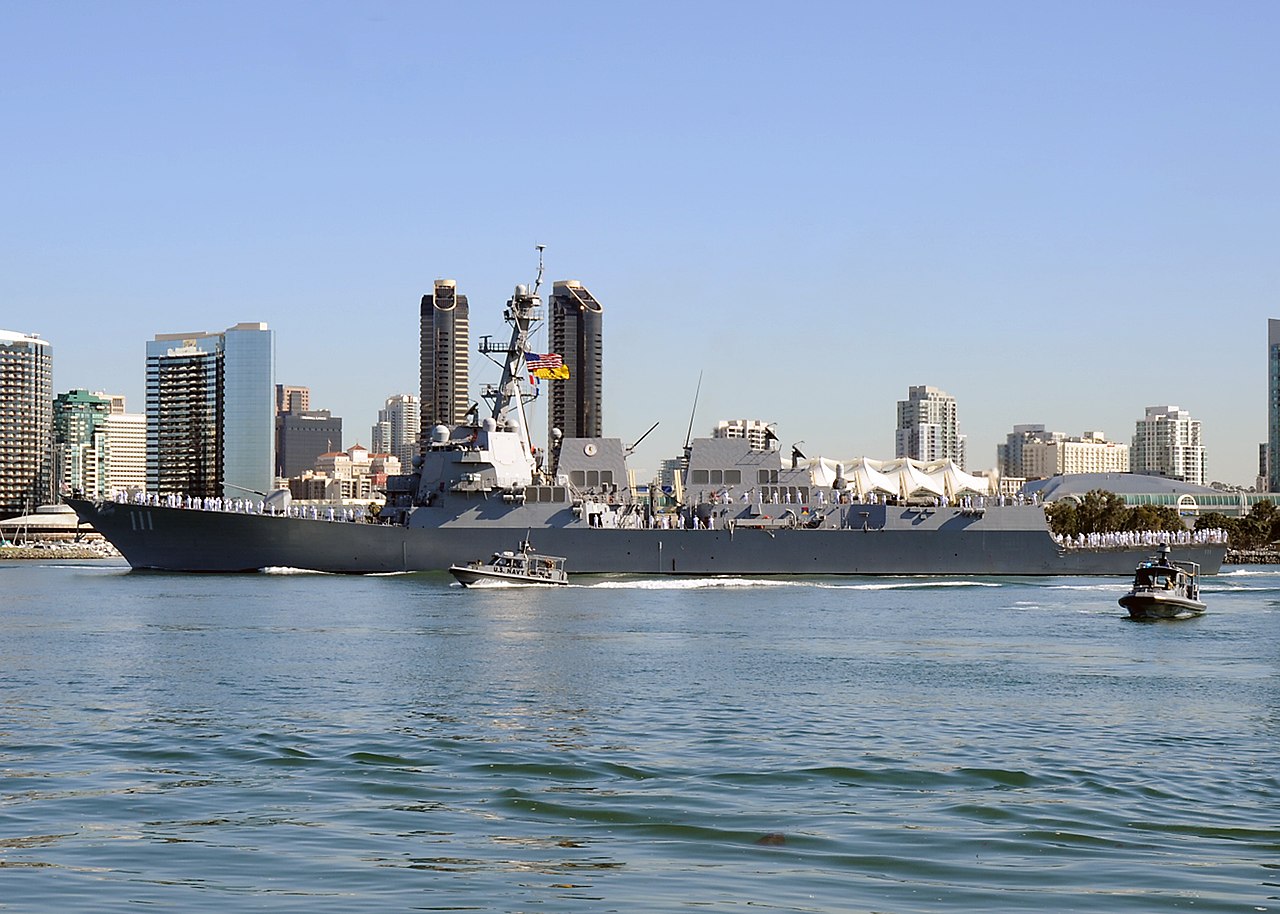
Cover photo: USS Spruance (DDG-111) underway. US Navy, public domain.