The diplomatic window closed Sunday night.
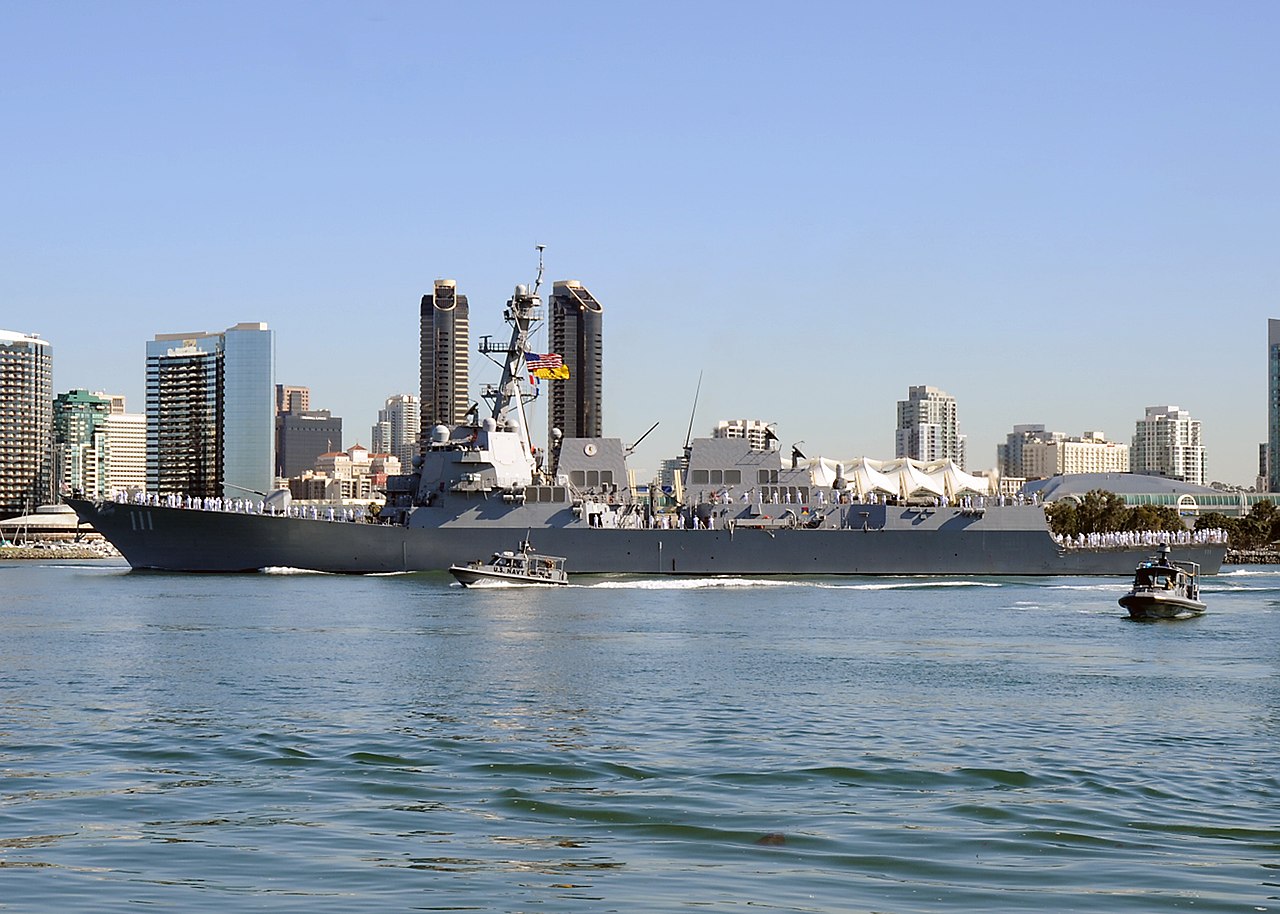
The USS Spruance, an Arleigh Burke-class destroyer, fired several rounds into the engine room of the Iranian-flagged container ship Touska after a six-hour standoff in the Gulf of Oman. The vessel had refused repeated orders to stop and was attempting to pass through the US naval blockade. Marines boarded and seized her. The Touska is a 5,000-TEU container ship on the US Treasury's sanctions list.
Iran's response was immediate. Tehran called the seizure "maritime piracy," vowed retaliation, and told reporters there are "no plans" for a second round of talks in Islamabad. The ceasefire expires tomorrow.
What Happened to the Touska
The Spruance first issued warnings by radio. When those were ignored, it fired warning shots. The crew still did not comply. After six hours, the Navy fired directly into the engine room, disabling propulsion. Marines then boarded under no armed resistance from the crew.
US Central Command confirmed the action and said the Touska had a history of sanctions violations. Trump posted that the Navy had "stopped them right in their tracks." The ship is now in US custody in the Gulf of Oman.
Iran's military said it will "soon respond." The foreign ministry called the seizure a violation of the ceasefire and international maritime law. Both claims are now moot: the ceasefire expires in less than 24 hours and Iran has already said it will not sit down for a second round of talks.
Talks Are Off
As recently as Sunday morning, Trump had confirmed a US delegation was traveling to Islamabad for a second round of negotiations. Iran's foreign ministry ended that plan on Monday. Spokesperson Esmaeil Baqaei said plainly: "As of now, we have no plans for the next round of negotiations."
The ship seizure made that outcome close to inevitable. Iran could not sit down with the United States hours after the US Navy seized a vessel flying its flag. The domestic political cost would have been too high regardless of any back-channel interest in a deal.
No mediation timeline is now on the table. Pakistan, which hosted the first round, has not publicly offered to restart the process.
The Oil Market Reaction
Brent crude jumped more than 7% in Asian trading on Monday, briefly touching $99. WTI moved back above $95. Both moves reverse most of the losses from last Thursday's "Hormuz is open" announcement.
Goldman Sachs put numbers to the risk in a note Monday: if the Strait of Hormuz remains closed for one additional month beyond the ceasefire lapse, Brent averages above $100 for the full year of 2026.
The market had been pricing a ceasefire extension as the base case. That base case no longer exists. What replaces it is a lapsed ceasefire, an active naval standoff, an Iranian vow of retaliation, and no diplomatic process. Prices are adjusting accordingly.
What a Lapsed Ceasefire Means
The ceasefire did not reopen Hormuz. It slowed the pace of escalation and kept a diplomatic channel open. Both of those functions end tomorrow if no extension is agreed.
Without the ceasefire framework, the US blockade of Iranian ports has no formal constraint on tightening. Iran has no obligation to allow even restricted tanker traffic. The Touska seizure signals that the US is willing to take kinetic action against vessels attempting to run the blockade, which substantially raises the risk premium for any tanker considering the route.
Strategic reserve releases from the US and IEA members have cushioned the market since early April. Those releases are finite. Goldman's $100 Brent call for a one-month extension of the disruption reflects what happens when the cushion starts to compress.
The ceasefire expires tomorrow evening. There is no deal, no extension, and no talks scheduled. Oil markets will open Tuesday with a different risk calculus than they had a week ago.
This article is for informational purposes only and does not constitute financial or investment advice. Oil market conditions can change rapidly. Consult a qualified financial professional before making investment decisions.
Cover photo: USS Spruance (DDG-111) leaving San Diego, 2013. U.S. Navy photo by Mass Communication Specialist 1st Class Rosalie Garcia. Public domain.