Donald Trump posted an AI-generated image of himself holding a rifle on Truth Social on Wednesday. The caption: "NO MORE MR. NICE GUY." The text alongside it: "Iran can't get their act together. They don't know how to sign a non-nuclear deal."
That is not a diplomatic opening. It is a closing door.
Brent crude held near $111.30 on Wednesday, roughly flat with Tuesday as markets absorbed the signal. WTI traded around $99.40. Both benchmarks have now held above $100 and $95 respectively for more than two weeks.
What the Post Actually Means
Behind the social media theatrics is a concrete policy shift. Trump has told senior aides to plan for an extended blockade rather than a return to full military hostilities, according to multiple US outlets. The calculus: a prolonged blockade is less dangerous and less costly than renewed strikes, but also less likely to force a quick resolution. The US is prepared to wait Iran out.
Secretary of State Marco Rubio had already dismissed Iran's Hormuz-first proposal earlier in the week, calling it insufficient without nuclear commitments. Wednesday's post confirmed that position is holding at the top.
Iran's proposal to reopen the strait while deferring nuclear talks has not moved. The US response to that proposal has not moved. The gap between the two positions is the same as it was a week ago.
The Extended Blockade Scenario
An extended blockade changes the market calculus in a specific way. Short-duration disruptions are absorbed by strategic reserves and demand destruction. Prolonged disruptions restructure supply chains, force permanent demand shifts, and push marginal producers to capacity.
The IEA has already described the current disruption as the largest supply shock in the history of the oil market. Flows through the Strait of Hormuz fell from more than 20 million barrels per day before the conflict to roughly 2 million barrels per day in March. Two months of that disruption, sustained further, begins to affect refinery feedstock contracts, long-term shipping arrangements, and national energy plans in a way that a two-week crisis does not.
US gas prices averaged $4.14 per gallon on Wednesday, up 28 percent since the conflict began.
The Rifle Post as Market Signal
Markets had priced in some probability of a negotiated Hormuz reopening following Iran's proposal last week. Wednesday's post, combined with the extended-blockade planning, reduces that probability. If the US has decided to wait rather than escalate or negotiate, the timeline for any resolution has just lengthened.
Goldman Sachs's $120 Q3 upside scenario is no longer a tail risk. It is a base case if the blockade runs through May.
The next signal to watch: Iran's formal response to Trump's Wednesday warning. Silence would confirm the stalemate. A counter-proposal would be the first constructive move in two weeks.
This article is for informational purposes only and does not constitute financial or investment advice. Oil market conditions can change rapidly. Consult a qualified financial professional before making investment decisions.
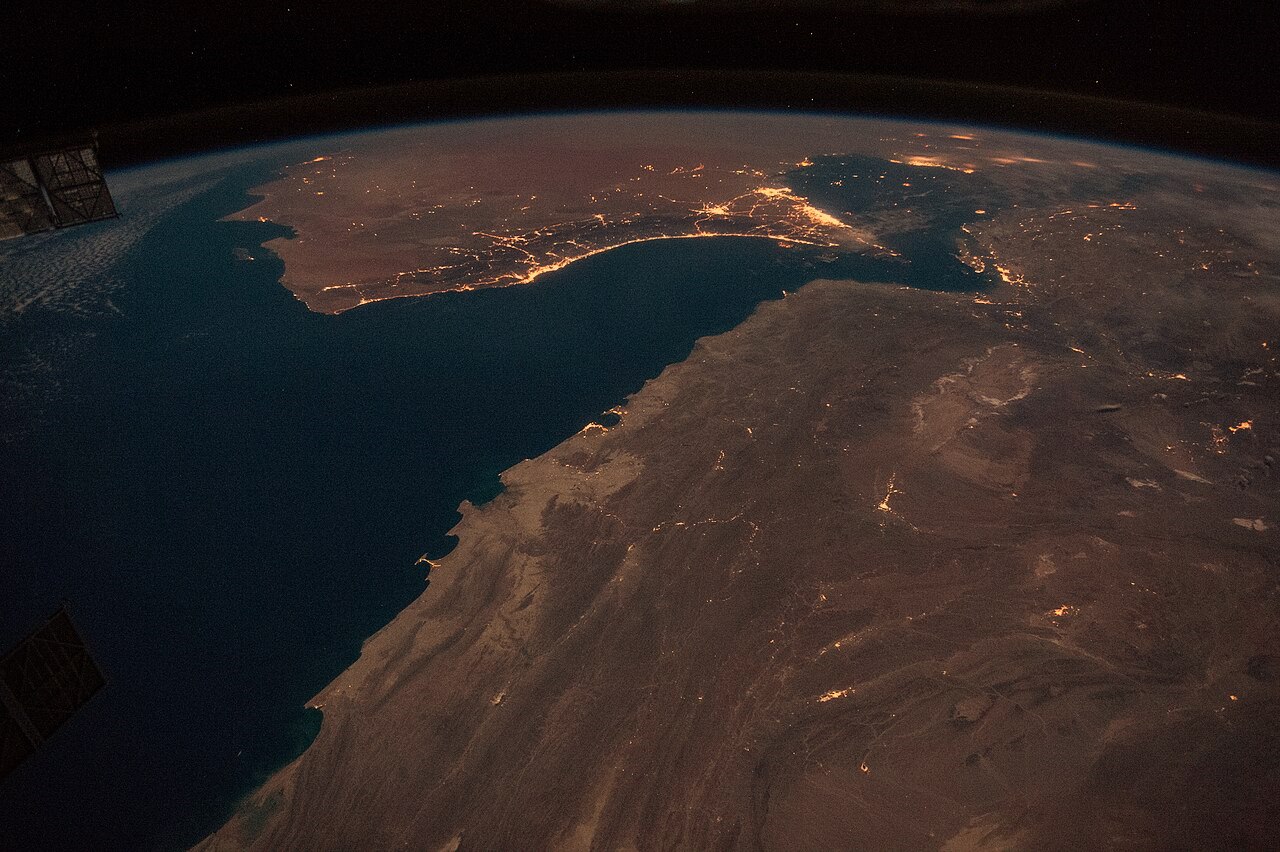
Cover photo: The Strait of Hormuz as seen from the International Space Station, 2011. NASA/ISS, public domain.