Trump announced Monday that he called off a planned large-scale military attack on Iran after Saudi Arabia, Qatar, and the UAE personally asked him to hold off. The three Gulf states told him they believe a deal is reachable within two to three days and asked for the chance to close it. His framing: "If we can do that without bombing the hell out of them, I'd be very happy." He added that the military remains "prepared to go forward with a full, large scale assault of Iran, on a moment's notice" if no agreement materializes.
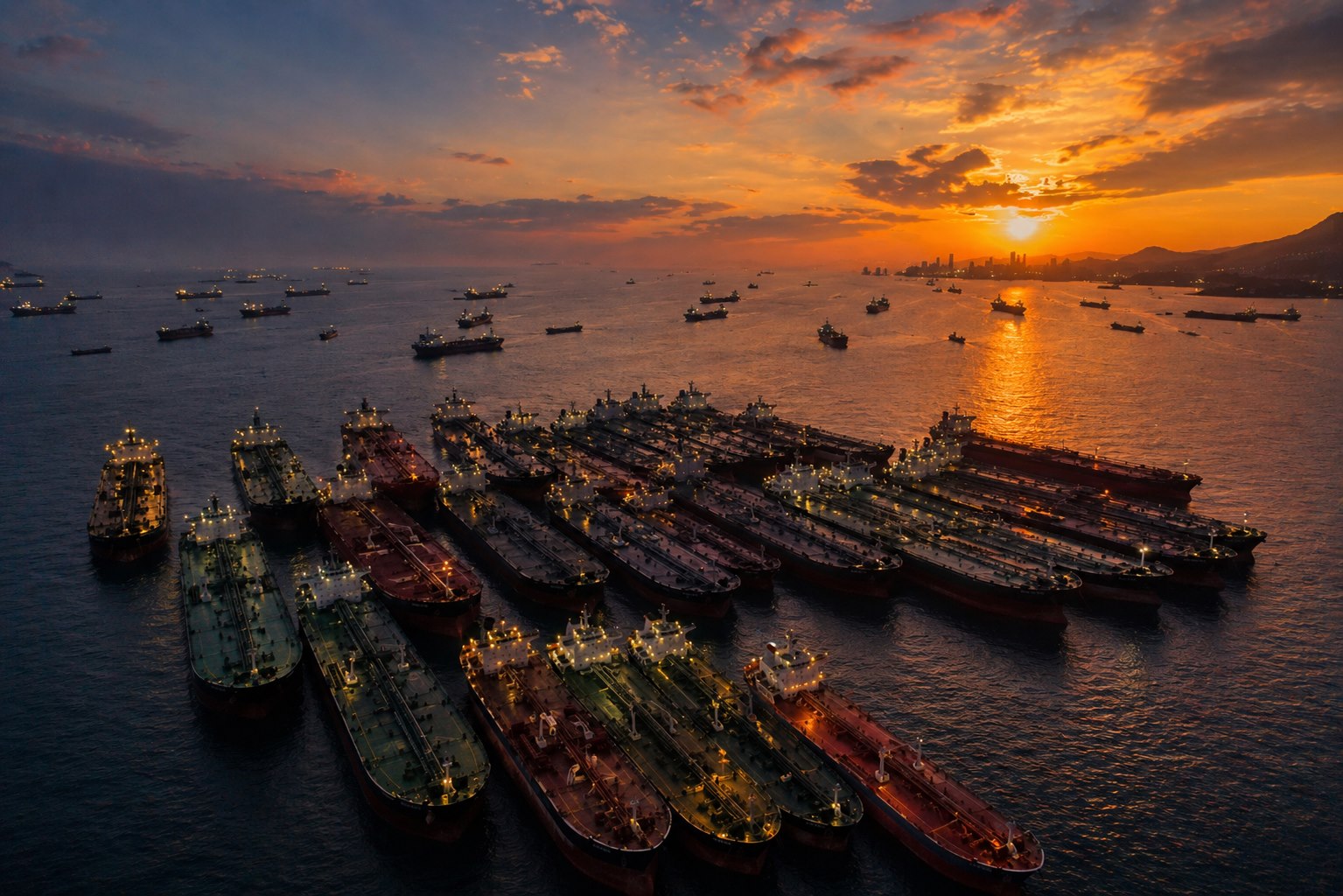
Brent crude fell from the $111 level hit after Saturday's Barakah drone strike to trade near $110.61. WTI dropped to around $103. Both benchmarks gave back some of the nuclear-scare premium while staying well above $100, because the Hormuz closure is still in place and no deal has been signed.
Iranian state media called Trump's announcement a "retreat" driven by "fear."
The Military Option Was Real
This is not the first time Trump has described military action against Iran as imminent. What is new is the specificity: a strike was planned and ready, and Gulf allies intervened directly to stop it. Saudi Arabia, Qatar, and the UAE are not neutral observers in this conflict. They are the countries whose tankers, terminals, and bypass pipelines sit closest to the Hormuz flashpoint. Their decision to personally lobby Trump for more time signals two things: they have active back-channel contact with Iran, and they believe something is movable in the next 48-72 hours.
The Situation Room meeting scheduled for May 19 appears to have been pre-empted by Trump's announcement. He made the call himself before the formal review.
The Deal Framework on the Table
The Witkoff-Kushner channel has been pushing a 14-point one-page memorandum of understanding. The core terms as currently understood: a 12-year moratorium on uranium enrichment to weapons-grade levels, no underground nuclear facilities, snap UN inspections, a phased sanctions relief pathway, and release of frozen Iranian assets.
Iran has not accepted this framework. The fifth round of talks ended without conclusion but was described by US officials as "professional." Gulf allies' intervention today suggests the informal track is more active than the official one, and that Riyadh, Doha, and Abu Dhabi may be the actual bridge between Washington and Tehran.
What Iran Gains and Loses From the 48-Hour Window
The 48-72 hour window gives Iran something it has been maneuvering for since the April 8 ceasefire: time without the immediate pressure of a US military strike, while the ceasefire framework technically holds. The risk for Tehran is that any incident in the strait during that window destroys the diplomatic space the Gulf states just created. A mine strike, a boarding, or another drone attack in the next two days would hand Trump the pretext he needs to restart the operation he just called off, with Gulf ally support gone.
Iran's characterization of the pause as American "fear" rather than diplomatic restraint is intended for a domestic audience. Externally, the framework Iran submitted in its 14-point counterproposal remains incompatible with the US draft on enrichment limits and inspection access.
The Brent Price Signal
The $1 to $2 pullback from $111 to $110 reflects the removal of the immediate strike premium, not a market view that the crisis is resolving. The Hormuz closure is still producing the same supply deficit it has produced since late February. The structural case for Brent above $100 does not change until tankers are actually moving through the strait in volume again.
The $97 to $111 range that has contained Brent since the April 8 ceasefire is still intact. The bottom of that range reflected deal optimism. The top reflected military escalation fears. At $110, the market is one more incident away from a new high, and one credible deal signal away from a retreat toward $100.
The next 48-72 hours are the most consequential window for oil prices since the ceasefire began.
This article is for informational purposes only and does not constitute financial or investment advice. Oil market conditions can change rapidly. Consult a qualified financial professional before making investment decisions.