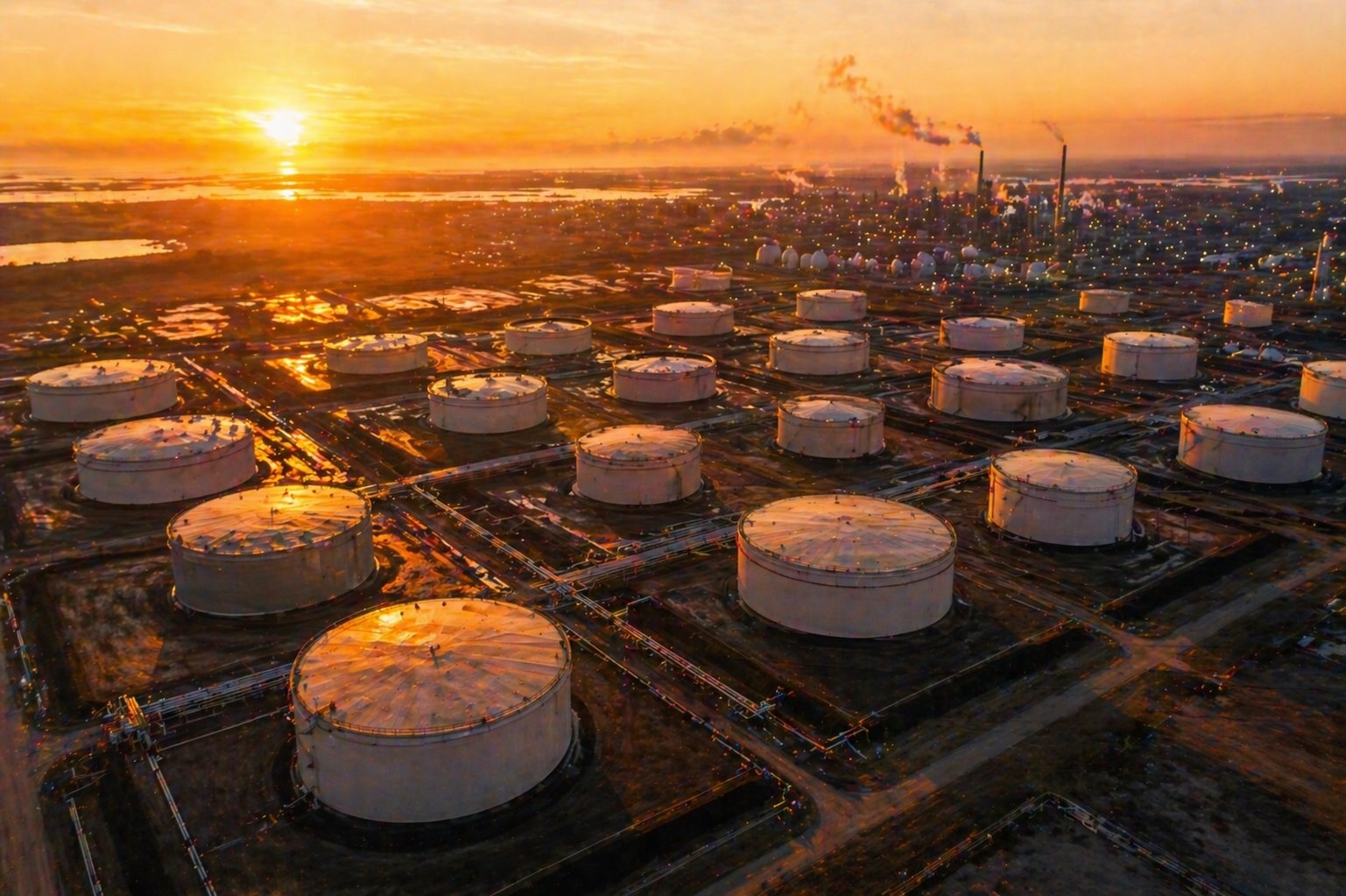
The Trump administration announced a loan of 53.3 million barrels from the Strategic Petroleum Reserve, with a first crude shipment already dispatched to Turkey. It is the largest SPR action since the 2022 release following Russia's invasion of Ukraine, and signals Washington's acknowledgment that the Hormuz closure is a sustained supply problem rather than a brief disruption.
Brent pulled back to roughly $105 from yesterday's high of $107.58. WTI slipped back under $100 to trade near $99. Markets are consolidating ahead of the Trump-Xi summit in Beijing on May 14-15, which most analysts consider the most important near-term catalyst for oil prices.
What the SPR Release Does and Doesn't Do
At 53.3 million barrels, the release covers roughly 12 days of the supply the US and its allies are no longer receiving through Hormuz. It is not a solution. It buys time for allies who depend on Gulf crude and signals that the administration views the closure as durable enough to warrant drawing down strategic reserves.
The Turkey shipment is particularly pointed. Turkey has been navigating between its NATO commitments and its role as a transit corridor for Russian and Iranian commodities. Sending US SPR crude directly to Ankara is both a supply lifeline and a political signal about whose side of the supply chain Turkey sits on.
OPEC April production figures released Monday in a Reuters survey reinforce why the release matters. OPEC output fell to its lowest level in more than two decades in April, down more than 9 million barrels per day from February. The seven remaining members (the UAE quit the cartel in late April) raised their June quotas by 188,000 barrels per day at their May 3 meeting. That number is irrelevant as long as the strait is closed.
What Trump-Xi Could Mean for Prices
Trump arrives in Beijing having publicly sanctioned 12 Chinese entities for buying Iranian oil and with China having responded by formally ordering domestic firms to ignore those sanctions. The conditions for the summit are adversarial on the Iran question.
The core ask from Washington is that Beijing restrict or stop Iranian oil purchases, removing Tehran's primary revenue source and forcing a faster concession on the nuclear program. China imports roughly 1.6 million barrels per day from Iran, accounting for about 90% of Iran's crude exports. Cutting that channel would be a decisive lever.
China's position, stated explicitly before the summit, is that US secondary sanctions are illegal. Beijing has enacted a blocking statute barring domestic compliance. Chinese companies have continued buying Iranian crude without interruption since February.
The realistic range of summit outcomes runs from a vague joint statement on "regional stability" (no change to oil flows, prices stay elevated) to a private Chinese commitment to moderate purchases in exchange for trade concessions elsewhere (downward pressure on prices). A complete breakdown of the summit would push prices toward the high end of the $97-$111 range the market has traded since the April 8 ceasefire.
Both governments have signaled they want to keep the Iran disagreement from overwhelming the trade agenda. That framing, if it holds, points toward the vague-statement outcome. Markets appear to be pricing exactly that: a holding pattern at $105 while waiting to see whether anything concrete emerges from Beijing.
Where the Ceasefire Stands
No fifth round of talks has been announced. Trump called Iran's counteroffer "garbage" yesterday and described the ceasefire as being at its "weakest point." Iran's parliament speaker said Washington has "no alternative but to accept" Tehran's terms.
The mediation channel through Pakistan and Oman is technically still open. But the public positioning from both capitals is incompatible. Iran is demanding sanctions relief, war compensation, and recognition of its Hormuz claims before moving on nuclear enrichment. Washington is demanding enrichment limits before anything else.
The SPR release and the summit visit are both workarounds for the fact that the ceasefire is not producing a deal. Neither addresses the underlying problem. The question after Beijing is whether there is still enough diplomatic runway left to avoid another Hormuz incident of the kind that happened last Thursday.
This article is for informational purposes only and does not constitute financial or investment advice. Oil market conditions can change rapidly. Consult a qualified financial professional before making investment decisions.