Oil markets staged one of their most volatile single-day performances of 2026 on Thursday. WTI crude surged nearly 4% to $94.69. Then it crashed to around $83. The entire round trip happened inside one trading session.
The trigger for the spike: a surprise inventory draw. The trigger for the crash: Iran said the Strait of Hormuz is "completely open."
Both things cannot fully be true at the same time. The market is still deciding which one to believe.
The Morning: Inventory Data Moves Oil to $95
The U.S. Energy Information Administration's weekly petroleum report showed crude stockpiles fell by 913,000 barrels last week. Analysts had expected a build of around 200,000 barrels. The miss — roughly 1.1 million barrels on the wrong side of consensus — was enough to push WTI above $94 and Brent briefly back toward $100.
Eight straight weeks of inventory builds had been one of the few bearish signals in an otherwise supply-constrained market. A draw of this size reversed that narrative in a single data point.
The inventory number also fits with what refiners have been saying privately: that despite Sinopec's 10% cut in run rates and reduced throughput across Asian refineries, global demand for crude has not fallen as fast as the supply shock would imply. Consumers are drawing down product inventories. Crude is flowing to fill that gap where it can.
The Afternoon: Iran Changes the Signal
Iranian state media announced that the Strait of Hormuz is "completely open" and that safe passage is available for tankers that coordinate with Iranian naval authorities.
Oil fell sharply on the news — Brent toward $89, WTI to around $83. That is a $12 round trip on WTI in a single session.
The Iranian statement is more complicated than the headline. "Completely open" via coordination with Iranian forces is not the same as freely open. Tankers still need Iranian approval. Insurance underwriters are not treating the strait as safe. As of Thursday afternoon, tanker traffic remained very low and no major charterers had publicly confirmed resumed sailings through the strait.
But the statement is significant. It is the first time Iran has described the strait as open rather than controlled or restricted. It creates diplomatic space — and it gave oil traders a reason to sell.
The Five-Day Problem
The ceasefire expires April 21. Trump told reporters Thursday that the US and Iran will "probably" meet over the weekend for a second round of talks. Both sides are reportedly considering a two-week extension to buy more time.
An extension without a full deal leaves the underlying situation unchanged: Hormuz is technically passable under Iranian conditions, Saudi infrastructure is partially damaged and not yet repaired, and the US blockade of Iranian ports remains in force. Those are not the conditions for a durable return to $70 oil.
The market's current range — roughly $83 to $95 WTI — reflects the range of outcomes the weekend talks could produce. A credible extension with resumed tanker traffic pushes prices toward the lower end. A lapse or escalation pushes them back toward $100.
With five days left and a $12 intraday range, Thursday made the stakes clear.
This article is for informational purposes only and does not constitute financial or investment advice. Oil market conditions can change rapidly. Consult a qualified financial professional before making investment decisions.
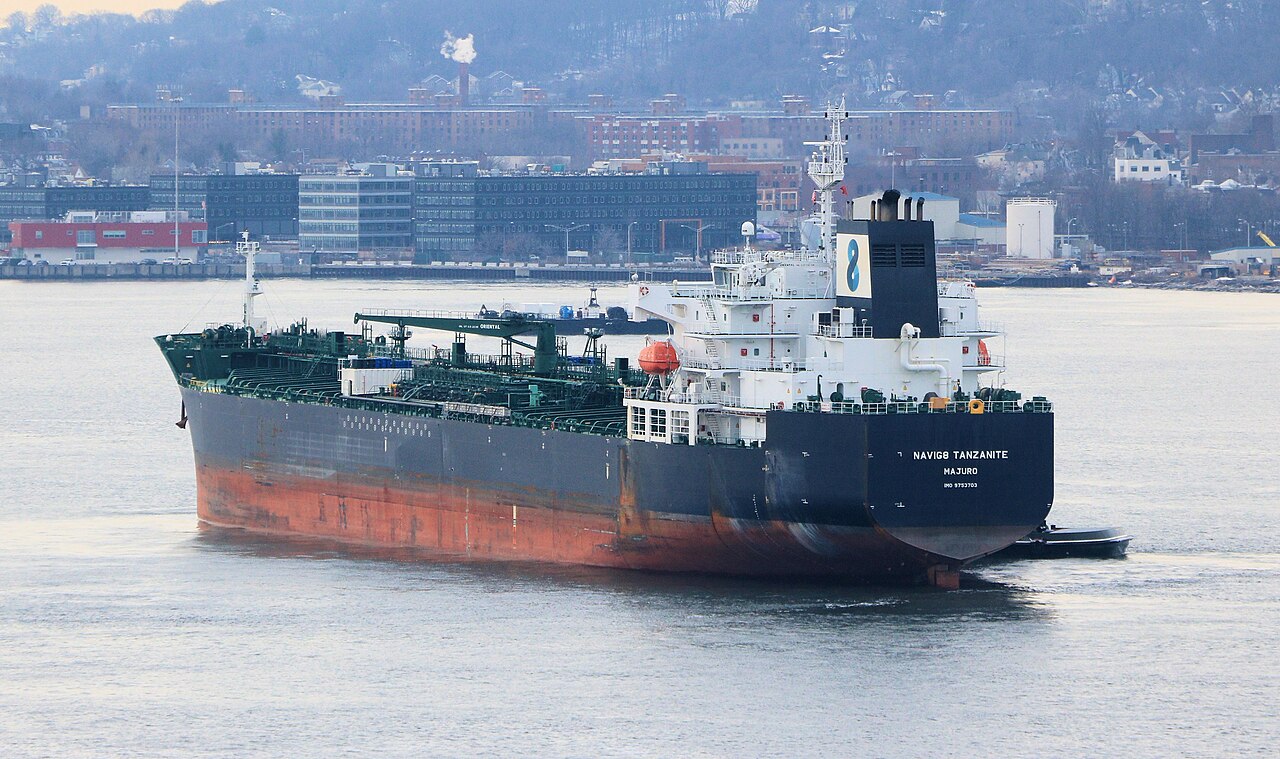
Cover photo: Navig8 Tanzanite crude oil tanker in New York Harbour. Paul Harrison / Wikimedia Commons, CC BY-SA 4.0.
