Brent crude traded around $91.13 a barrel on Tuesday, up about 2.1%, with WTI near $84.91, up 2.9%. The level matters less than the character of the move. On Monday, Brent touched $91.42 and gave almost all of it back within hours. On Tuesday it went through $91 and stayed. For the first time in this war, the $90 handle is behaving like a floor rather than a spike.
Two things changed. The market decided the ceasefire on the table is not getting signed soon, and it learned that the corridor Washington built to keep tankers safe does not keep tankers safe.
The Ceasefire Is Stalling on Purpose
Neither Washington nor Tehran has accepted the 10-day ceasefire proposal, and reporting on Tuesday indicated that both sides intend to keep striking to improve their leverage before committing to anything. That is a different situation from a proposal under active consideration. It is a proposal both parties are using as a backdrop for more fighting.
The terms explain the deadlock. The proposal envisions a 10-day cessation to find a Hormuz solution and revive last month's interim deal, built around a "middle corridor" through the strait between Omani and Iranian waters. One variant would grant Iran administrative authority over the waterway, including the right to collect what is described as reasonable service fees for maritime security. Iran has never held that power, and handing it over is precisely what the United States and its Gulf partners have refused since the spring. Washington wants a longer ceasefire and at least preliminary freedom-of-navigation guarantees before any cessation takes effect. Administration officials publicly dismissed Iran's terms as absurd and illogical. The White House says strikes continue until the president decides otherwise.
The rhetoric on the other side moved the same direction. Iran's president Pezeshkian said on Monday that the country is now involved in a generalized war with the United States, which is not the language of a government about to sign a truce.
One caution on this story: news organizations directly contradict each other on who originated the proposal. Reuters framed it as mediators passing a plan to Iran, which Iran's foreign ministry confirmed receiving. Other reporting says Iran quietly submitted the plan itself. Those two versions imply very different levels of Iranian urgency, and neither is confirmed. Treat the authorship as unknown.
The Safe Corridor Was Not Safe
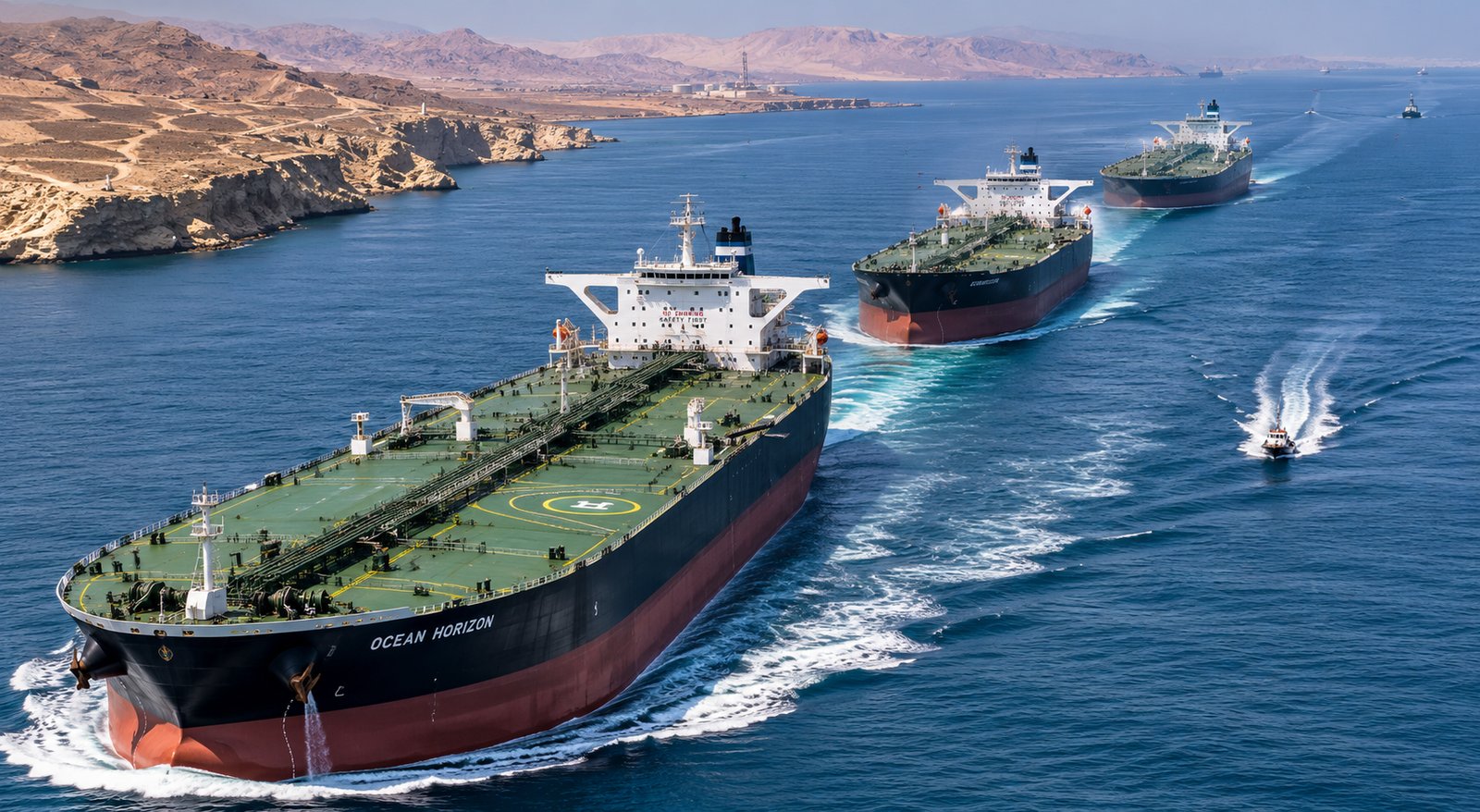
The sharpest development came in the water. Two Greek-managed tankers were struck at almost the same moment on Monday roughly eight nautical miles northwest of Oman's Kumzar. The Kavomaleas, a Malta-flagged Panamax, was hit by two projectiles and suffered an engine-room fire, and its crew evacuated. The Acheloos, a Liberian-flagged VLCC, took one projectile with its crew unharmed. There was no pollution and no reported deaths, and the projectiles were officially described as being of unknown origin. The Revolutionary Guard claimed two tankers exploded after taking what it called an unsafe southern route, a claim it did not clearly tie to these two vessels and which is not independently verified.
Here is why it matters more than another pair of tanker strikes. Both ships were transiting the US-facilitated southern corridor, the route Washington established as the protected passage through Hormuz. The premise of the entire "middle corridor" now being negotiated is that a designated lane can be made safe. On Monday, the existing designated lane was where the shooting happened. Insurers have already drawn their conclusion: war-risk cover runs 3% to 10% of hull value against 0.25% before the war, and six protection and indemnity clubs have withdrawn cover altogether.
The Cap Is Weakening
Through most of this month, the argument for why oil could not run away was the surplus underneath it. That argument is getting weaker, and it deserves saying plainly because this site has leaned on it repeatedly.
The Energy Information Administration's July outlook has global inventories falling an average of 5.1 million barrels a day in the second quarter, with a further draw near 2.2 million barrels a day expected in the third. US commercial crude stocks fell 1.7 million barrels in the week to July 10, to 409.7 million, about 6% below the five-year average, with refineries running at 96.2%. That is a drawing market, not a glut. Goldman Sachs estimates Persian Gulf flows are running below 45% of pre-war levels.
The spare capacity is still there, more than 5 million barrels a day of it, and Saudi Arabia holds roughly 3 million. But most of it sits behind the strait that is closing, and a barrel that cannot reach a buyer does not discipline a price. Goldman told clients that Brent could exceed $120 in the fourth quarter if Hormuz disruption persists, while keeping $80 as its base case for the fourth quarter and $75 for 2027 on the assumption of de-escalation. The bank describes its risks as tilted to the upside. The gap between $80 and $120 is the same gap it has been all month, and the market is drifting toward the wrong end of it.
Still Not Kharg
The one thing that has not changed is the one that matters most. Kharg Island's export terminal has not been struck and is still loading. Tracking of the terminal recorded two VLCCs, the Alicia and the Felix, loading roughly 1.75 million and 2 million barrels at the T-jetty on July 15, with at least 26 Iranian loadings since the June 17 memorandum, 11 of them from Kharg.
What has changed is the volume of talk about taking it rather than bombing it. A US senator said on Monday that American ground forces at Kharg could spare the export terminal from destruction, following reports that a possible operation there was discussed at a mid-July White House meeting. That remains talk. Ten consecutive nights of US strikes, confirmed by Central Command and reported across Sirik, Bandar Abbas, Qeshm, Shiraz and Isfahan, have hit military targets and not the oil. Iranian retaliation reached Kuwait, Bahrain and Jordan; Revolutionary Guard claims of destroyed US facilities at Bahraini bases follow a pattern of such claims in this war going unevidenced, and casualty figures on both sides remain unverified.
The Front Nobody Is Pricing
While the Gulf absorbs the attention, a second supply disruption is running. Ukrainian drones struck the tanker Nelsa loading at the Caspian Pipeline Consortium terminal near Novorossiysk on Monday, the second attack on a civilian tanker there in two days after the Nordic Zenith on July 17. CPC loadings are suspended again. That route carries roughly 1.58 million barrels a day and about 80% of Kazakhstan's oil exports, and it has nothing to do with Iran. A market already short of comfortable routes has quietly lost another one.
Meanwhile Yemen's Houthis have declared a naval blockade of Saudi Arabia but have not, so far, produced a verified attack or interdiction under it. A Saudi commercial vessel did catch fire in Hormuz shortly after the declaration, but that was attributed to Iranian forces in the strait, not to the Houthis in the Red Sea. The declaration is a risk the market has to carry. It is not yet an event.
What Breaks It
The same three triggers, with the odds shifting. A signed ceasefire still pulls prices back hard, but both sides now say they want more leverage first. A strike on or seizure of Kharg still sends Brent toward Goldman's $120 within days, and the conversation in Washington has moved from bombing it to taking it. And a genuine closure of Bab el-Mandeb would add a second chokepoint to a market that has already lost most of the first.
What is gone is the comfortable assumption that a surplus would catch every rally. The barrels are drawing down, the safe route is not safe, and the off-ramp is being used as a bargaining chip rather than an exit. Oil at $91 is no longer the market being frightened. It is the market recalculating.
This article is for informational purposes only and does not constitute financial or investment advice. Oil market conditions can change rapidly. Consult a qualified financial professional before making investment decisions.