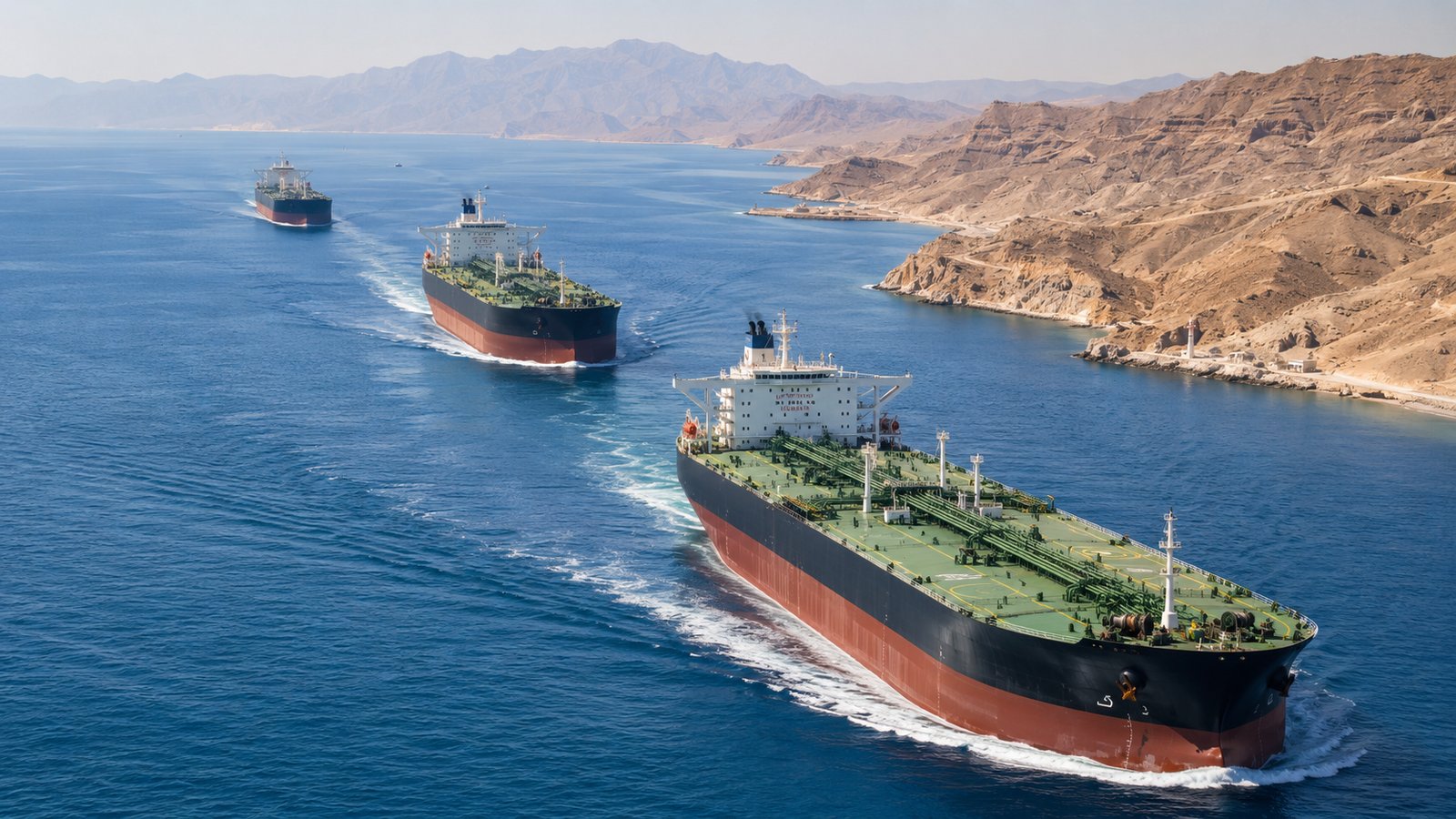
Six days ago Iran declared the Strait of Hormuz closed and the oil market shrugged, because a declaration is only words. On Thursday Iran did the real thing. An Islamic Revolutionary Guard Corps drone struck a container ship in the strait, the first attack on a vessel since the framework was signed in Versailles. The market gave it exactly one day. By Friday the bounce was gone and WTI had fallen back below $70 to a fresh post-crisis low. Iran fired a live shot, and oil is cheaper than it was before the trigger was pulled.
That sequence is the clearest measure yet of how thoroughly the war premium has drained out of this market. A tanker strike in the world's most important oil chokepoint produced a rally that lasted less than 24 hours. The thing that used to be worth $40 a barrel is now worth a single session.
The Attack
The vessel was the Ever Lovely, a Singapore-flagged container ship operated by Taiwan's Evergreen, hit by a drone near the Omani coast on Thursday evening. The IRGC confirmed responsibility, and a US official attributed the strike to Iran. The damage was minor, confined to the bridge area, all 21 crew were unharmed, and the ship completed its transit. It was a message, not a campaign.
The message still landed on the shipping industry. The International Maritime Organization suspended the voluntary escort and evacuation scheme it had stood up to shepherd ships through the strait, the first operational pullback in what had been a steady multi-day recovery in traffic. That suspension is the cleanest evidence that the strait is still not normal, even as the raw numbers say otherwise. Total sailings through Hormuz hit 62 on Wednesday, the highest single-day count since the crisis began, though still only about half of pre-crisis levels. Iran has not rescinded its closure declaration, and Deputy Foreign Minister Gharibabadi reiterated that safe passage "could not be guaranteed without coordination with Tehran." The strait is reopening and contested at the same time.
Why the Bounce Didn't Hold
Oil jumped about 3% on Thursday as the headlines crossed. Then it gave all of it back. WTI fell roughly 4% on Friday to around $69, its lowest since February 27, back below the round number and at a fresh low for the entire episode. Brent dropped to the low $70s. WTI is now down about 10% on the week, its worst week in roughly a month.
The reason the bounce failed is the same reason the closure declaration failed: supply is pouring back faster than a single incident can frighten it. Saudi Arabia is loading tankers at Ras Tanura, and the UAE, Kuwait, and Qatar are all ramping exports, constrained now mainly by how fast tankers can be found rather than by anything happening in the strait. The barrels that were stranded or withheld for four months are hitting a market that has already repriced for them. Against that flow, a drone strike that dented one bridge and hurt no one is not a supply event. It is a headline, and the market traded through it within a day.
The Fights That Are Left
The disputes that could still matter are the ones that threaten the volume of oil, not the safety of a single ship. The clearest new one is over money. As the strait reopens, the question of whether Iran charges tolls for passage has hardened into its own fight. Oman's foreign minister said the new arrangements "will not involve imposing any transit fees." Iran stayed deliberately vague, referring to "future administration and maritime services." Secretary of State Marco Rubio warned that tolls, once introduced, would spread "like a contagion" to every chokepoint in the world. That is a fight over the permanent cost of moving oil through Hormuz, and it is unresolved.
The inspections standoff is also unresolved and unmoved. IAEA inspectors still have not entered Iran. Director General Grossi maintains access is coming "soon" while conceding the detailed talks have "barely initiated," and Iran continues to tie any inspections to a final deal and the end of all sanctions. It is the core unsettled term of the 60-day negotiation, and it has not broken the track, but it has not been bridged either.
The next scheduled catalyst is OPEC+, which meets on July 5 to set August output. The group has been adding barrels in roughly 188,000-a-day increments, and if it keeps that cadence the last of its 2023 cuts unwinds by the end of September. With prices at four-month lows and a glut debate underway, a pause is the live alternative, but the signals so far, from a secretary general who rejects the glut warning to an Iraq pushing for a higher quota, lean toward proceeding. More barrels, in other words, into a market that already has too many.
For now the pattern holds. Iran reached past the declaration to an actual strike, the market flinched for a day, and then it went back to doing the only thing it has done all month: following the barrels lower.
This article is for informational purposes only and does not constitute financial or investment advice. Oil market conditions can change rapidly. Consult a qualified financial professional before making investment decisions.