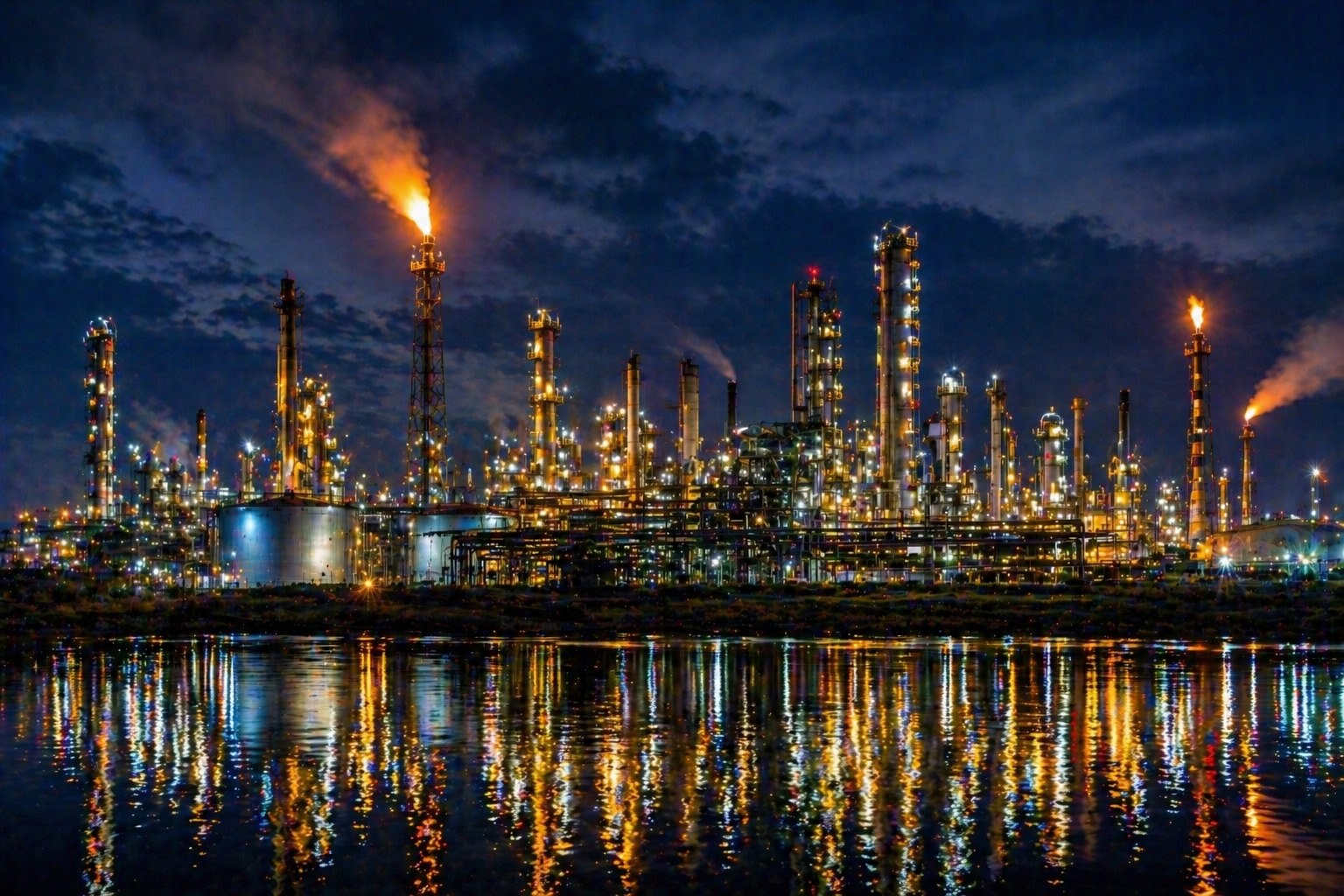
An Iranian drone struck the Fujairah Oil Industry Zone in the UAE early Monday morning, igniting a fire at the petroleum complex. Three Indian nationals were injured. The UAE military said it intercepted four additional Iranian missiles over its waters before they reached their targets.
Brent crude rose to $115.01 per barrel on the news, up $3.81 from Friday's close.
The target matters more than the damage. Fujairah sits at the terminus of the Abu Dhabi Crude Oil Pipeline, the only major route for Gulf crude to reach export tankers without passing through the Strait of Hormuz. If Iran can degrade Fujairah, it closes the last open door.
What the ADCO Pipeline Is
The Abu Dhabi Crude Oil Pipeline runs 235 miles from inland fields to Fujairah on the Gulf of Oman, entirely bypassing the strait. It carries roughly 1.5 million barrels per day at full capacity. Since the Hormuz closure began in late February, it has been the primary export route for UAE crude and one of the few functioning Gulf oil lifelines left.
The UAE announced its OPEC exit effective May 1, partly on the basis that freed from quotas it could push exports toward its full 4.8 million barrel per day capacity. That calculation assumed Fujairah remains operational.
Iran's Declared Control Zone
The IRGC released a map Monday showing its claimed "operational control zone" across the eastern Gulf. The zone encompasses Fujairah and the nearby port of Khorfakkan. That framing is new and deliberate: Iran is signaling that the bypass route is within its reach and that it intends to contest it.
Whether Iran can sustain that threat is a separate question. Monday's strike caused a fire but did not take the terminal offline. The UAE's missile intercepts suggest active air defense. But a sustained campaign against Fujairah infrastructure would change the supply calculus for every Gulf producer still exporting.
Market Impact
Brent at $115 reflects two simultaneous developments: the Fujairah strike and the launch of Project Freedom, the US military escort operation that began at dawn Monday. The two events pull in opposite directions. Project Freedom opens a potential path for 800 stranded vessels to clear the strait. The Fujairah strike threatens to close the only bypass route.
Friday's close of $111.20 was already elevated. Monday's $115 print sets a new floor for this phase of the crisis.
Goldman Sachs's Q3 upside scenario of $120 per barrel, twice described as a tail risk and then as a base case, is now the lower bound of a realistic range. If Fujairah is put out of commission, the supply picture tightens further and $130-plus becomes a plausible scenario.
What Happens to Gulf Oil If Fujairah Is Degraded
Gulf producers with Hormuz bypass capacity are limited. Saudi Arabia's East-West Pipeline carries crude to Yanbu on the Red Sea coast, but its capacity is capped at around 5 million barrels per day and it is already running near full. Kuwait, Iraq, Qatar, and Bahrain have no comparable bypass infrastructure. Their exports depend entirely on the strait.
The UAE's Fujairah pipeline was one of the few remaining pressure-release valves in the system. Iran striking it on the same morning the US launched a Hormuz escort operation is not coincidental. Tehran is signaling that every workaround will be contested.
This article is for informational purposes only and does not constitute financial or investment advice. Oil market conditions can change rapidly. Consult a qualified financial professional before making investment decisions.