The window that opened Thursday closed Saturday.
Iran's Islamic Revolutionary Guard Corps fired on a tanker near the Strait of Hormuz and announced that the waterway would remain closed until the United States lifts its blockade of Iranian ports. Three days earlier, Iranian state media had declared Hormuz "completely open." That declaration briefly sent WTI to $83. By Sunday, oil had retraced most of the move. WTI is back above $93. Brent is near $97.
The two-week ceasefire expires Tuesday.
What Happened on Saturday
The IRGC intercepted a vessel transiting near the strait's southern approaches and opened fire. No crew casualties have been confirmed. The tanker diverted. Iran's navy issued a statement saying the incident demonstrated that "unauthorized passage" would not be tolerated during the current period of negotiations.
Iran's foreign ministry followed with a clarification that undercut Thursday's announcement: Hormuz is open only to vessels that have coordinated with Iranian naval authorities. Ships that have not done so, or that are flying flags of US-aligned nations, remain at risk.
Insurance underwriters have not changed their war-risk assessments. Tanker traffic through the strait remains near zero.
The Oil Market Reversal
Thursday's "open Hormuz" announcement produced one of the sharpest single-day drops in oil this year. WTI fell from $94 to $83. Brent dropped toward $89.
Saturday's incident reversed that move almost entirely. By Sunday evening, WTI had recovered to $93 and Brent to $97. The round trip took less than 72 hours.
The speed of the reversal tells you something about how the market is reading these signals. Thursday's announcement was treated as durable. Saturday's incident was treated as clarifying. The market is now pricing in a higher probability that the ceasefire lapses without a deal than it was at Friday's close.
Monday Is the Last Realistic Chance
Trump confirmed Sunday that a US delegation will arrive in Islamabad Monday evening for a second round of talks. Vice President JD Vance will again lead the American side.
Iran's chief negotiator offered a less optimistic framing, saying the two sides are "still a long way from a deal" on the core issues: uranium enrichment limits, the terms of Hormuz passage, and the sequencing of any US sanctions relief.
The first round of Islamabad talks collapsed after 21 hours. The second round opens with less time and a harder starting position. Iran has now demonstrated, twice in four days, that its public statements about Hormuz do not reliably predict what its naval forces will do.
Trump added his own pressure on Sunday, posting that the US would "knock out every single Power Plant, and every single Bridge" in Iran if talks fail. Whether that language is negotiating posture or operational intent, it has not historically accelerated Iranian concessions.
What the Ceasefire Expiry Actually Means
The April 21 deadline is not automatically a trigger for resumed hostilities. Either side can allow it to lapse without immediately escalating. But a lapsed ceasefire removes the diplomatic framework that has kept the blockade from tightening further.
The current US naval posture around Iranian ports is already at a level that Iranian officials describe as a blockade. If the ceasefire expires and no extension is agreed, the US would have no formal constraint on expanding that posture. Iran, for its part, would have no obligation to keep Hormuz even partially navigable.
The market is priced for uncertainty. WTI at $93 is neither the deal scenario nor the full-escalation scenario. Monday's talks will narrow that range in one direction or the other before Tuesday's deadline.
This article is for informational purposes only and does not constitute financial or investment advice. Oil market conditions can change rapidly. Consult a qualified financial professional before making investment decisions.
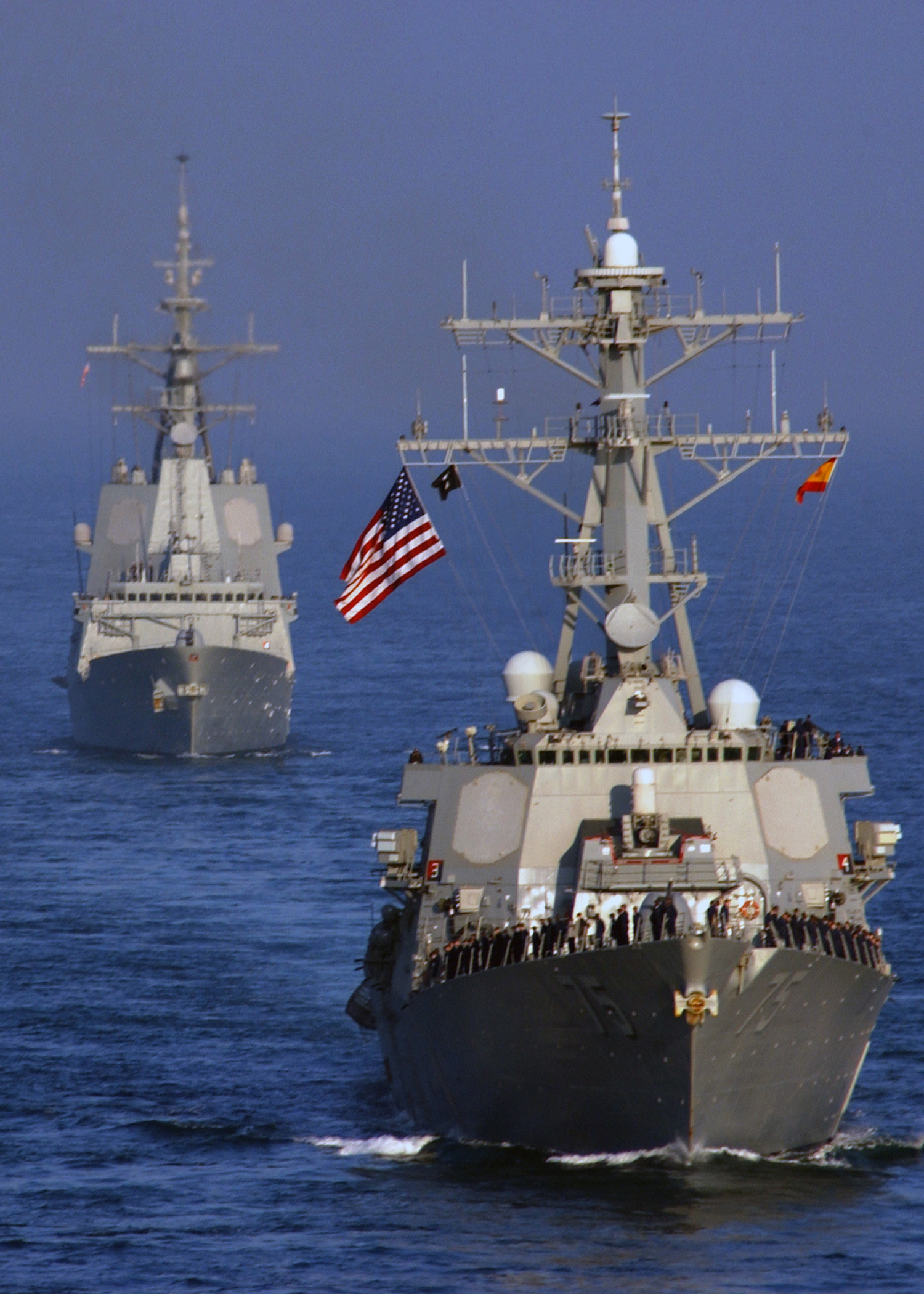
Cover photo: USS Donald Cook (DDG-75) in the Persian Gulf. U.S. Navy photo, public domain.