With less than two hours before Trump's 8 p.m. Tuesday deadline, Iran agreed to a two-week ceasefire and said it would allow safe passage through the Strait of Hormuz. Oil markets responded immediately and violently.
WTI plunged 18% to $92 per barrel. Brent fell nearly 17% to $91. It was the largest single-day drop in crude prices since the 1991 Gulf War. The only comparable move outside that was the COVID demand collapse of 2020. As of Wednesday morning, both benchmarks had partially recovered and were trading in the $95-97 range as traders assessed what the ceasefire actually means in practice.
What the Deal Says
The agreement is a two-week halt to hostilities. The U.S. said its military objectives had been met. Iran agreed to allow shipping through the strait "via coordination with Iran's Armed Forces and with due consideration of technical limitations." That language immediately raised questions about how open the strait actually is.
Pakistan brokered the ceasefire after Prime Minister Shehbaz Sharif asked Trump to delay his deadline and separately asked Iran to allow passage as a goodwill gesture. Both sides claimed victory within hours of the announcement.
The deal does not cover Lebanon. Israel said the ceasefire does not apply to its ongoing operations there.
The Strait Is Not Fully Open
This is the critical detail markets are now pricing. At least two vessels transited safely after the announcement, but most tankers that have been stranded inside the Gulf for weeks remained in place hours later. Iran controls the operational mechanics of reopening, and its language about "technical limitations" and "coordination" suggests the backlog will take time to clear.
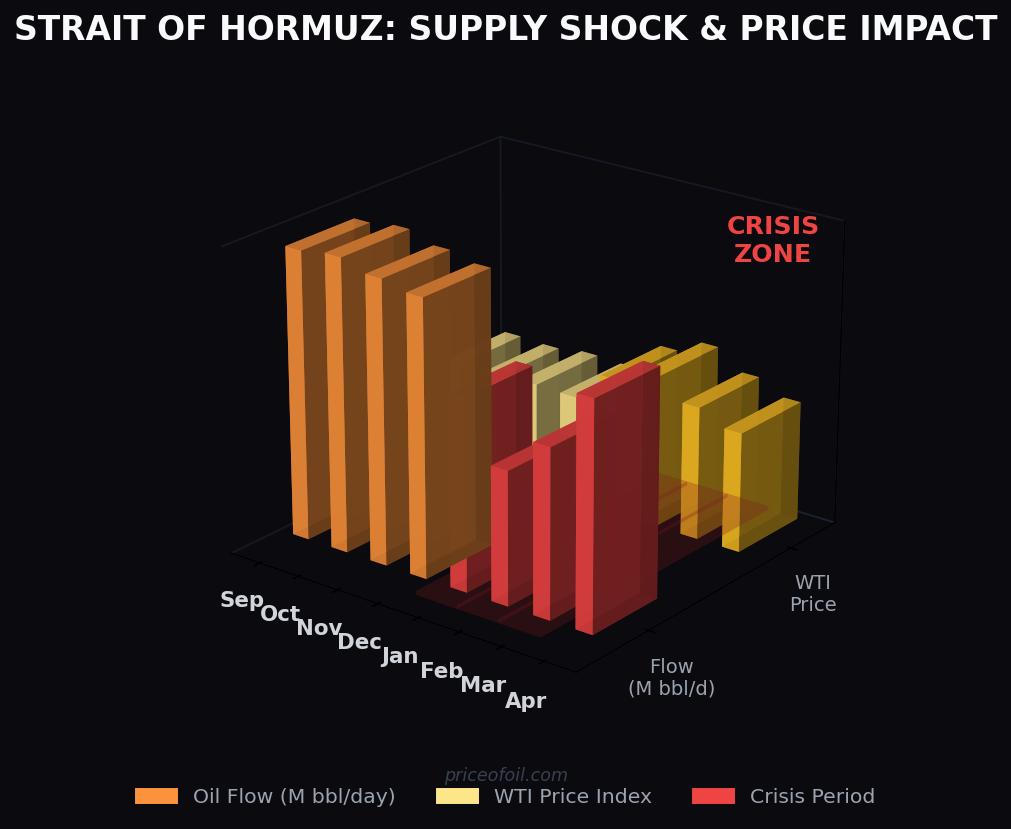
CBC reporting Wednesday morning cited no sign that Iran is ceding control of the strait itself. The ceasefire pauses the shooting. It does not automatically restore the 20 million barrels per day of flow the strait handled before March 4.
What the $30 War Premium Bought
Before the war began in early March, WTI was trading near $67. The conflict pushed prices to $114 at their peak. The $30-plus war premium is now largely gone, but oil at $95 is still well above pre-war levels, which reflects the reality that no tankers have actually loaded and departed yet.
The math going forward: if the two-week ceasefire leads to a permanent settlement and full reopening, analysts expect Brent to fall toward $80 or below as supply floods back into a market that, outside the Hormuz disruption, is adequately supplied. OPEC+ has been hiking output. U.S. shale production has held up. The war premium was not hiding a structural supply deficit: it was pure risk pricing.
Why Markets Are Not Fully Relaxing
Two weeks is short. The last 40 days produced five separate Trump deadlines, multiple rejected proposals, and ongoing strikes before this deal was reached. Traders have reason to treat a 14-day window cautiously.
The war premium will likely continue eroding if tankers start moving and the strait operates normally. But another breakdown would send prices back sharply: one rejected ceasefire extension, one strike on a vessel. The range for WTI over the next two weeks is probably $88 on the low end if the deal holds and tankers clear, to $105+ if it collapses.
Gasoline prices at the pump will lag the crude move by one to two weeks. The national average was above $4.19 going into the ceasefire. Relief at the pump is coming, but not immediately.
What to Watch
The two-week clock started Tuesday night. Key dates:
- This week: Do tankers actually begin transiting? Does Iran's "coordination" requirement create delays?
- April 14-18: First week of shipping data: will Lloyd's and tanker trackers show normal traffic?
- April 21: Two-week deadline arrives. What does the next phase of negotiations look like?
The ceasefire is real. The war premium is deflating. But the strait is not a light switch, and the deal is fragile. Oil's next big move depends on which direction this resolves.
This article contains forward-looking analysis based on current market conditions and publicly available information. Commodity prices are highly volatile and subject to rapid change. Nothing here constitutes investment advice.