The ceasefire did not expire. It also did not produce a deal.
Trump extended the truce hours before the midnight deadline on Tuesday, citing a "seriously fractured" political situation inside Tehran. The blockade of Iranian ports remains in effect. The Strait of Hormuz remains functionally closed. Talks are not scheduled. The Touska is still in US custody and Iran has still not formally backed away from its vow of retaliation.
Brent crude briefly crossed $100 per barrel on Tuesday before paring gains after the extension was announced. It settled around $99. WTI touched $95 and pulled back to around $91. The market's read: an extension without a deal or a blockade lift changes the timeline, not the underlying supply math.
What the Extension Actually Means
A ceasefire extension is not a peace deal. It is a continuation of the status quo.
The status quo is: US naval forces blockade Iranian ports. Iran controls access through the Strait of Hormuz under the framework of "coordination" with its navy. Tanker traffic remains near zero. Saudi repair timelines for Manifa and Khurais are running weeks behind initial estimates. The EIA's 5.1 million barrel per day global inventory draw continues.
The extension removes the immediate escalation risk that a lapse would have triggered. It does not restore supply. Rystad Energy published a note Tuesday projecting a 1 billion barrel cumulative supply shortfall if the current disruption extends through Q3. That number does not change because the ceasefire was extended by a week or two.
Why $100 Did Not Hold
Brent's move through $100 on Tuesday morning was brief. The extension announcement brought sellers back in. Two dynamics pulled in opposite directions: the supply disruption argues for higher prices, but the ceasefire extension argues that a resolution, however distant, is still possible.
The $99 level where Brent settled reflects the market pricing the extension at face value: more time, same problem. If talks resume and show genuine progress, prices will fall. If the extension lapses again without a deal, the next move through $100 will likely hold.
WTI's larger pullback to $91 reflects the domestic US inventory picture — the EIA's weekly draw data due Wednesday will be closely watched for signs that the disruption is accelerating or stabilizing.
Iran's Position Has Not Changed
Tehran acknowledged the ceasefire extension without welcoming it. The foreign ministry did not announce any readiness to resume negotiations. Iran's stated precondition for substantive talks remains the lifting of the US port blockade, which Trump did not offer.
The Touska seizure continues to complicate the diplomatic environment. Iran cannot publicly drop its demand for the ship's return or walk back its retaliation vow without significant domestic political cost. The US has not indicated any interest in either returning the vessel or relaxing the blockade.
Both conditions that would unlock a real negotiation — an Iranian willingness to talk without preconditions, or a US willingness to ease the blockade as a confidence measure — remain absent.
The Market's Remaining Questions
Three data points this week will define where prices go next.
Wednesday's EIA inventory report is the first. If the draw continues at the pace seen over the past three weeks, the supply gap is real and widening. If strategic reserve releases are closing the gap, the ceiling on prices drops.
Any signal from Iran on whether it will engage in talks is the second. Even a back-channel indication of willingness would move prices. The complete absence of any diplomatic signal is itself information.
The third is Saudi Arabia's repair timeline update. Manifa and Khurais were supposed to restore 600,000 barrels per day by late April. That deadline has slipped. An official update from Saudi Aramco on the new timeline would materially affect the supply outlook through Q2.
The ceasefire extension bought time. It did not buy a solution.
This article is for informational purposes only and does not constitute financial or investment advice. Oil market conditions can change rapidly. Consult a qualified financial professional before making investment decisions.
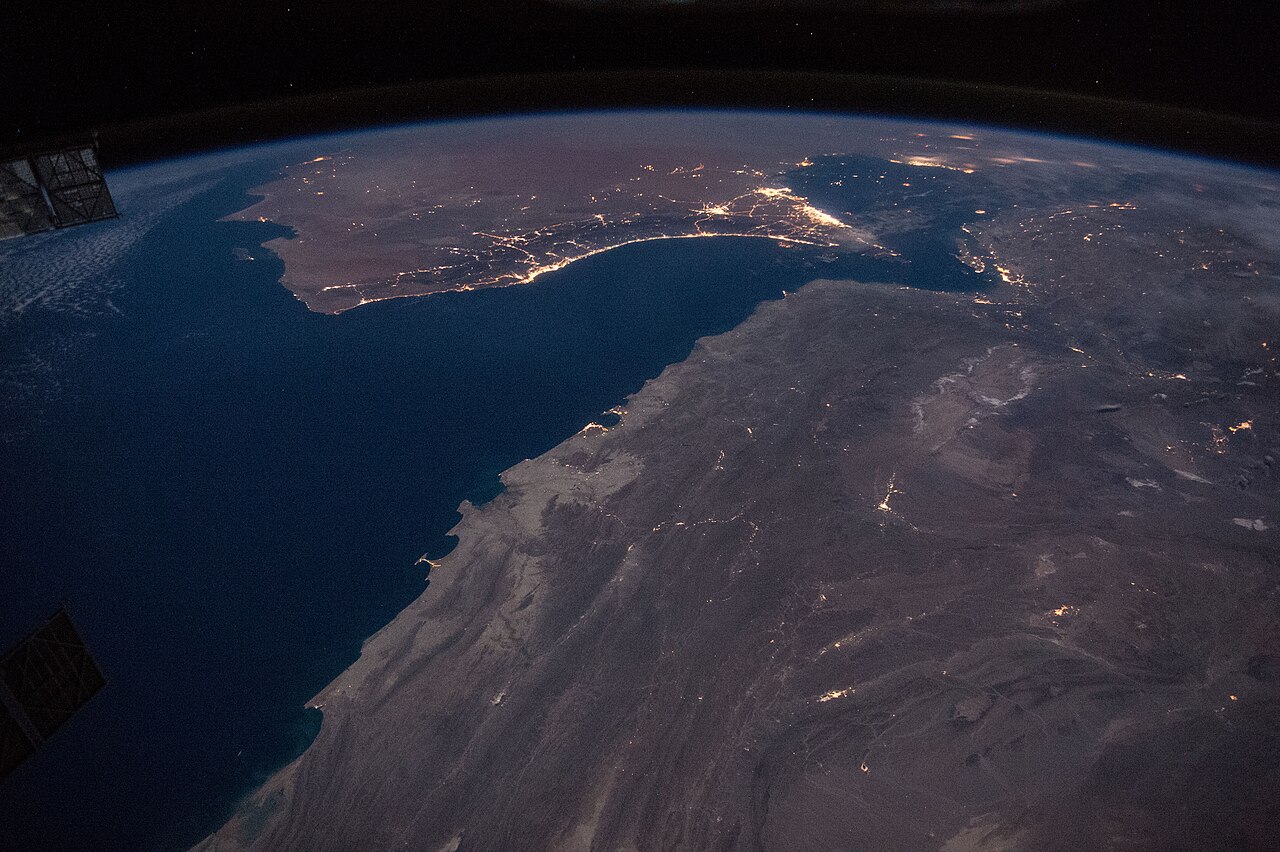
Cover photo: Gulf of Oman and the Strait of Hormuz at night, photographed from the International Space Station, January 23, 2016. NASA/Tim Kopra, Expedition 46. Public domain.