After the Pakistan mediation collapsed on Friday, Iranian Foreign Minister Abbas Araghchi flew not home but to St. Petersburg. He met with Vladimir Putin on Monday. Putin pledged Russia's support.
Brent crude rose to $107.97 on Monday, up roughly 2.5 percent from Friday's close. WTI traded near $96.36. Both benchmarks have held above $100 for two weeks without a credible path to resolution.
What Russia's Backing Means
Putin's language was political, not operational. Russia is not sending ships to the Strait of Hormuz. But his support gives Iran diplomatic cover to hold its position longer, and signals that Iran's isolation — a core pillar of US pressure strategy — is not total.
Putin described Iran as fighting "courageously and heroically for its independence and sovereignty" and said he hoped the Iranian people would "weather the difficult period." That is not neutral mediation. That is an endorsement.
For Iran, having Russia on record as a backer changes the negotiating calculus. Walking away from talks is easier when a major power is publicly in your corner. Russia's own economic position adds another layer: every week Hormuz stays closed, Brent stays elevated. Russia, a major oil exporter, benefits directly from $107 Brent. The Kremlin has no structural incentive to push hard for a quick resolution.
Araghchi framed the Pakistan failure in terms that align with this framing. He blamed "excessive US demands" for the collapse. That framing gives Russia something to echo in international forums.
Trump: Call Me
Trump's public response to the weekend's events was dismissive. Iranian leaders can "just call" if they want to talk. No envoys will be dispatched. The US will not travel to third-country mediators.
Iran's answer was to send Araghchi to Moscow.
The gap between the two positions has not narrowed. Iran will not negotiate while the naval blockade is in place. The US will not lift the blockade before direct talks begin. Araghchi meeting Putin does not bridge that gap. It hardens it.
The Supply Math
The IEA's April report put the disruption at 10.1 million barrels per day in March. Two full weeks of that disruption, compounded, now represents the largest single supply event since the 1973 oil embargo by cumulative barrel count.
US gas prices averaged $4.10 per gallon over the weekend, down from recent peaks but up roughly 27 percent since the conflict began.
Where Brent Goes from Here
If the Russia connection enables Iran to sustain its position through May, the $110 level comes into view. Goldman's $100-plus full-year Brent average was already built on assumptions the market has exceeded. Their upside scenario of $120 by Q3 depends on exactly this kind of prolonged diplomatic failure.
The next concrete signal to watch: whether Araghchi's Moscow meetings produce any new diplomatic mechanism, or whether Russia simply provides political cover with no path attached. Based on Monday's statements, it is the latter. But that can change.
This article is for informational purposes only and does not constitute financial or investment advice. Oil market conditions can change rapidly. Consult a qualified financial professional before making investment decisions.
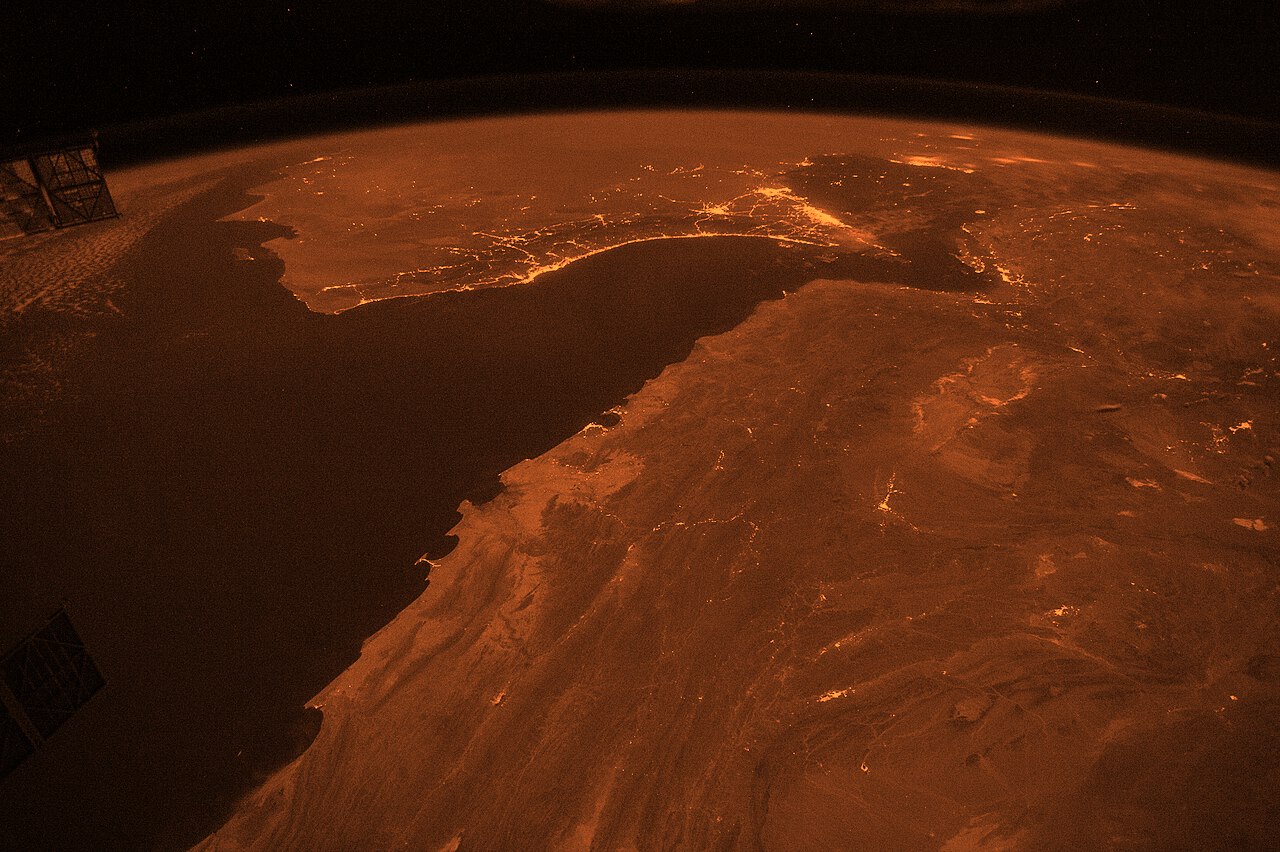
Cover photo: The Strait of Hormuz as seen from the International Space Station, 2011. NASA/ISS, public domain.