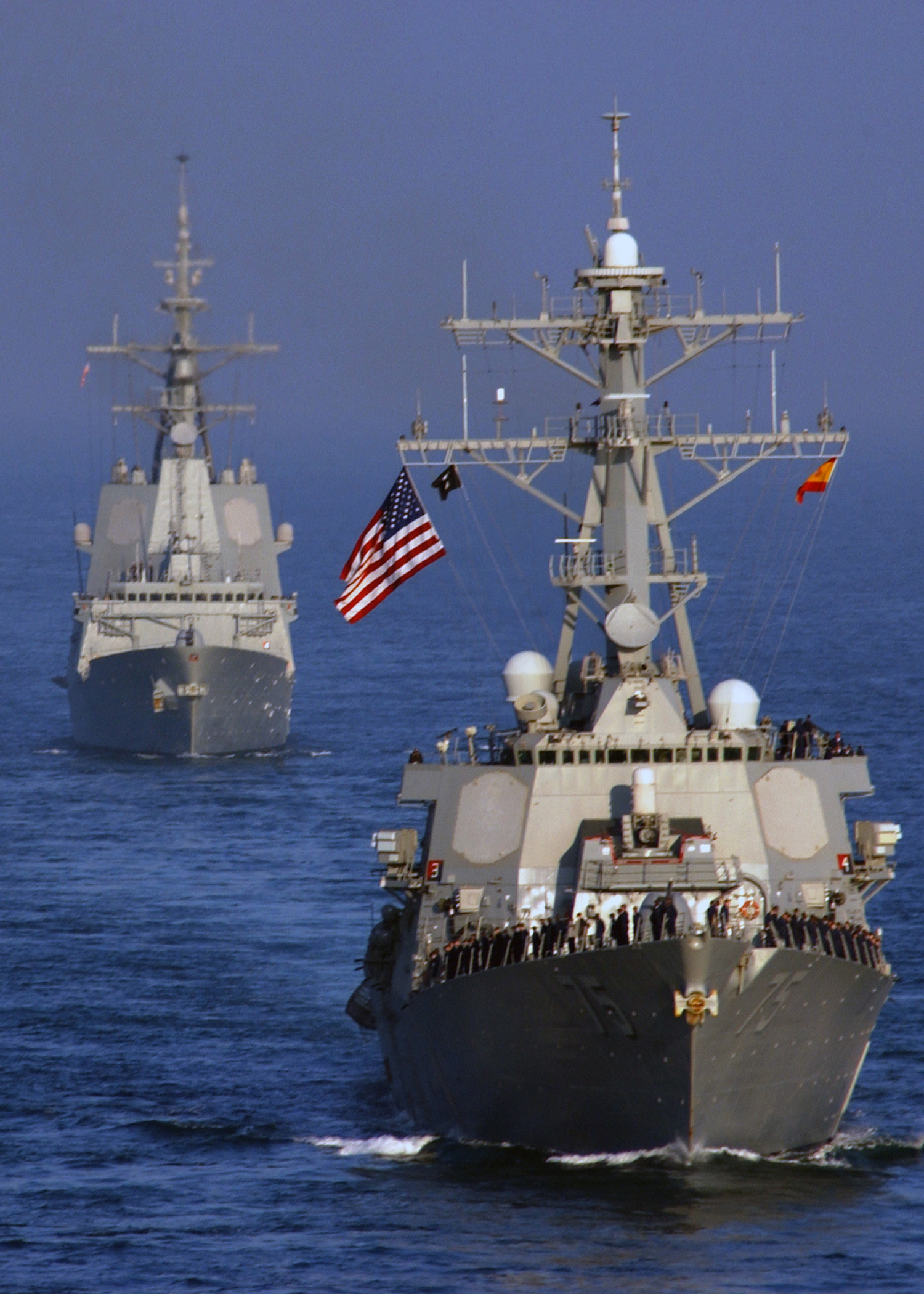
The US military launched Project Freedom at dawn Monday, deploying guided-missile destroyers into the Persian Gulf to escort commercial vessels through the Strait of Hormuz. Two US-flagged merchant ships completed the transit by mid-morning and are safely underway. Approximately 800 vessels remain stranded in the Gulf.
Iran responded within hours. The IRGC fired warning shots at US warships and launched missiles and drones at vessels in the strait. Trump told reporters the US "blew up" seven Iranian small boats after they approached the convoy. The IRGC claimed two missiles struck a US frigate near Bandar-e-Jask. CENTCOM denied it: "No US Navy ships have been struck."
What Project Freedom Is
Project Freedom is a naval escort program modeled loosely on the convoy system the US ran during the Tanker War of the 1980s. US Navy destroyers accompany commercial vessels through the strait, providing air defense cover and surface escort. Participation is voluntary. Ship owners must request inclusion.
The operational challenge is scale. The strait is 21 miles wide at its narrowest point. Running convoys through it requires coordination between dozens of ships, constant air cover, and the ability to respond to Iranian small-boat swarms and drone attacks simultaneously. The US Navy has the capability. Whether Iran can sustain enough harassment to make the cost prohibitive is the open question.
Day One Results
Two ships through. Seven Iranian boats destroyed. No confirmed hits on US vessels. One fire at the Fujairah bypass terminal from a separate drone strike.
That is not a rout in either direction. Two transits out of 800 stranded vessels is a start, not a solution. Iran's immediate response demonstrates it will not concede the strait without a fight. The warning shots and drone launches are calibrated: enough to contest the operation, not enough to cross the threshold that would trigger a broader US military response.
Iran's Counter-Move at Fujairah
The Fujairah drone strike, simultaneous with Project Freedom's launch, was not coincidental. Iran is signaling a strategy: contest the strait directly and threaten the bypass route at the same time. If both vectors succeed, there is no path for Gulf oil to reach export tankers.
That scenario has not occurred. Fujairah is damaged but functional. Two ships made it through the strait. But the direction of travel is clear. Iran is fighting a two-front oil infrastructure war.
What the Market Is Saying
Brent at $115 reflects the ambiguity. Project Freedom is theoretically bullish for supply: if 800 stranded ships clear the strait over the coming weeks, global oil flows resume. But the Fujairah strike is bearish: it threatens the one bypass route keeping some Gulf exports moving.
The net read from traders is that the situation is more dangerous Monday than it was Friday, not less. The escort mission has raised the operational tempo on both sides. Iran will not watch 800 ships leave without escalating. Whether that escalation stays below the threshold for a US military response is the week's central question.
Iran's Diplomatic Track in Parallel
While firing on US warships, Iran also has a diplomatic proposal in play. Tehran submitted a 14-point plan via Pakistan on May 2 covering a full US withdrawal, sanctions relief, war reparations, recognition of enrichment rights, and a new Hormuz framework with nuclear talks deferred. Trump said he is reviewing it but "can't imagine it would be acceptable."
The dual track, military pressure and diplomatic offer simultaneously, is Iran's standard posture. It gives Tehran flexibility: escalate if talks go nowhere, de-escalate if an offer gains traction. The 14-point proposal is a long way from what the US would accept. But its existence means a diplomatic channel is technically open, which puts a ceiling of sorts on how far either side will push the military track today.
What to Watch
The number of ships that clear the strait this week is the concrete scorecard for Project Freedom. If the rate is dozens per day, the operation succeeds. If Iran's harassment keeps throughput to a trickle, the operation fails and the next decision point for Washington is whether to escalate militarily or negotiate.
The status of the Fujairah terminal by end of day is the second variable. If it stays operational, the supply picture holds. If Iran follows up with additional strikes, the bypass route becomes unreliable and the market will price that accordingly.
This article is for informational purposes only and does not constitute financial or investment advice. Oil market conditions can change rapidly. Consult a qualified financial professional before making investment decisions.